
On leaving Dachau yesterday, the German equivalent to Radio 3 – BR Klassik, which also plays full works unspoiled by ads – was playing a Mozart piano concerto, which caught perfectly my reflective mood. It was followed by a Vaughan Williams piece, and then by a Klezmer romp from the David Orlowsky Trio called ‘Happiness’. While these three were playing, it came on to rain heavily, as I drove into Austria, passing the turn for Berchtesgaden, Hitler’s mountain eyrie in the Bavarian Alps. This was cosmic cinema on an epic scale.
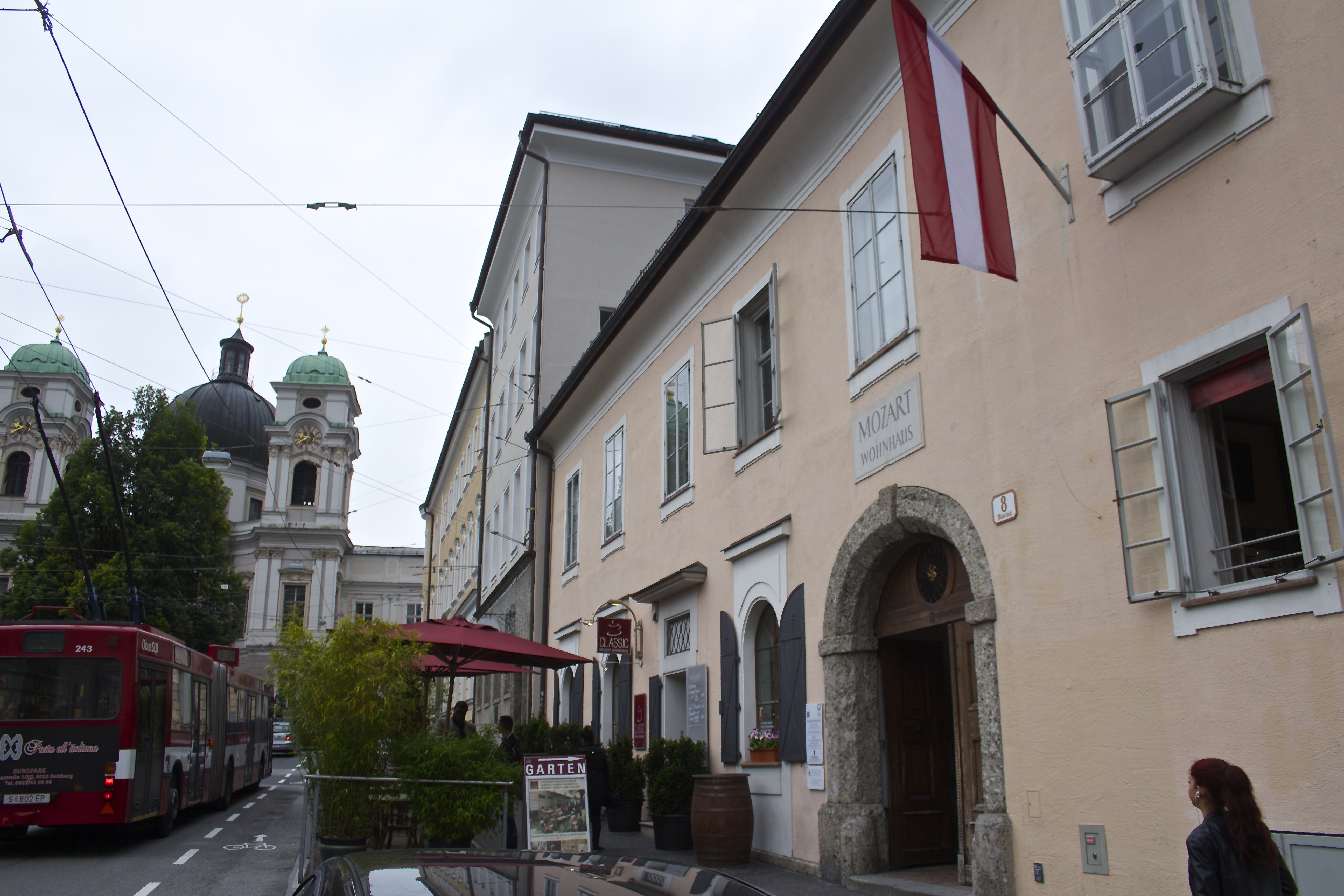
Music is the ultimate transnational cultural form, whether it is the endless churn of Euro-pop on my car radio – ninety per cent of it sung in English – or classical music which bridges social rifts, as painfully proven in the death camps. It was by pure coincidence that I turned out to have booked a guest house in Salzburg just across the road from Mozart’s house. [He of course was the international pop sensation of his time – the Justin Bieber of his age? – and welcomed to perform in the royal courts of Europe, from Versailles to St James, on a ‘world tour’ way before that became the norm.] You see the Catholic church above? Yes, I had inadvertently arranged to stay in a converted seminary, and was woken by the bells calling me to prayer at five to seven. The previous night I had had the same religious experience, since my hotel was just beside the Mainzer Dom (Mainz cathedral). The bells! The bells! Reminds me of Charles Laughton in The Hunchback of Notre Dame.
The funny thing is, I cannot remember where I stayed throughout most of my 1968 trip, presumably in hostels.One thing I do remember about Salzburg was being in a shop where a typical Yorkshire tourist was trying to make himself understood by speaking English slower and louder each time he failed. Hew wanted a bread-basket, as used to serve bread at his hotel table. Enfuriated by the Teutonic incomprehension, he eventually went bi-lingual and shouted “I want a brod– basket!”
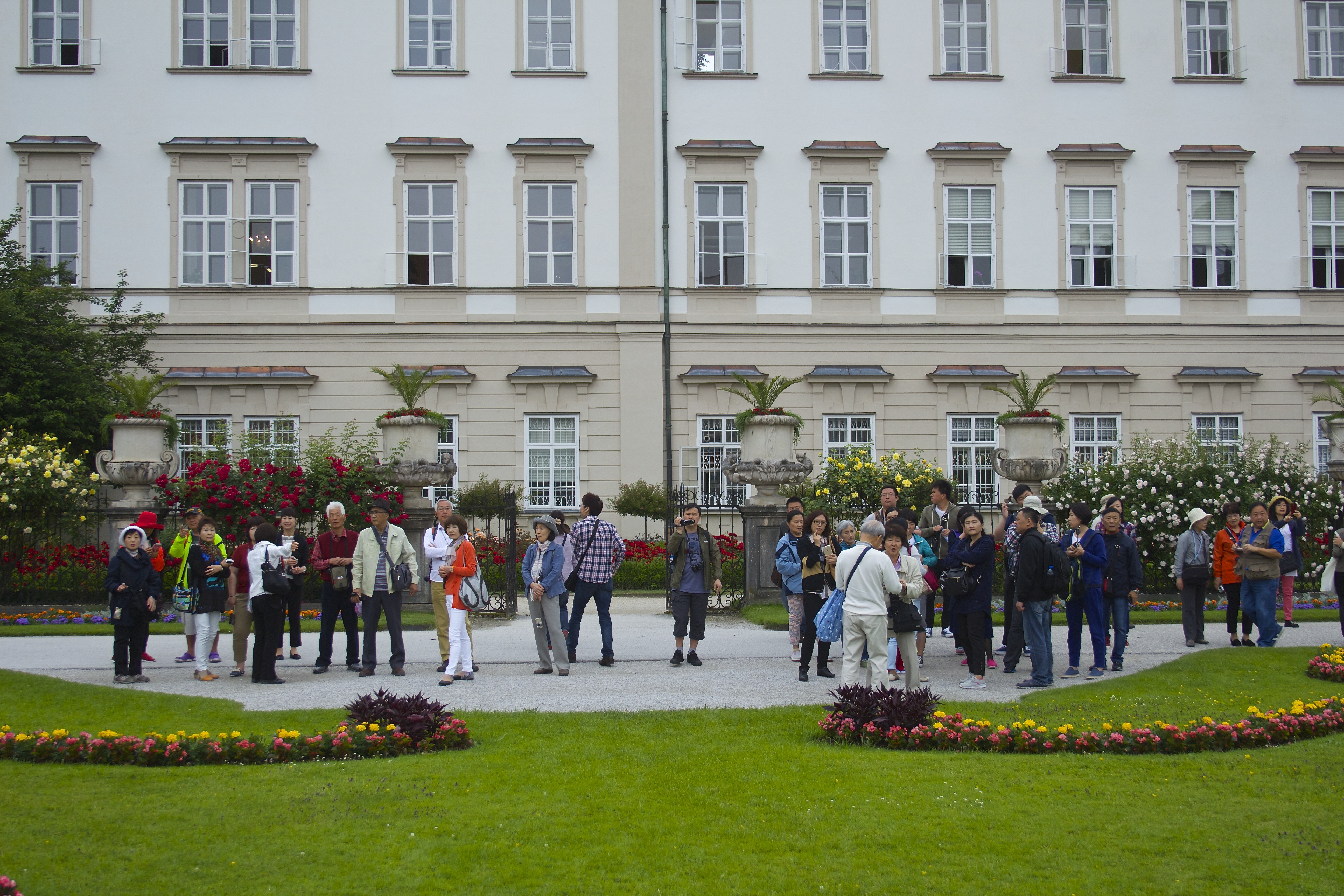
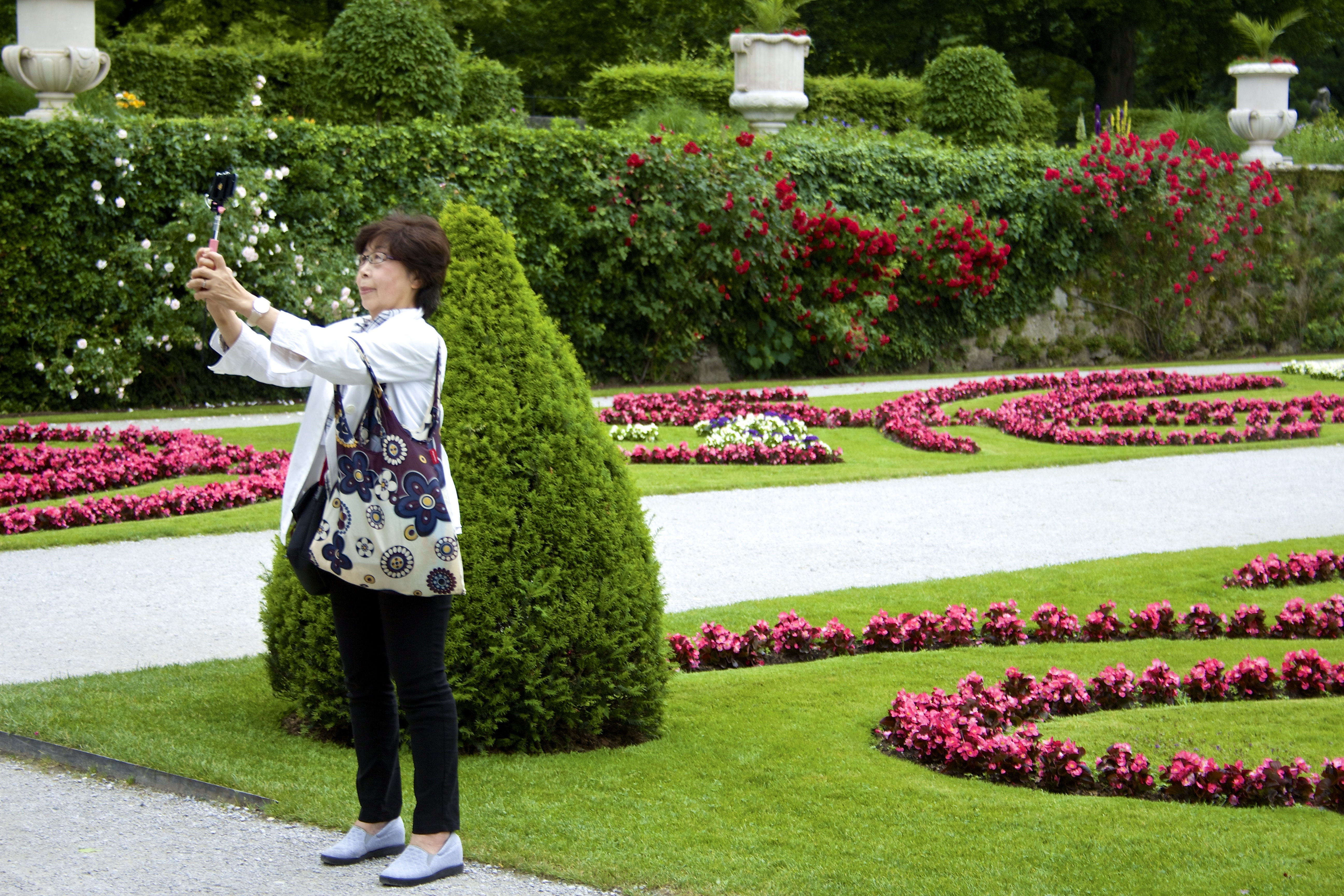
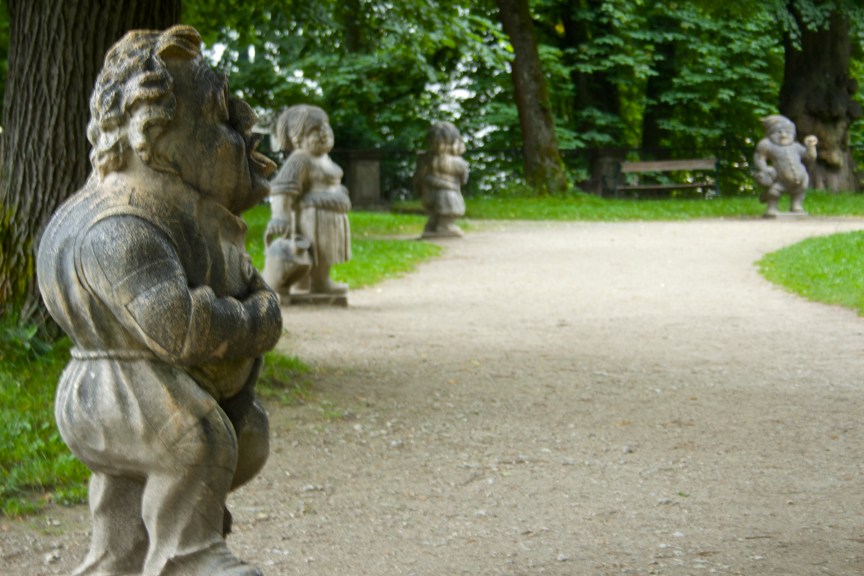
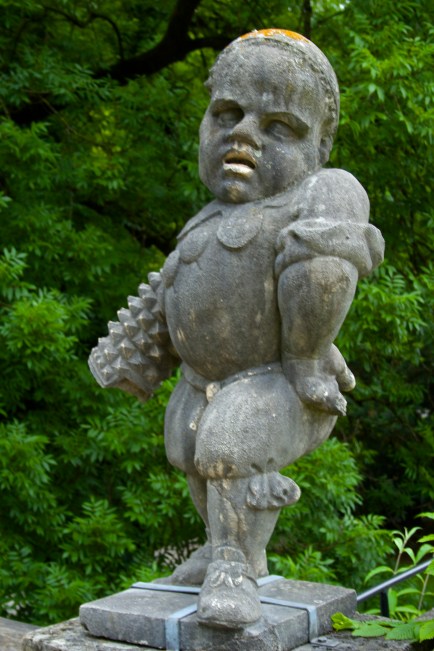
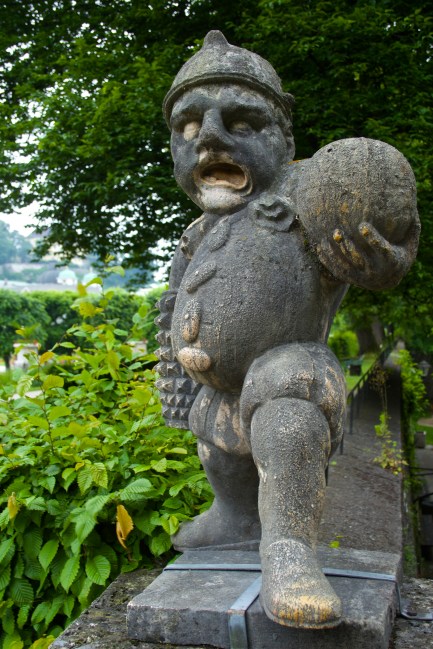
Salzburg is still overrun by tourists, many from the Orient. As you can see, the selfie sticks were out, yet strangely none featured the outsize garden gnomes, which are a feature of the gardens of the Schloss Mirabell. Difficulties explaining who was which when they got back home, I guess.
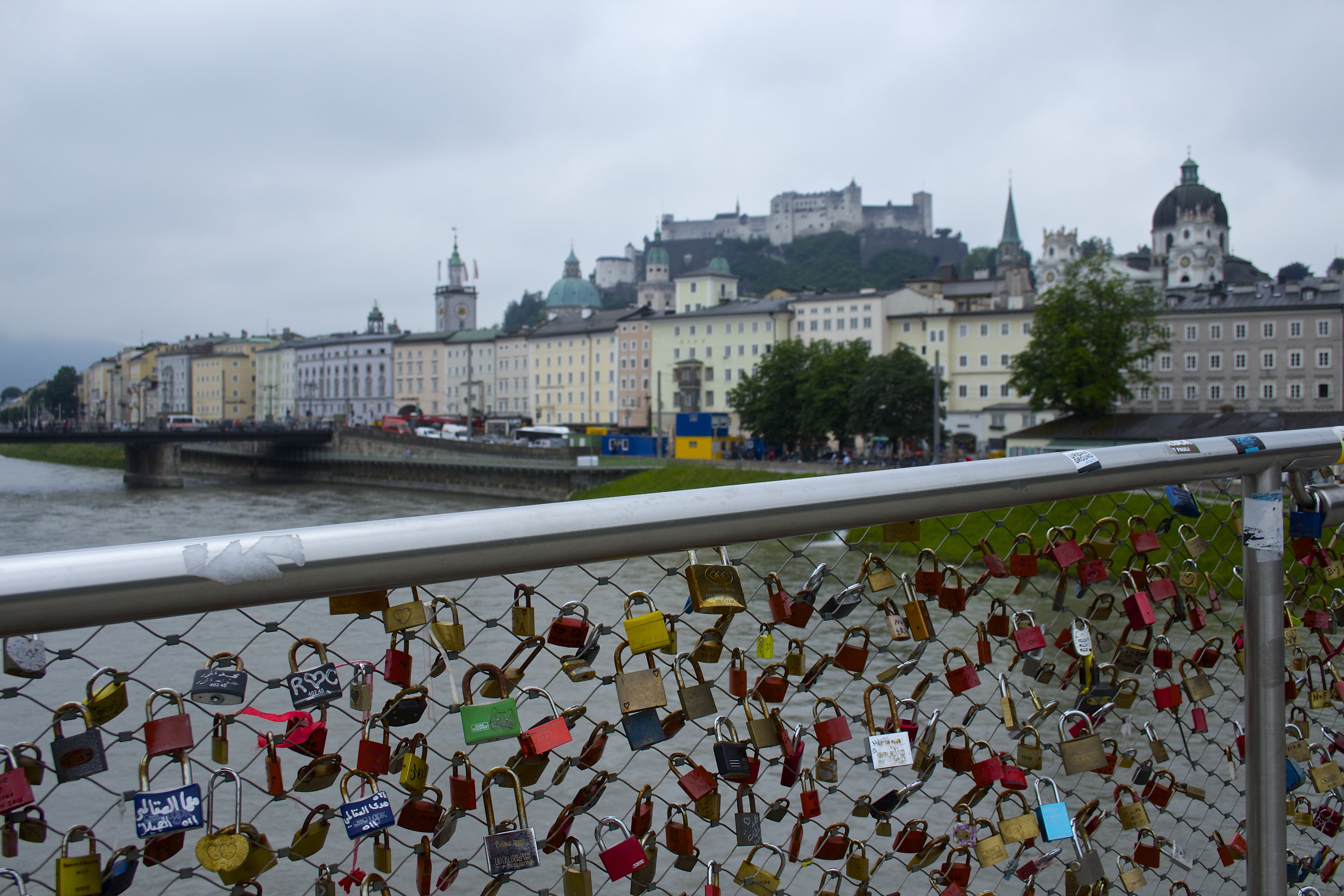
This footbridge has been assailed by visitors’ love locks, forty-five tons of which have recently had to be removed from the Pont des Arts in Paris before they brought it down. I was more surprised, and moved, by this defiant statement, posted on the side wall of the Salzburg Landestheater, in a way which I would find highly improbable from a local authority or other public body in England:
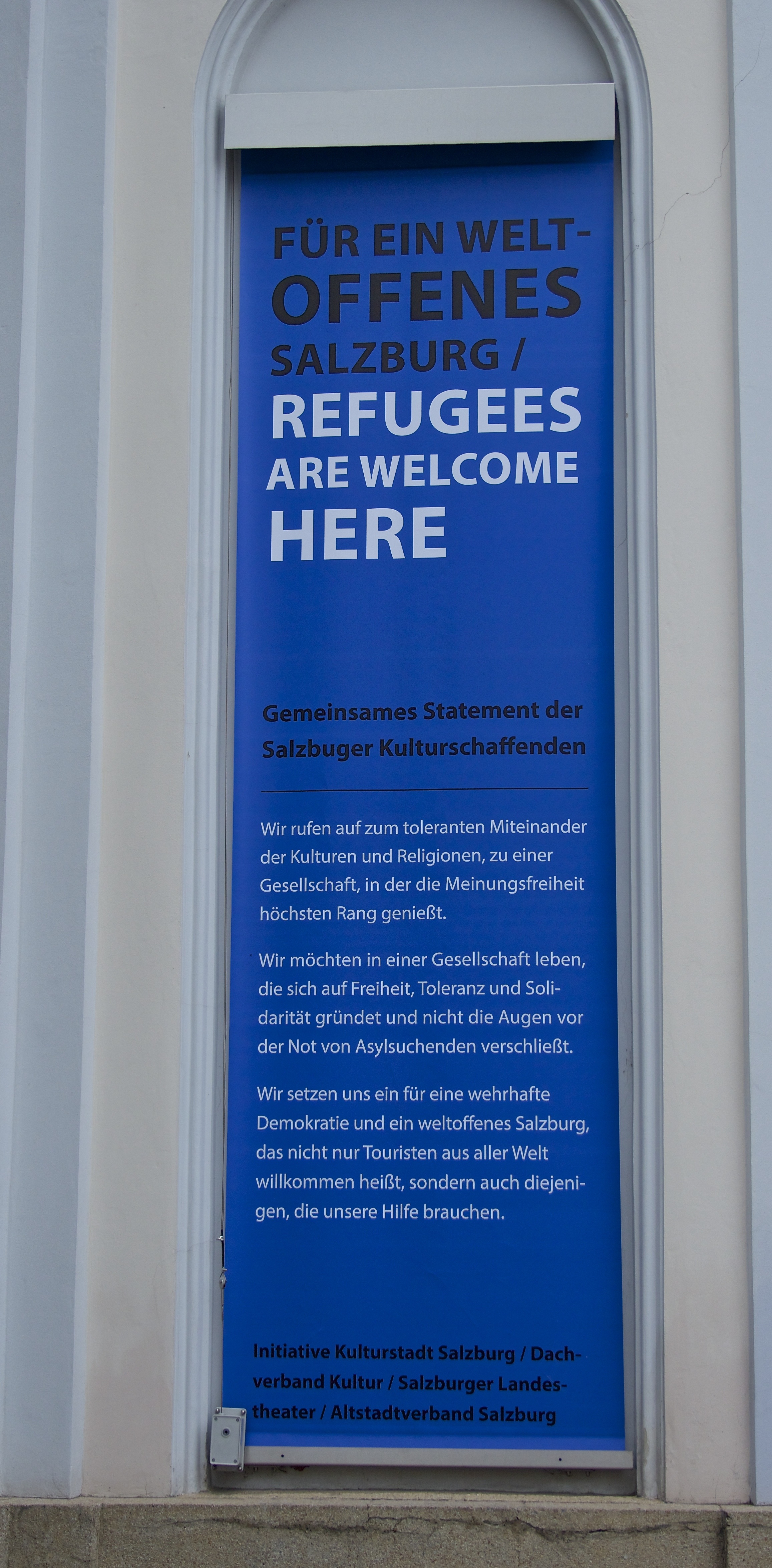
However:
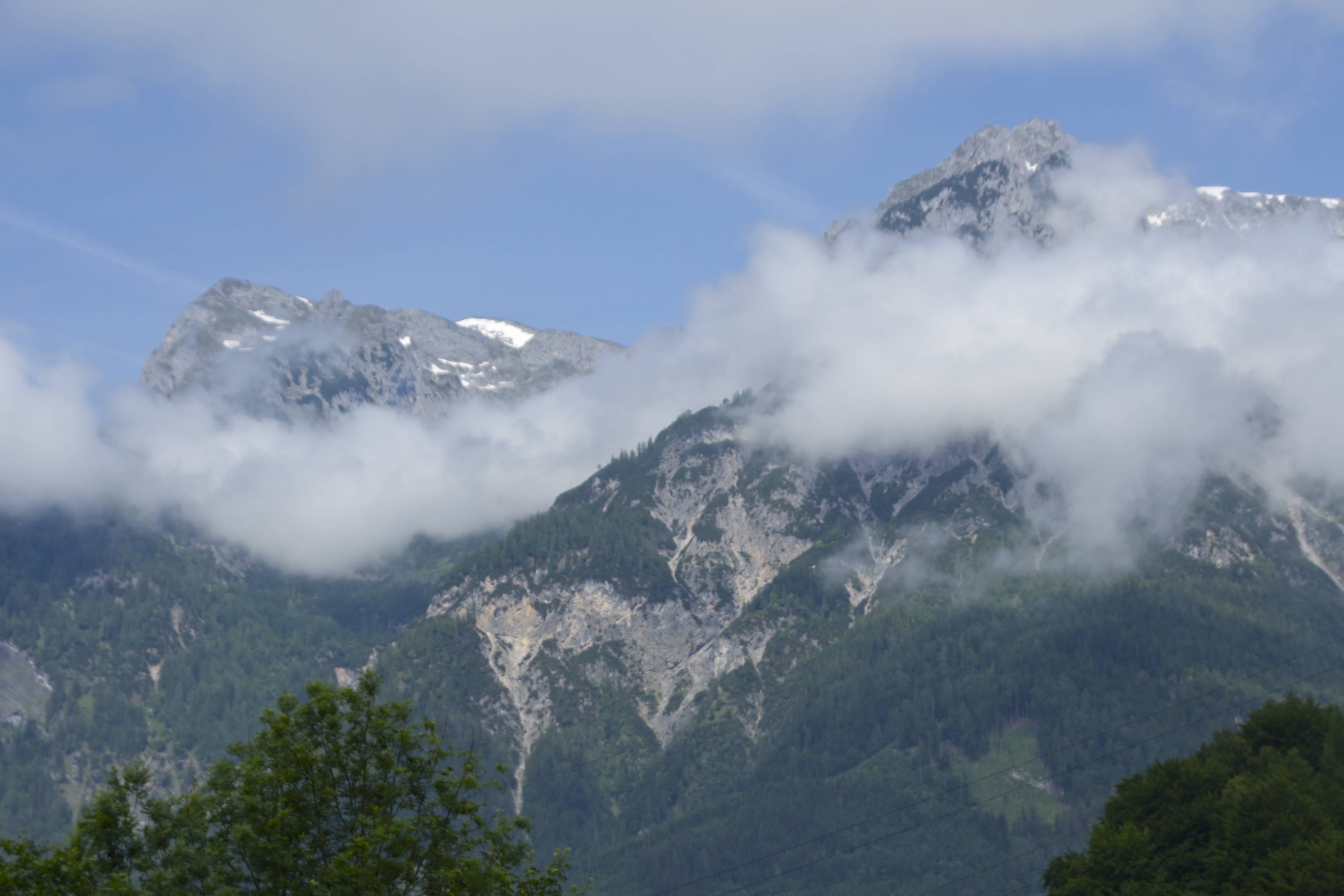
So it was with pleasure I escaped Austria after breakfast, for lunch in Slovenia and dinner in Croatia. The clouds lifted as I drove through the Austrian mountains and this magnificent landscape continues to demand that overused epithet of the day: ‘awesome’.
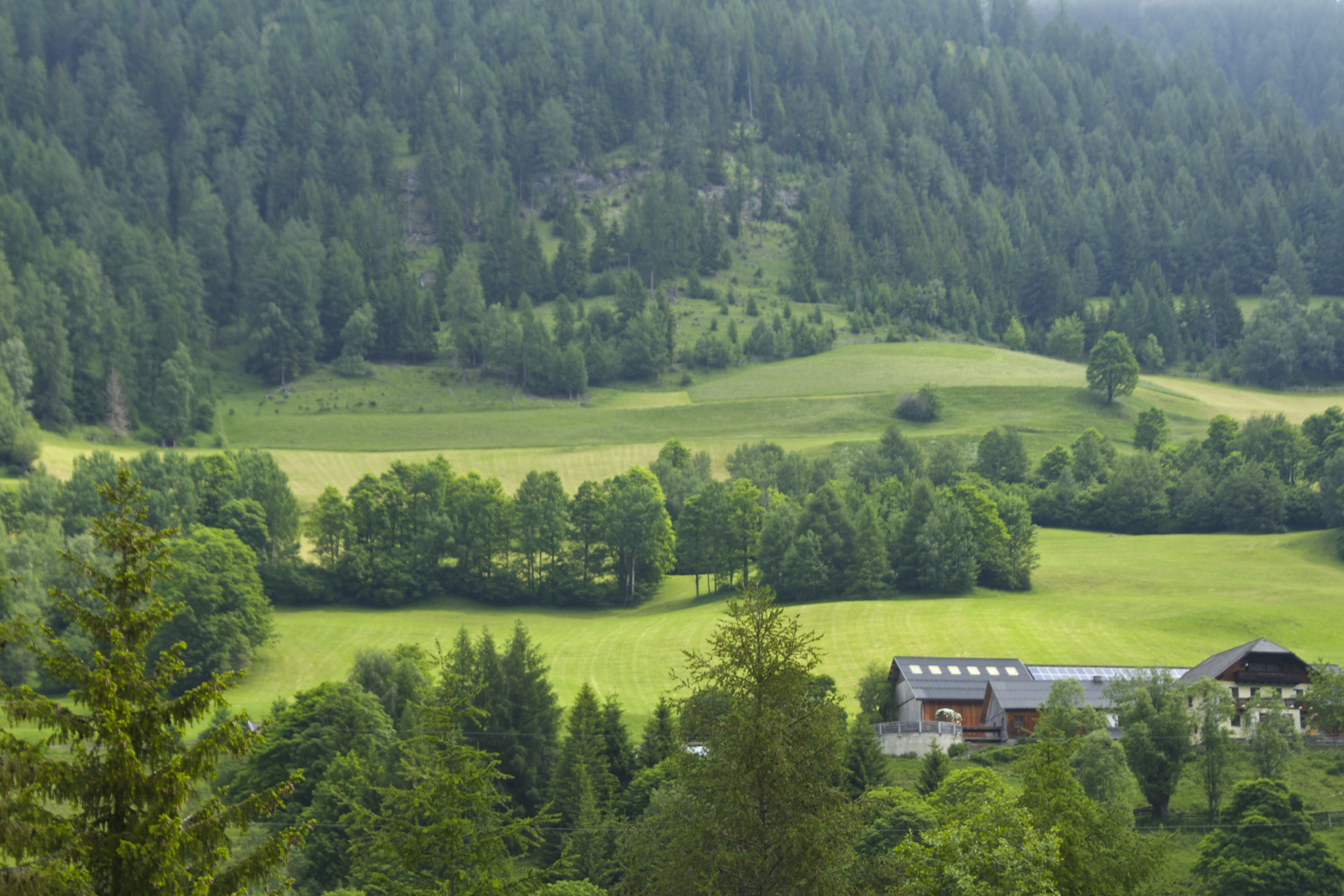
The clarity of mountain air makes colours more vibrant, a legal high which no doubt someone somewhere is working to ban. I am always struck by the emerald green fields, cut from the near-vertical tapestry of the forest pines like a patchwork quilt. These farmers may have 4x4s and Wifi, but the basics of their life have changed little in centuries. I can imagine their phlegmatic acceptance of the Third Reich after the Anschluss correctly, if cynically, doubting any exterior authority’s ability to control these mountain domains differently.
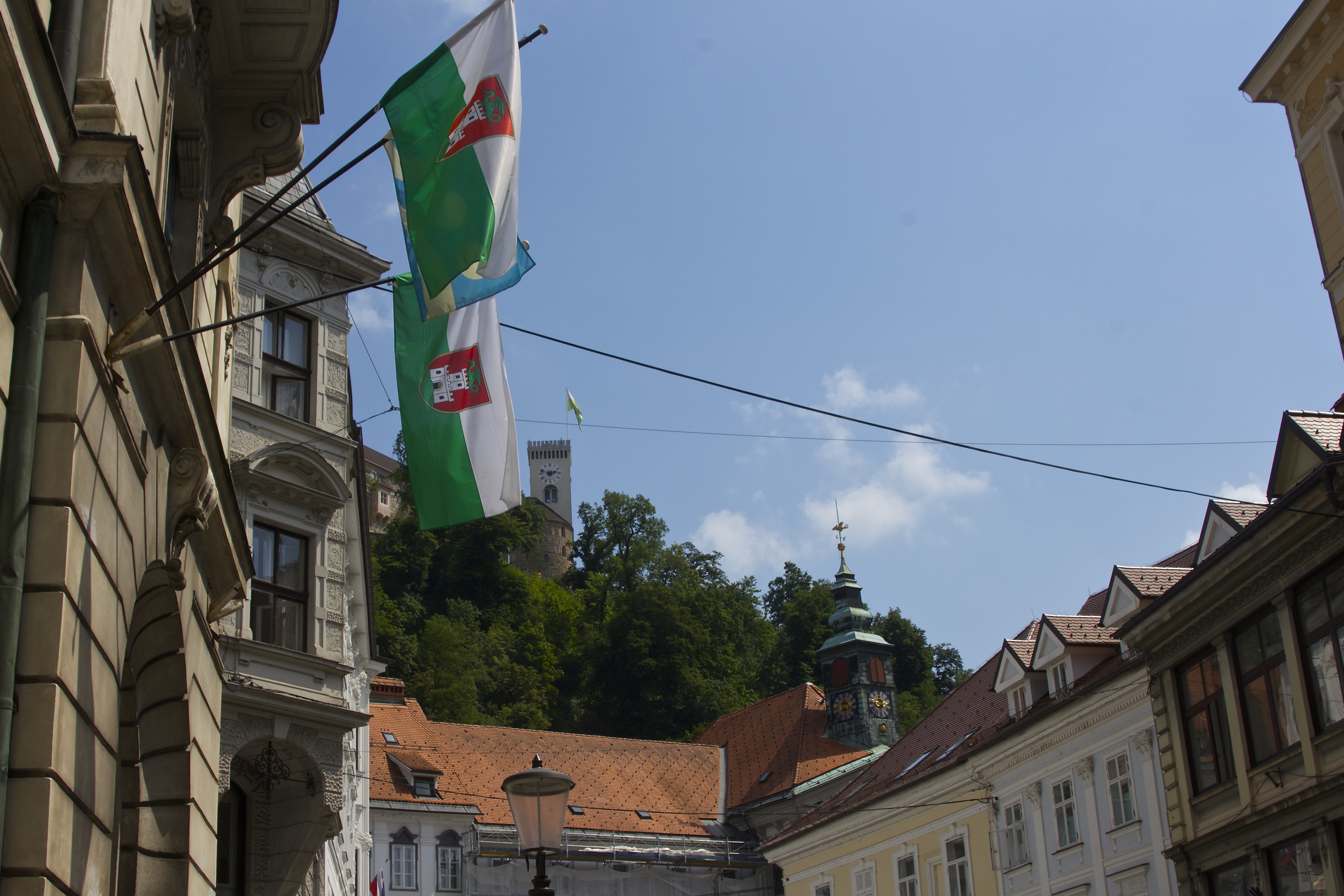
The last time I was in Ljubljana was in 1997, making a film about Europe’s most liberal prison system, where even the Slovenian equivalent of our Category ‘A’ prisoners go home for the weekend and work in hot metal workshops. They have much lower recidivism rates as a result of treating prisoners like redeemable human beings. Filming in the top jail, I walked by their most famous serial killer, freely strolling in the garden. The prisons minister at the time gave me the Lonely Planet book on Slovenia, which I am still travelling with. Their proud, new-found nationalism was in no way threatened by their joining the European Union, and the capital I lunched in today has continued to grow as a city, unsullied by the foreign hordes little Britain fears so, and still keen on flying its flags.
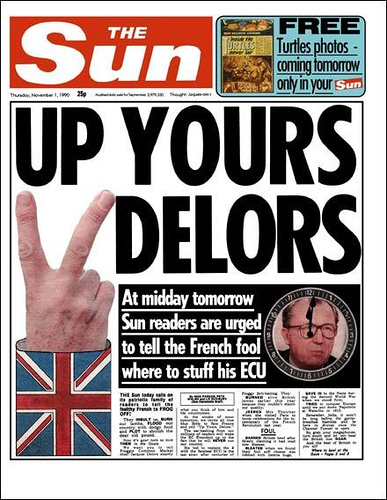
I have also appreciated yet again the benefits of moving from one country to another with a transferable currency – the euro – just as we could up until the 19th century, and the introduction of national currencies. Now in the Croatian capital Zagreb, I am back out of the Eurozone, struggling with one day of Croatian Kuna, before passing through Serbia’s Dinar to the Romanian Lei. Spanish ‘pieces of eight’ were one of the key drivers opening up European trade five hundred years ago. The euro has done the same over the last sixteen years. I travelled in Europe in the summer of 1990, researching a BBCTV documentary I made with Mike Phillips on Europe’s attitudes to migrants in the run up to the implementation of the Schengen Treaty in 1992. I was awarded a grant for that research from the European Fund of the then EEC, and got the cheque in ECUs (European Currency Units, which pre-dated the euro), signed by the Commission’s then president, Jacques Delors. The money, the research, the film and its message, were all reflective of the view that we are all bigger, better, morally as well as economically, together rather than divided. The Sun is famous for its 1990 headline “Up Yours, Delors!”, opposing plans for European federalism. The upcoming referendum will decide which we are: big-hearted or bigoted.
 peterleewright.com