
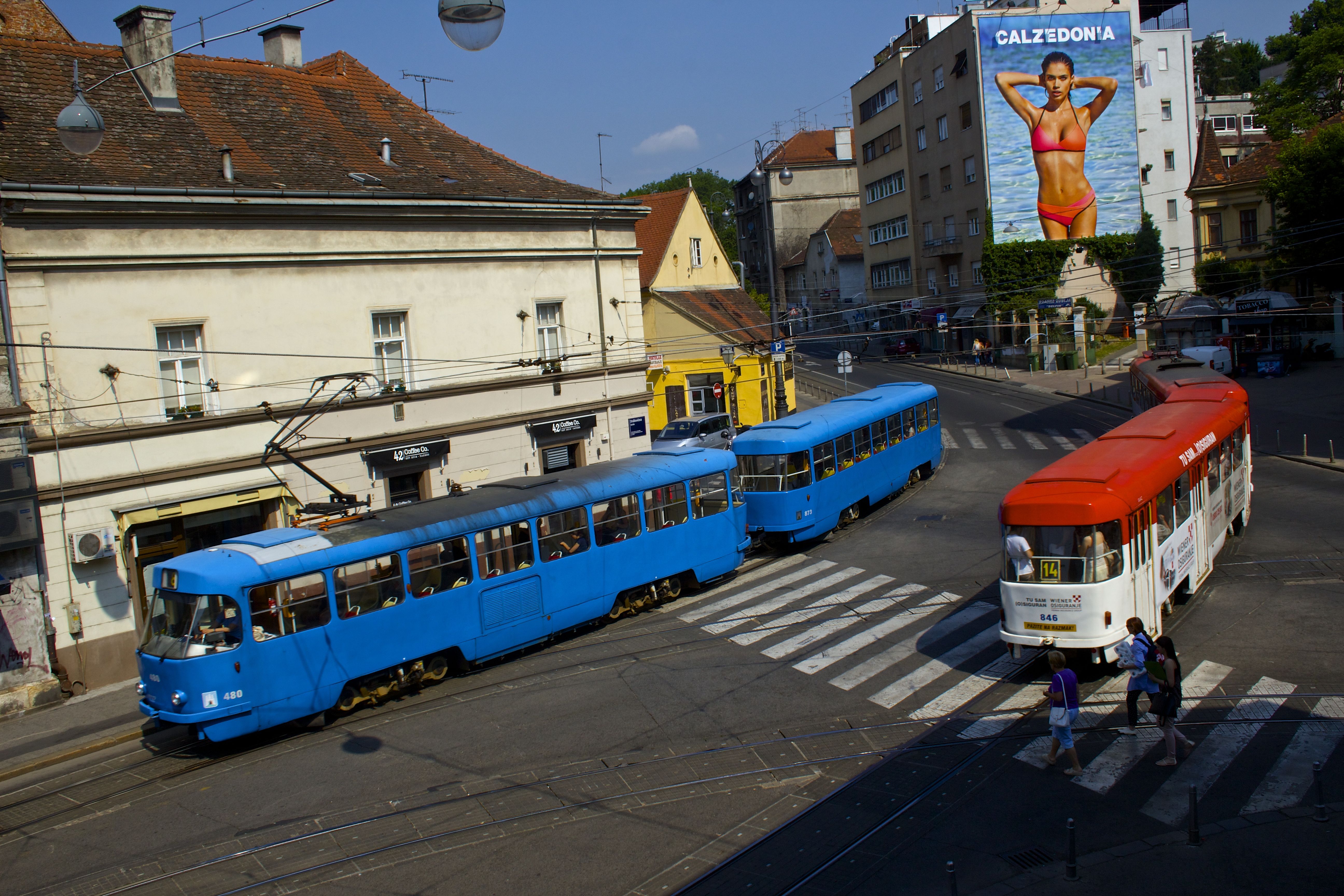
Croatia was the latest – the 28th – country to join the European Union, in July 2013. They like to herald the fact that in their referendum 66% voted for joining, but only 44% actually voted, meaning only 30% of the population expressed a positive endorsement, so they suffer from similar levels of political disengagement to England. Their economy is far from healthy and I had read that many of the young are disillusioned and leaving. I found this to be true.
The hotel receptionist said her name was Vanya. I wanted to say “Oh, Uncle Vanya”, but I decided to leave that to Check-out. (OK, she may have said Ivana, but I am sticking with the Vanya I heard.) She was extremely pleasant, polite and helpful, until I asked for a local restaurant recommendation. She showed me where there were several on the town map. “None in particular?” I asked. Then the seething resentment popped out from beneath the professional visage. “They are all full of tourists. To you they are cheap. They are too expensive for us, so I have never been.”
I had already noticed that bars and restaurants here tended to be frequented by groups of men or older couples. Our urban phenomenon of young things out for the night was not apparent, endorsing Vanya’s view of disenfranchisement. Of course, when I was young in Britain – and when I first travelled in Europe – I too was not able to eat in restaurants. Takeaway was the very best we could aspire to, mostly making do with bread and cheese and fruit. Even my parents never ate out. So the indulgence we now take for granted is relatively recent, and yet to reach this part of the world.
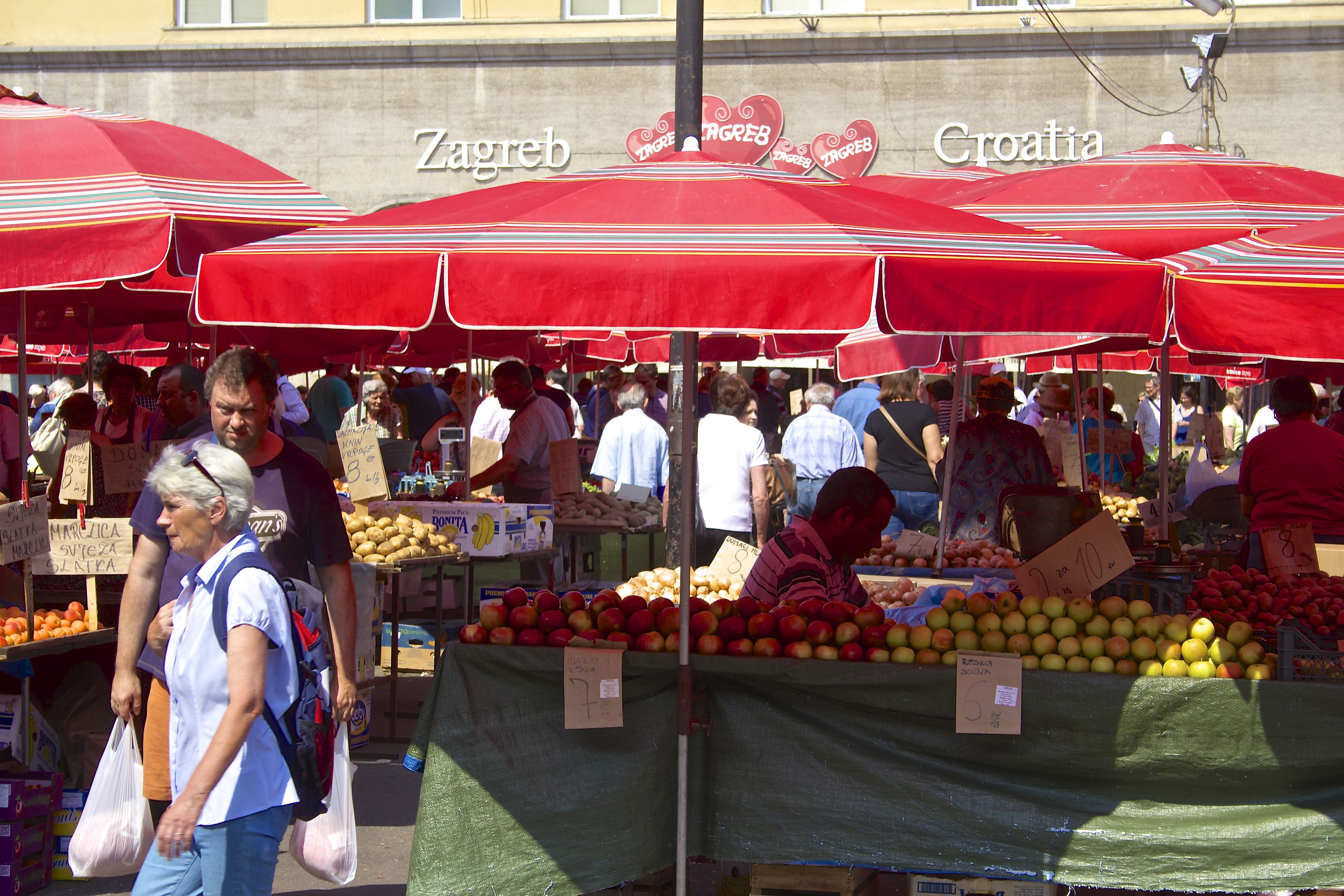
It will apparently be some years before Croatia can meet the convergence criteria to join the Eurozone, by which time Vanya tells me she will be in Canada, where opportunity is for everyone. In Croatia, she says, you have no chance without rich parents. I explained the same was happening – at least in many of the desirable professions – in Britain, where unpaid internships excluded those without family support; but for her I remained a representative of the Haves addressing the Have-Nots, the same problem we – and particularly the Labour party – have with parliamentary democracy. With the growing number of people being dispossessed and marginalized in our society, they are unlikely to feel much exercised by the In-Out question; but – if I were UKIP (I am not) – I would attempt to turn the referendum into a vote on the current inequable system, suggesting it is an opportunity to reject ruling class preference.
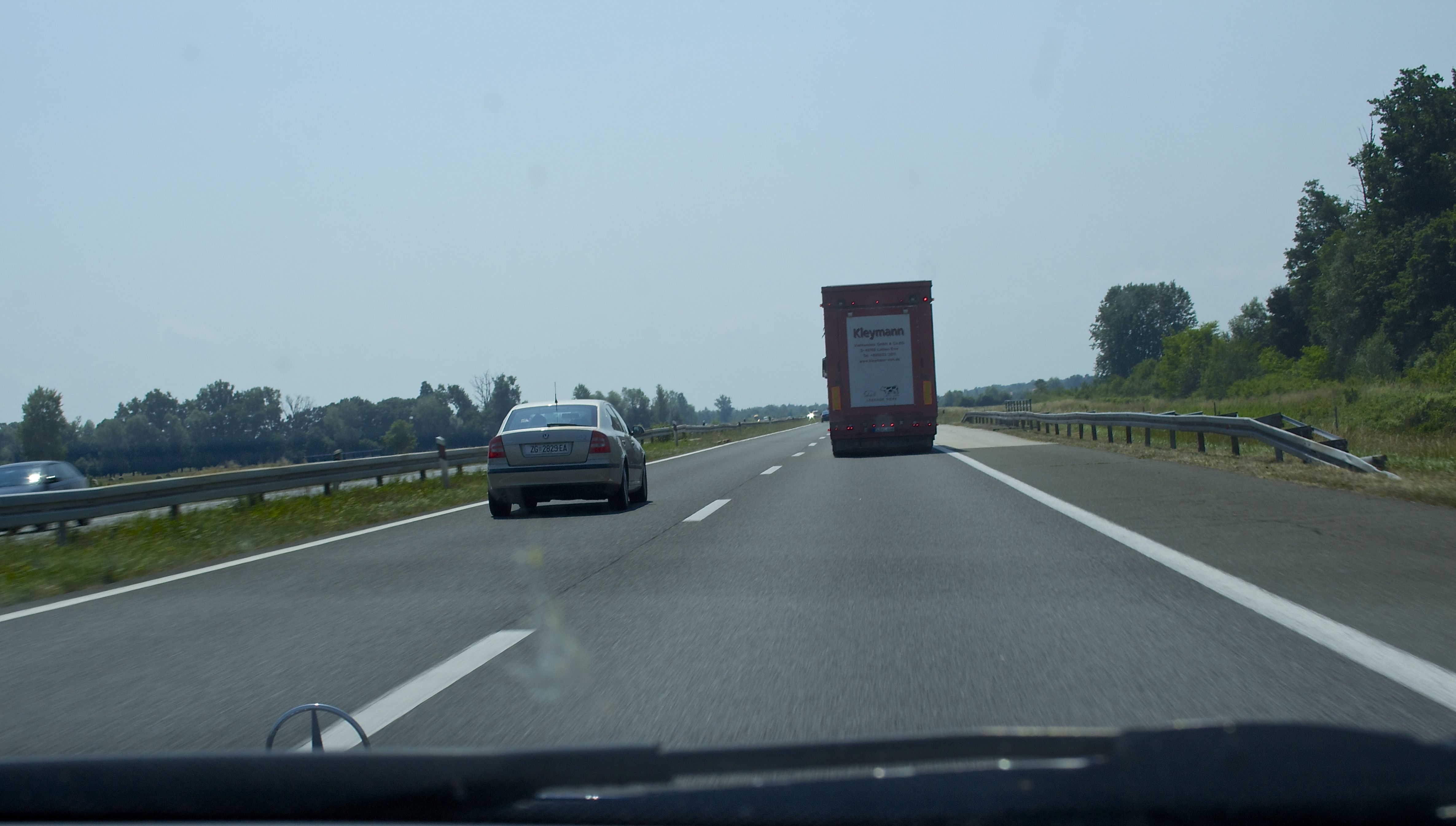
Today I drove the long, straight, flat 400 kilometres from Zagreb to Beograd. The last time I travelled this road, in 1968, it was an ordinary single carriageway road, despite then carrying most of the heavy goods and human traffic from the West to South-Eastern Europe, Turkey and beyond. As a result, it was a death trap and the verges carried many memorial crosses to the fallen, often adorned with the steering wheels salvaged from their wrecked vehicles. Today, the crosses have gone and it is one of the quietest motorways I have driven in the last 1200 miles. You could virtually set the cruise control at 130 kph (the European standard = 80 mph, not 70 mph) and watch the road dissolve apparently into water as the 30 degrees temperature built.
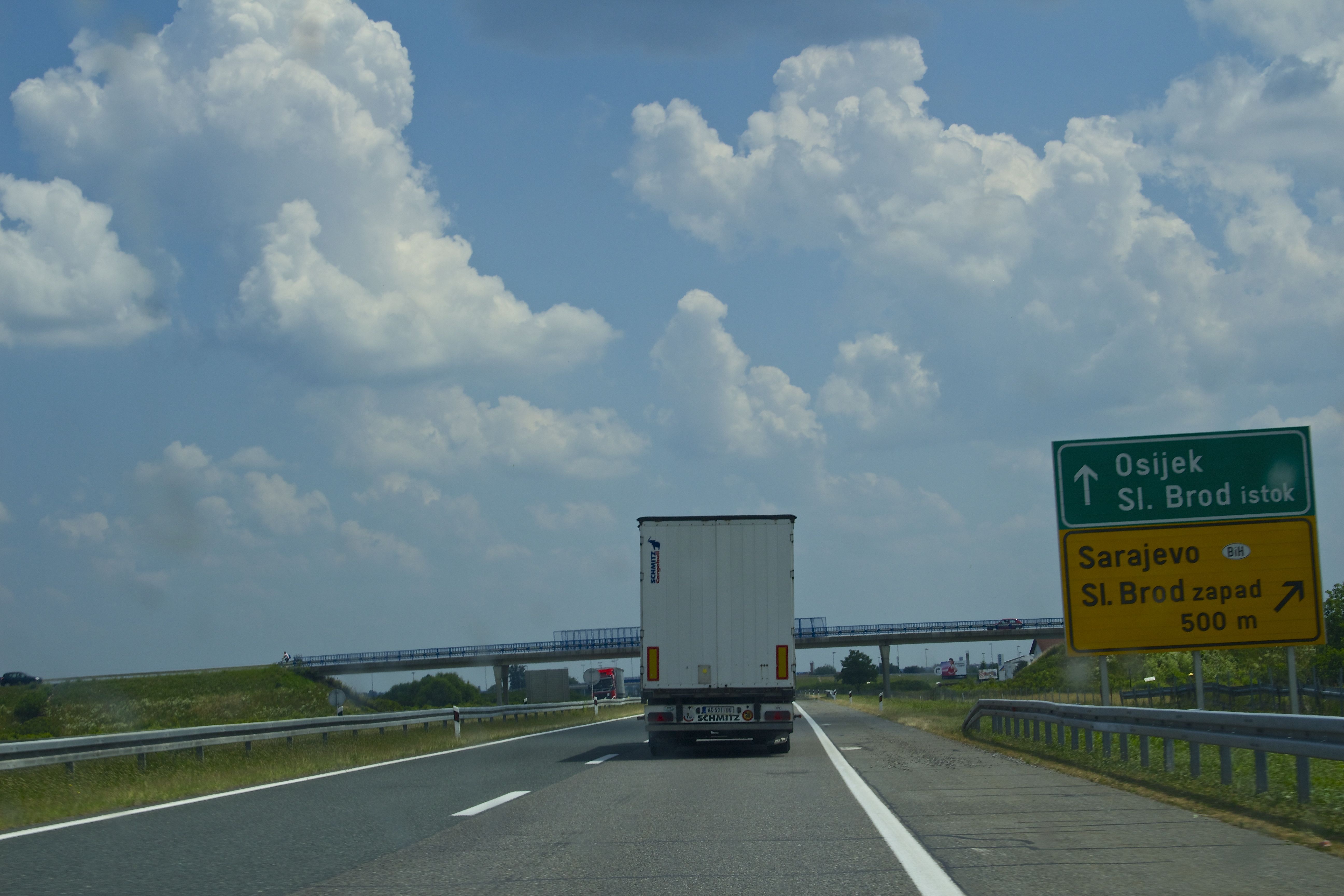
47 years ago, I got to the mid-way point on this road and was clearly not getting to the city we called Belgrade that night, so I took a bus into the nearby town of Slavonski Brod, asking if anyone aboard could tell me where I could get cheap lodging for the night. A delightful Yugoslav girl said I could stay with her for free, which I did. (I never got such invitations in Salisbury, but then I never took the bus there.) Although I didn’t keep her contact address – as a gauche youth I kept no such souvenirs – I decided to make a return visit to Slavonski Brod today, to see if it was still the same featureless town in the middle of nowhere. It is, though no worse than a thousand other towns throughout Europe. As we know, you don’t judge countries by their capital – London is hardly representative of Britain – you take the temperature in towns like this.
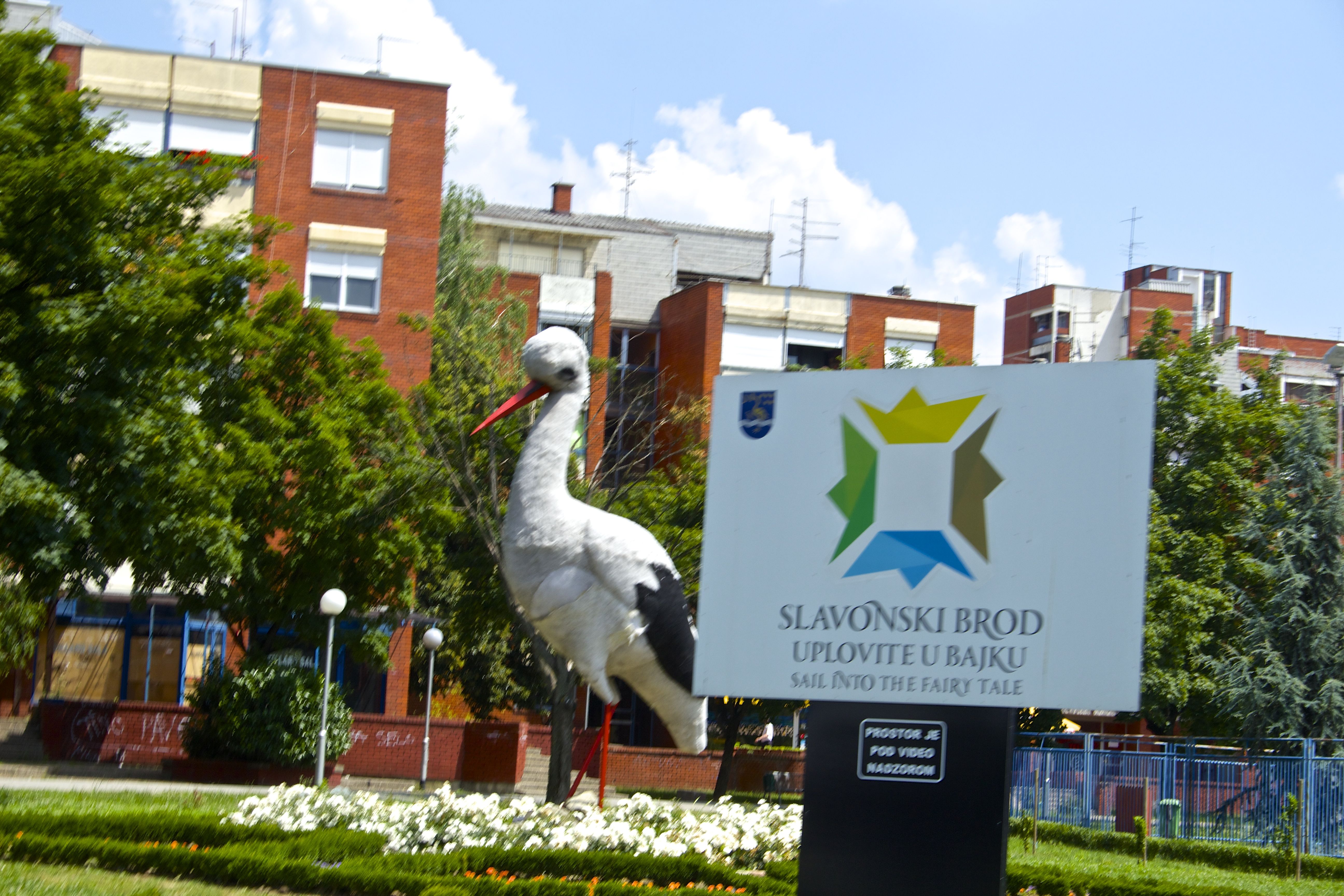
I am not sure about the fairy tale, but Slavonski Brod is a sleepy, leafy town on the River Sava which looked quite pleasant on a hot afternoon, with even the Communist era flat blocks humanised by children playing happily in their paddling pools. But I did notice a significant number of working age males around, clearly not working. Gora, the 30-something bar-tender at the Iguana Café/Music bar, told me that the EU was not working for them. He has a wife and two children. His apartment costs him 3,000 kuna a month, just about what he takes home from the bar job. He has to do a second fulltime job to make enough money for them to live on. So the optimistic EU billboard standing in front of these flats represents a triumph of hope over reality, and the persistent failure of trickle-down economics, where the trickle never seems to reach those who need it most.

It was around here I began to recognise place names on signposts which conjured up dark recent history, Sarajevo for instance. I was last in Beograd in early 1993, at the height of the Balkan war which cost some 100,000 lives, the worst conflict to disfigure Europe since 1945. I used to produce a series for BBC2 called Open Space, whose job was to air experiences and opinions given short shrift elsewhere in the media – a programme and a liberal concept long since defunct. Bellicose Western media and politicians had managed to reduce this complex conflict to the usual simple binaries, which had cast all Serbs as bellicose thugs, to some extent exonerating other belligerents. The news machine’s demand for a simplistic narrative had so distressed their East European correspondent, Mischa Glenny, that he had recently resigned.
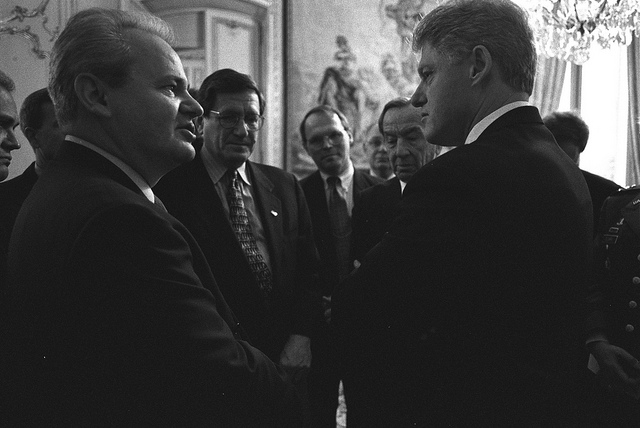
An open letter from an émigré journalist to the Serb President Slobodan Milosevic in the Guardian had expressed the angry view that he did not speak for all Serbs, like her and her Croat husband, a marriage which was a classic expression of Tito’s federalist Yugoslavia. I thought this attempt to recognise internal intellectual dissent in Serbia was not only a valuable corrective, but a classic example of my programme’s editorial objective. So we went to film, albeit that sanctions meant that I had to smuggle film stock in overland from Budapest. We still shot on 16mm in those days, and I was able to hire a six-man Serbian crew for the cost of a two-man English video crew. The writers and academics we met were all too keen to talk, and the film was duly shown under a title chosen with my characteristic taste for understatement: Blood in the Air.
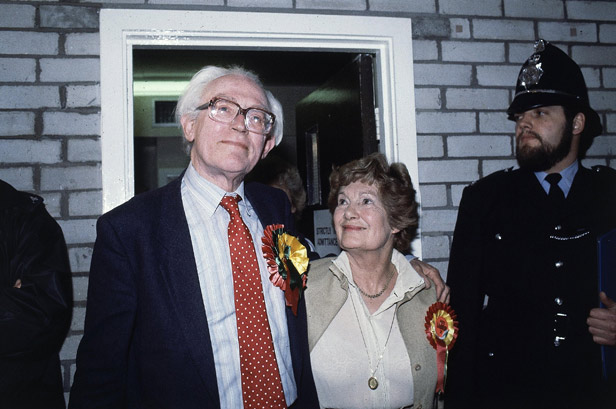
However, so entrenched in Britain was anti-Serb feeling that people, led by former Labour leader Michael Foot’s filmmaker wife Jill Craigie, that they pressured the BBC to commission and show a response, ie a corrective which re-established the dominant narrative. It was a betrayal of the principle for which Open Space stood, and I am glad I had by then left the BBC.
I have yet to establish whether, 20 years after the war, Serbs still feel aggrieved at the extent to which they were vilified by the West, when there were so many bad people doing bad things on all sides. That history is clearly what has helped stymie thus far Serbia’s protracted negotiations for membership of the European Union. Crossing the Croatian-Serbian border brought back how painful movement in Europe was before the Schengen Treaty. The queue for cars leaving Croatia was only about ten to fifteen minutes, but the truck queue stretched for over quarter of a mile and would obviously take the rest of the day to clear, as the drivers snoozing on the roadside recognised. One German car driver had failed to grasp that the photo ID which allowed him to drive freely around Europe would not let him pass, as became clear. Entering Serbia, I was quizzed about what I might be importing, but let go quicker than many others around me. Once in Serbia, the quality of the motorway surface and road furniture was redolent of pre-EU standards, or of British A-roads since the shredding of public finances. Beograd is as vibrant as ever, but bomb damage still leaves an ugly scar on the landscape, which is undoubtedly also reflected in psychic damage to the national soul.
 peterleewright.com