
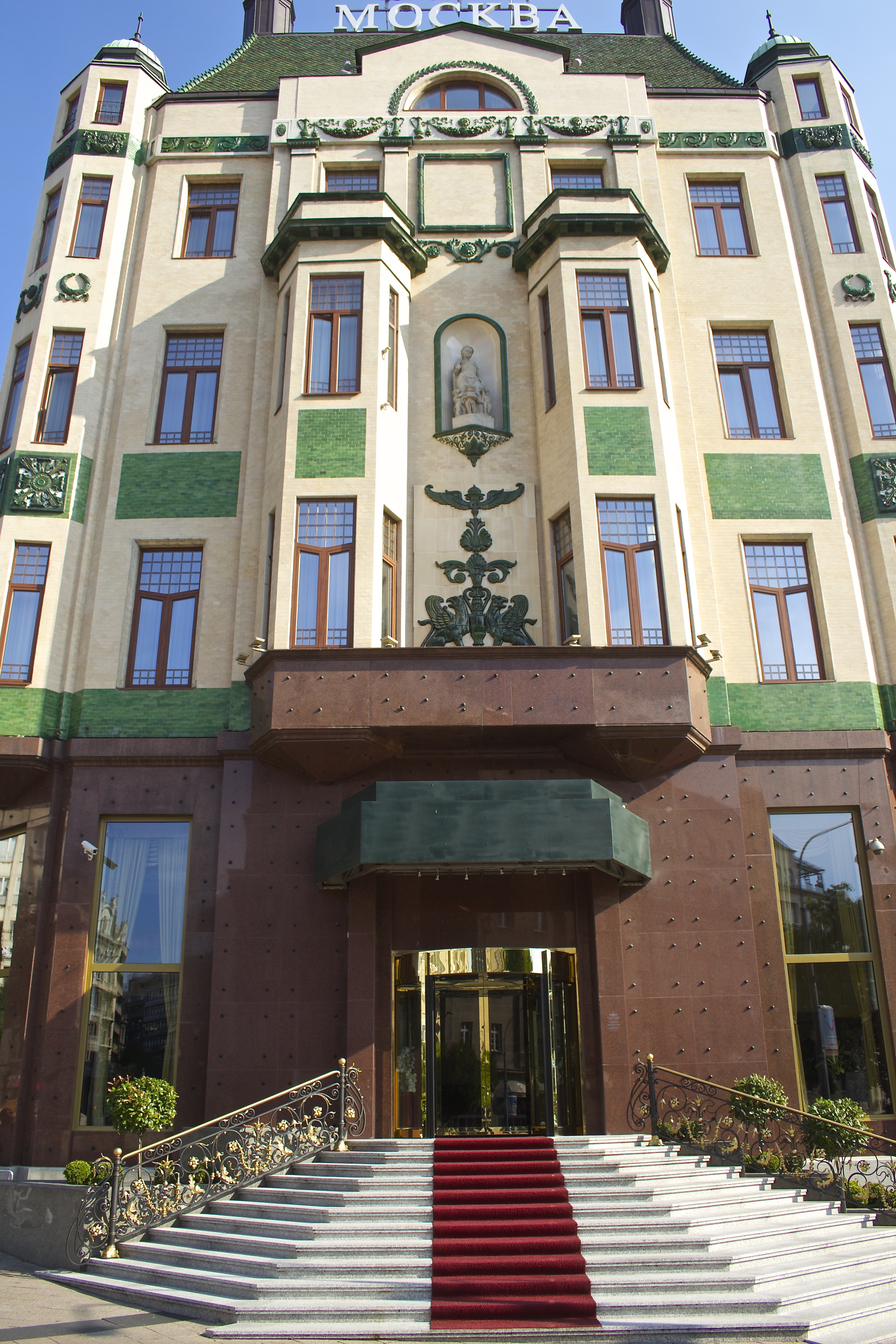
Sterling’s newfound strength in Europe made a stay at Beograd’s best Communist-era hotel, the Moskva, an acceptably modest indulgence, red carpet and gargantuan breakfast included. Not only did the nomenklatura stay there but so – according to the portraits which line the corridors – did a galaxy of stars, from Monica Vitti to Laurence Olivier. According to the front desk manager, S—–, this was the golden age. He spoke of Tito’s ability to attract foreign capital. Since Yugoslavia’s break-up and the Balkan wars, he says nothing has gone right. He doesn’t even think Slovenia is doing well from the EU, but was certainly behind delaying Croatia’s entry and blocking Serbia’s. He reckons it will be at least ten years before they are admitted. In the meantime, he says, they will have completed a motorway through Hungary, Romania and Bulgaria, to by-pass Serbia and keep traffic within the EU.
As I commented yesterday, you see the lack of traditional EU investment in roads and infrastructure. But once I had penetrated the officious border controls at Vrška Čuka – Bulgarian border police deeply dubious at my lack of car registration documents, as if as a car smuggler I would bring in a clapped out 13-year old Mercedes – I was immediately reminded that Bulgarian roads are no better. Two years ago I damaged an axle touring Bulgaria in the only car fit to take on these roads: a hire car.
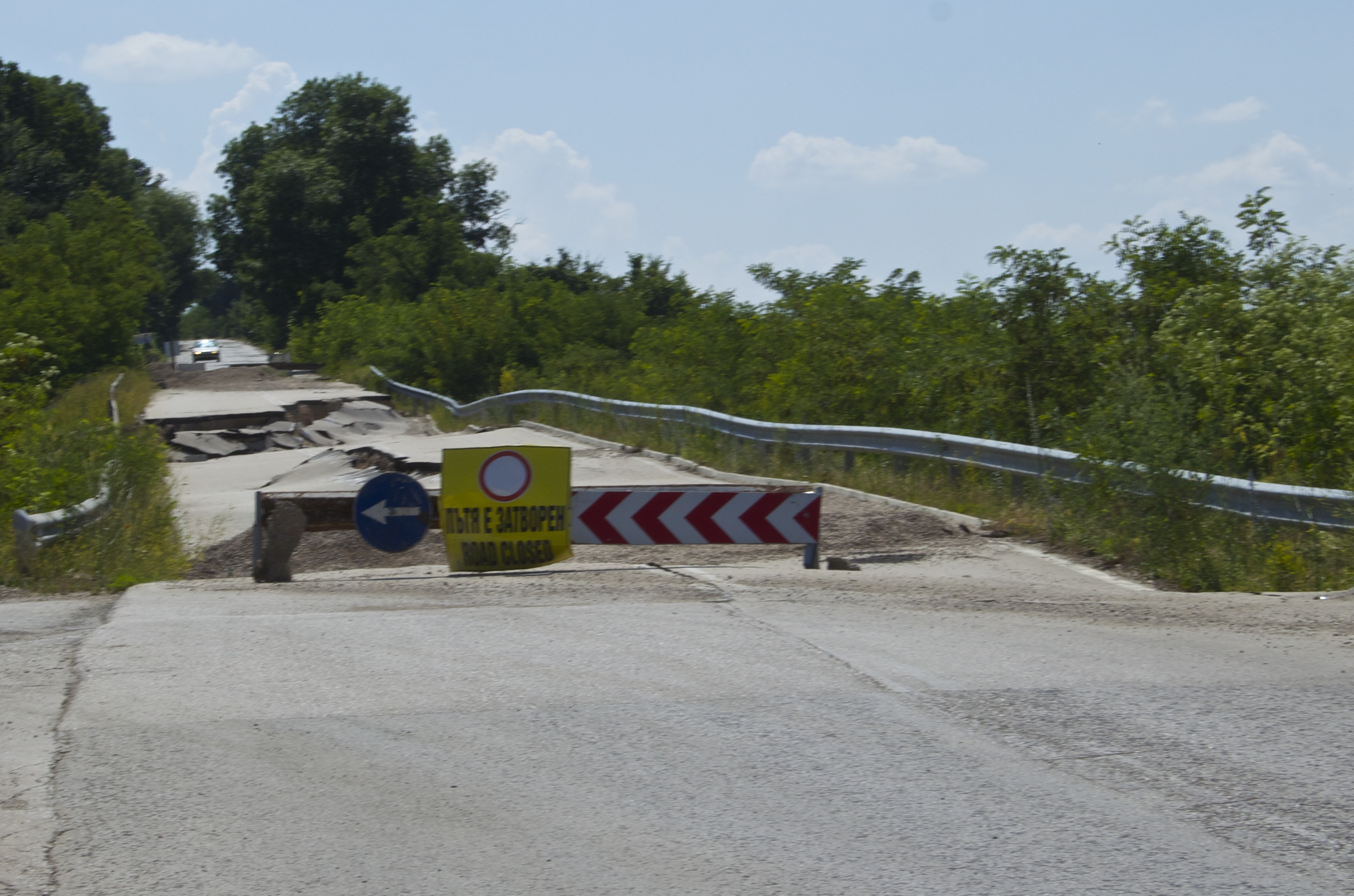
Today it was my own suspension taking the hammering. This road collapse was only the most extreme stretch of what the French delightfully term a chaussée déformée. The New Europe toll Bridge over the Danube at Calafat is an icon of what European investment can deliver. Originally estimated at €99 million, it opened in 2013 having cost €266 million, yet there was still a huge long queue of trucks waiting to cross from Bulgaria into Romania. The 88 kilometre road from there to Craiova was obstructed by constant roadworks, all showing recognition of EU funding.
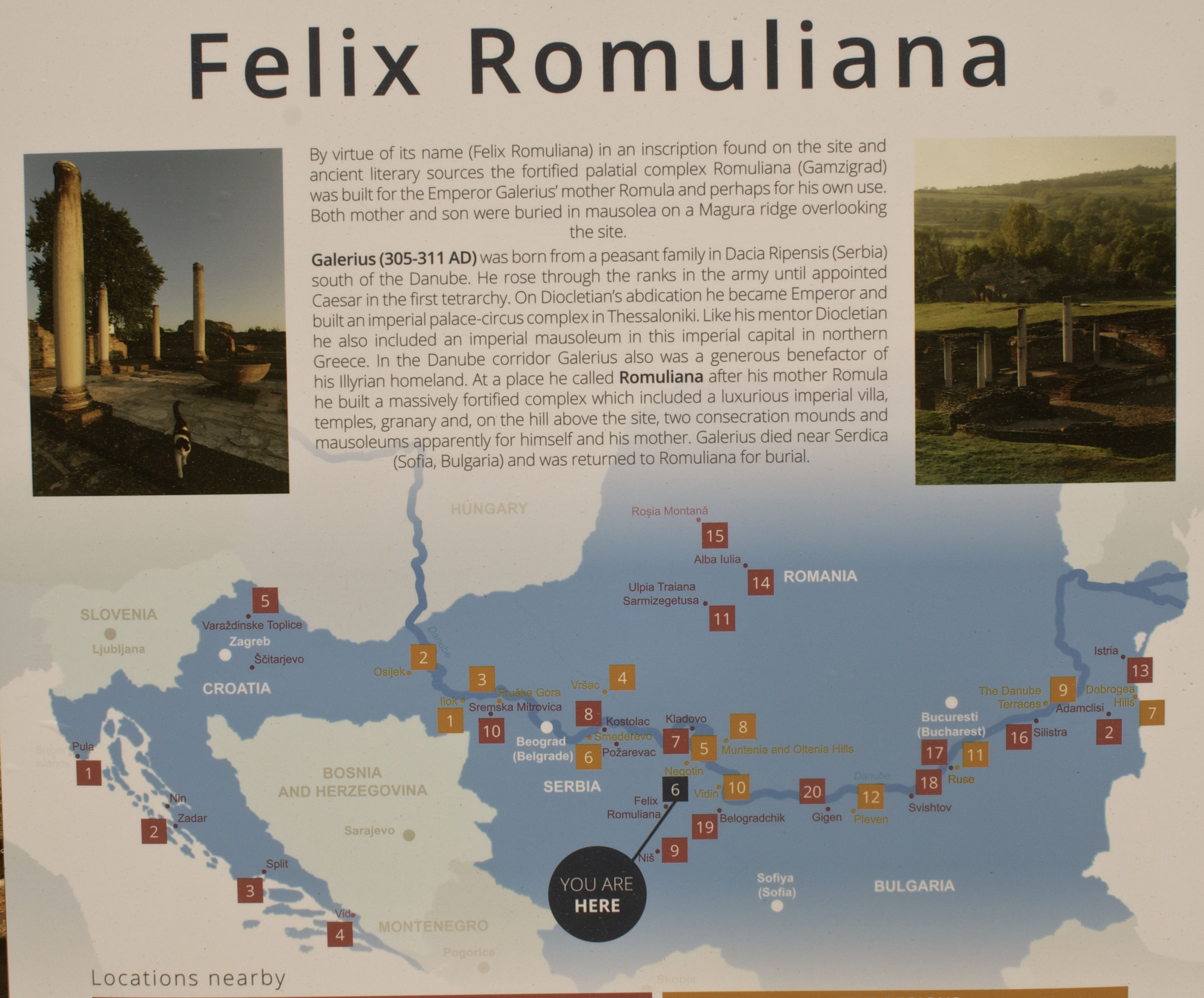
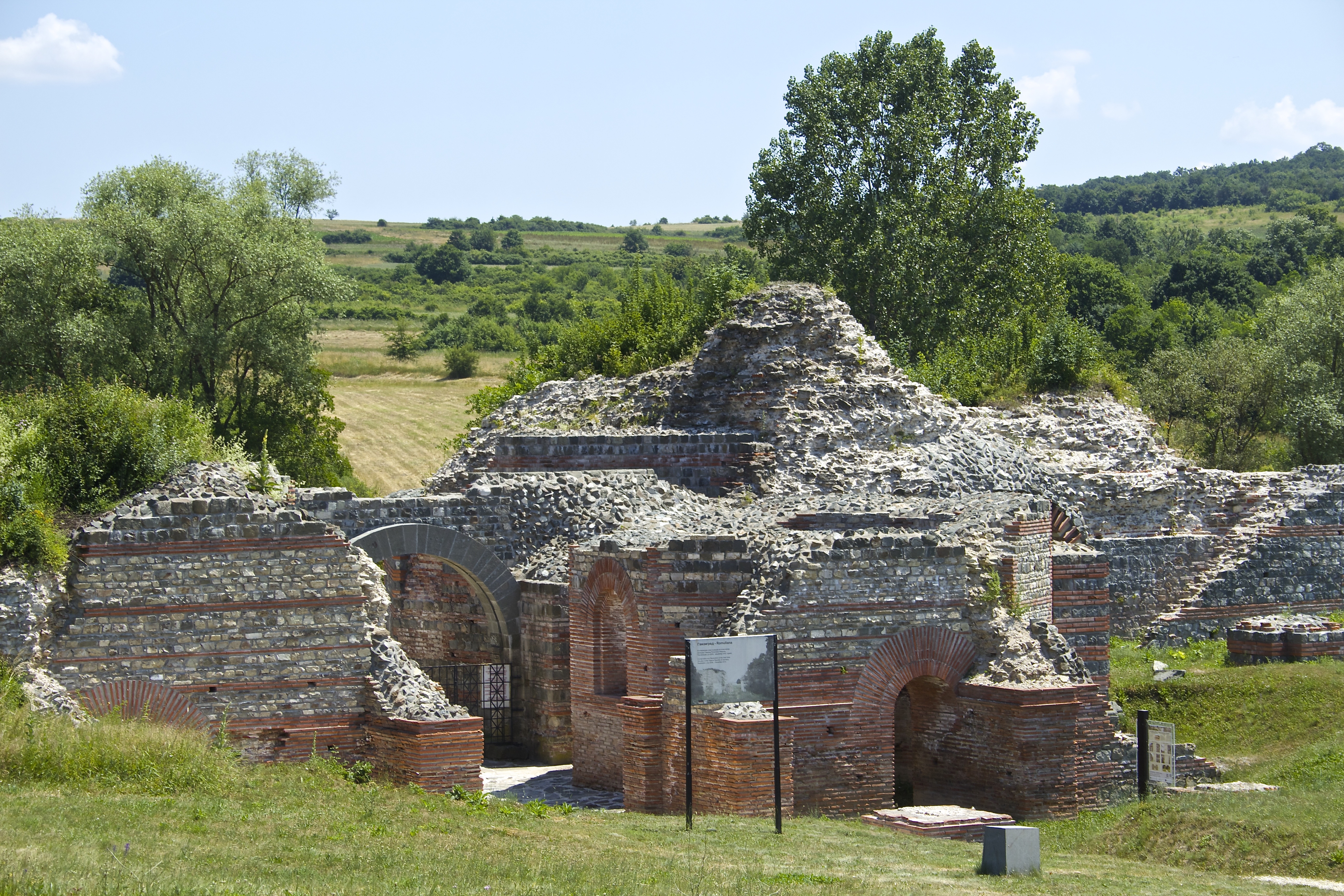
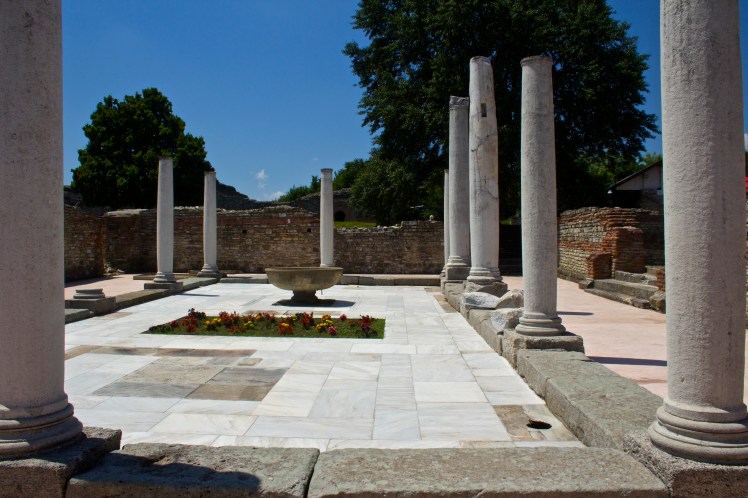
My route unintentionally paralleled the Danube wine tour, which also reflects the Roman investment in protecting this northern bulwark of the late Eastern Roman Empire. I took a side trip to the gigantic 3rd & 4th century fortress, temple and palace complex, Felix Romuliana, named for the Emperor Galerius’ mother, Romula. A UNESCO World Heritage site since 2007, it is well maintained, if rather crudely presented, and appears to have some of the most significant standing walls remaining from the period. But a sign crediting the German government with helping fund the ‘stabilisation and reconstruction’ of the eastern gatehouse (below) suggests quite a bit of re-building has been going on, an approach to conservation some of us disapprove of. (Mind you, I forgot to mention that the Mozarts’ Wohnhaus in Salzburg was largely a rebuild, thanks to the Allies having bombed it to smithereens in 1944.)
Nonetheless, Romuliana got me thinking about the extraordinary reach of the pax Romana and its largely civilising and inclusive ethos. That is also the neoliberal reading of the British Empire championed by Niall Ferguson. At least the payback was that many of its subjects were eventually able to move to Britain to enjoy the founthead’s benefits (before the killjoys started to cry “Wolf!”), as indeed did many Roman subjects. The US empire emulates Rome more in its imperial phase – even to the eagle iconography – by attempting to turn every town centre and country conquered into a corporate desert with a Macdonalds and a Starbucks on alternate corners. (When I first encountered Macdonalds in the States in 1969, it was only famous for cheap burgers (25 cents at the time, delivered fast to the counter, in the time it took you to walk from the door.) Just as Rome built straight roads and similar fortresses everywhere, all US Army camps abroad conform to the same grid plan, even if the sighting of the commissary causes the loss of priceless archaeological relics. Some earlier conquerors tended to be a little more subtle at accommodating indigenous sites and practices to the new rule, as Roman Christianity adapted pagan Celtic feastdays and practices. At the end of the Danube was Romania, then their more pleasant equivalent of Russia’s Siberia, a place of exile for dissidents, like the poet Ovid.
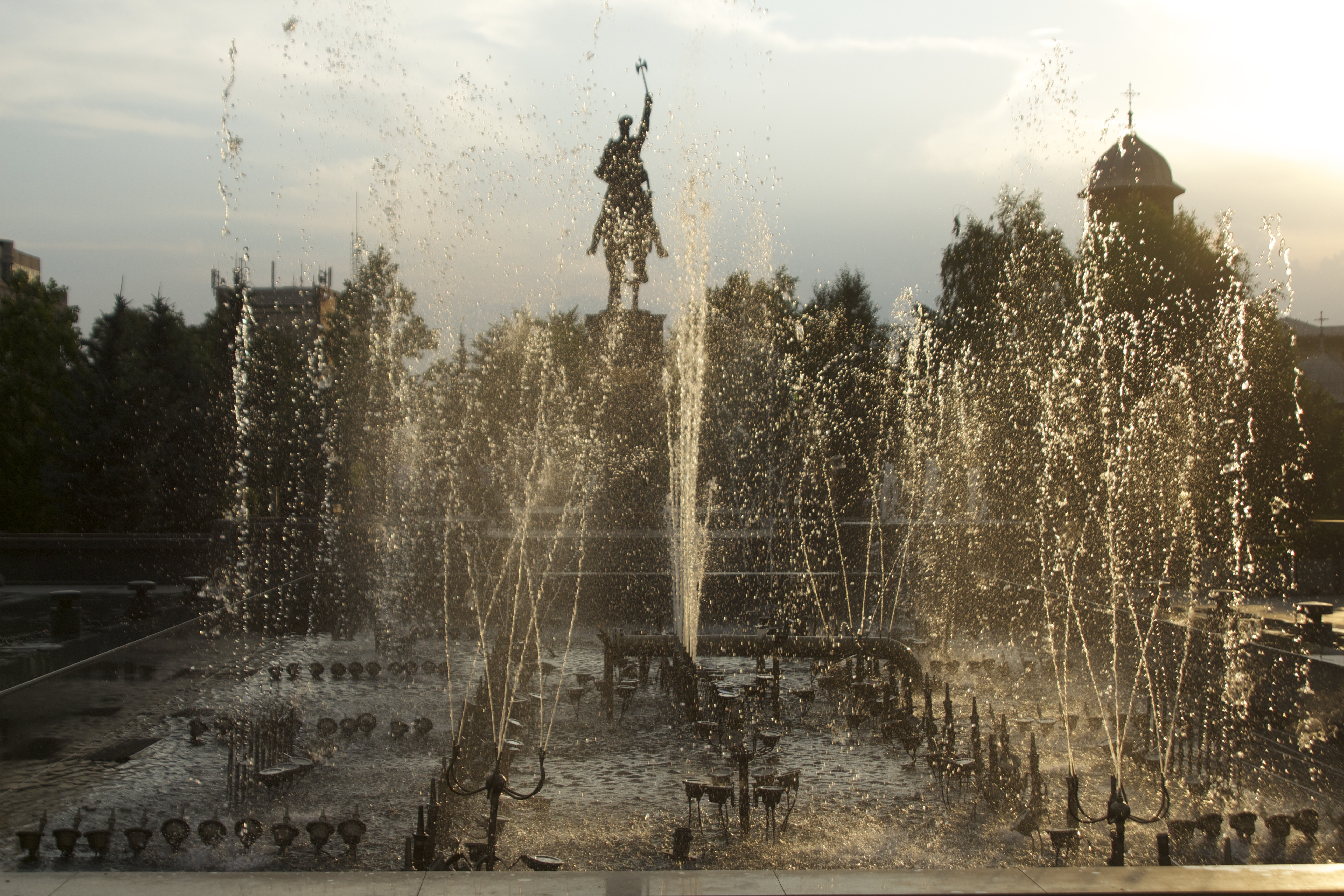
In some sense, the EU follows the same path as the Roman imperium, ensuring a general raising of standards without really curtailing national cultures and differences. Yes we introduced metric measures but no, pace the Sun, we did not enforce a rule that bananas must be straight. When I was young, you did not dare drink tap water in Europe. It was the apparent sophistication of Europe’s dependence on bottled mineral water that gave rise to the overpriced fad for bottled water in UK restaurants, which was no better than the stuff in the tap. Thanks to EU standardization, you can drink free tap water in restaurants all over Europe, and are no longer browbeaten into paying silly money for the stuff. Water may yet become the ultimate causus belli, as the underdeveloped world is short while much of the world’s resources are now controlled by transnational companies, desperate economies being forced to privatize their resources to gain IMF funds. Many countries have lost control of this most essential asset. The Romans were great water engineers, with aqueducts carrying water hundreds of miles. Such pipelines may yet become more valuable and conflictual than oil. Tonight in Craiova, I watched their balletic display of water fountains choreographed to classical music, and hoped that day was long off.
 peterleewright.com