
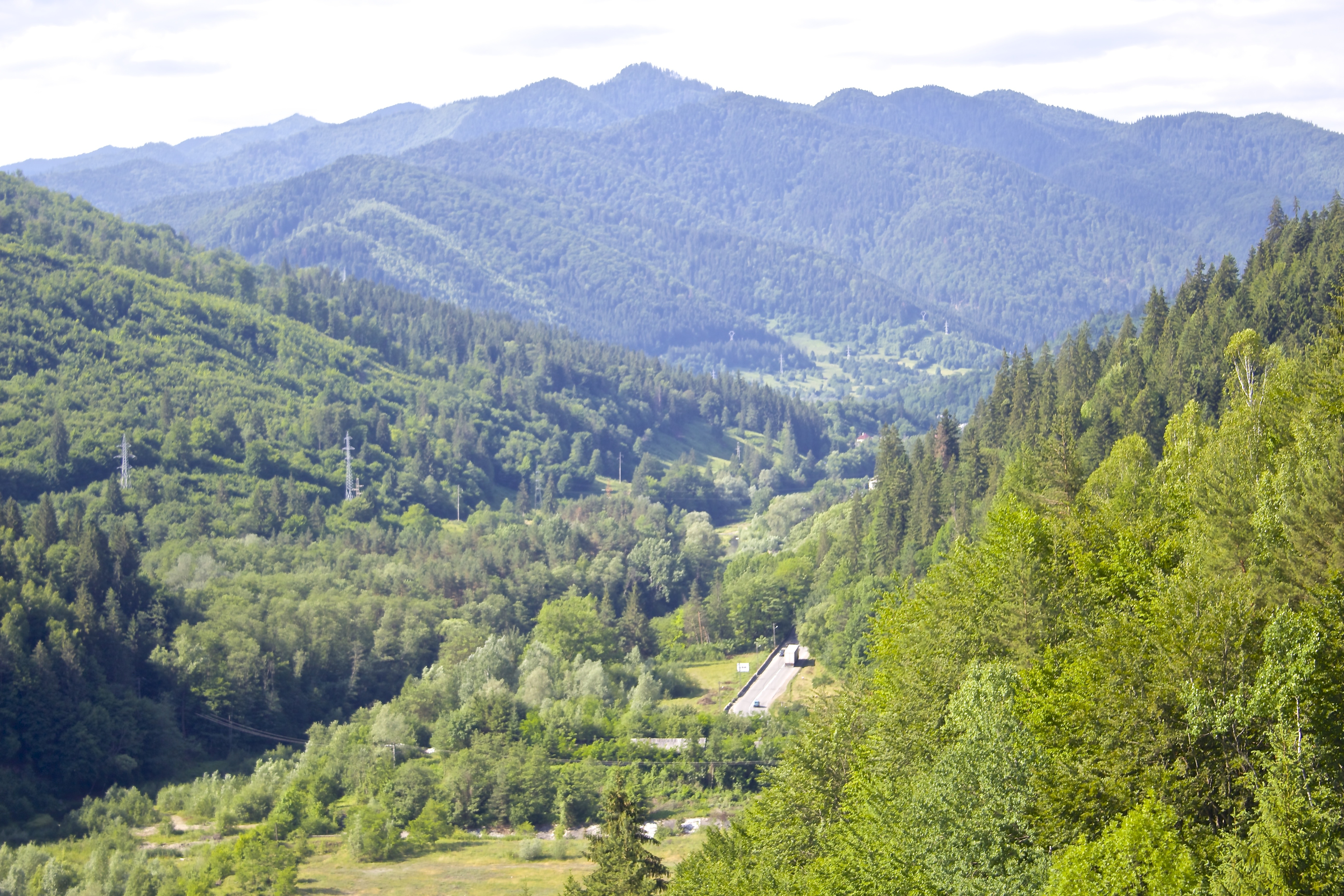
I needed today to remind me what a staggeringly beautiful country – at least in some parts – Romania is. Having spent one night in Transylvania, with my neck still intact I drove over the Valea Postei viaduct:

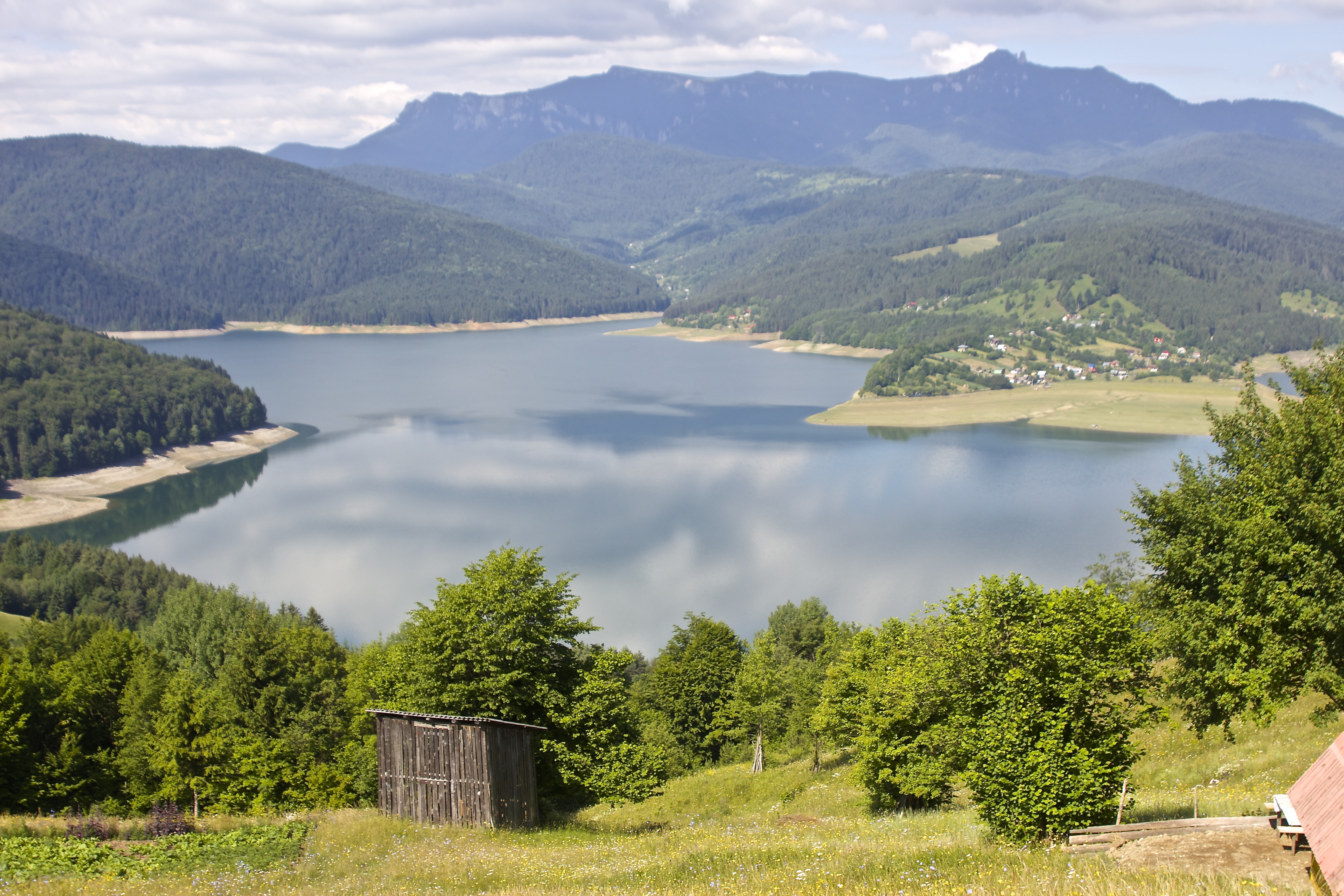
and then along the side of the massive reservoir Izvorul Muntelui, the largest artificial lake in Romania.
I then hit the southern Bukovina monasteries hard, starting with the oldest.
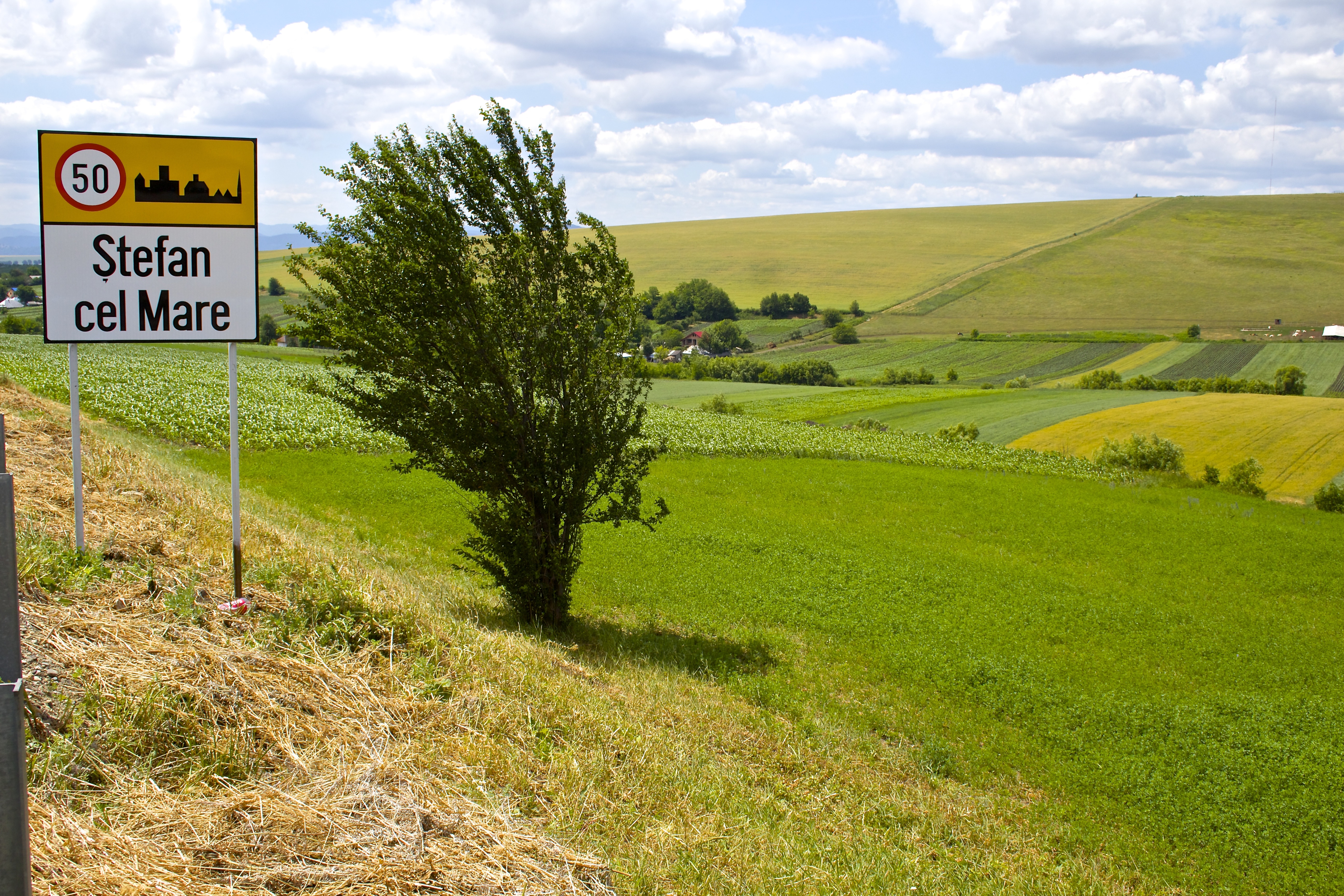
First, it’s time I introduced you to a guy called Stefan cel Mare (Stephen the Great 1433-1504), whose name is more common than any other in Romania. There are at least eight villages called Stefan cel Mare, and a street of that name in every town. He was a warlord who took on the Ottomans and had committed himself to founding a church or monastery for every battle he won, which turned out to be 44, so his was a much more successful crusade than those bigger spectaculars undertaken by Western Christendom.
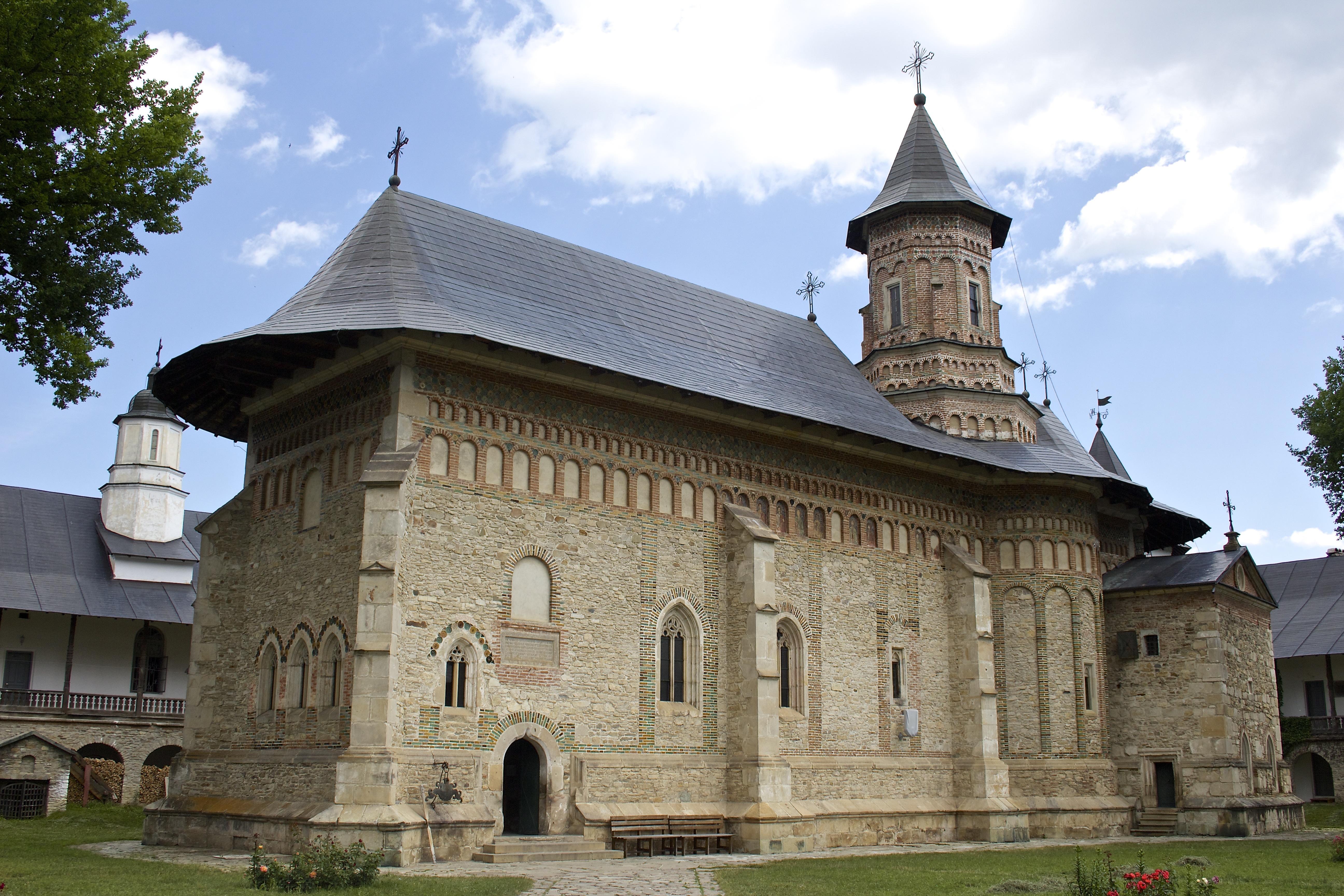
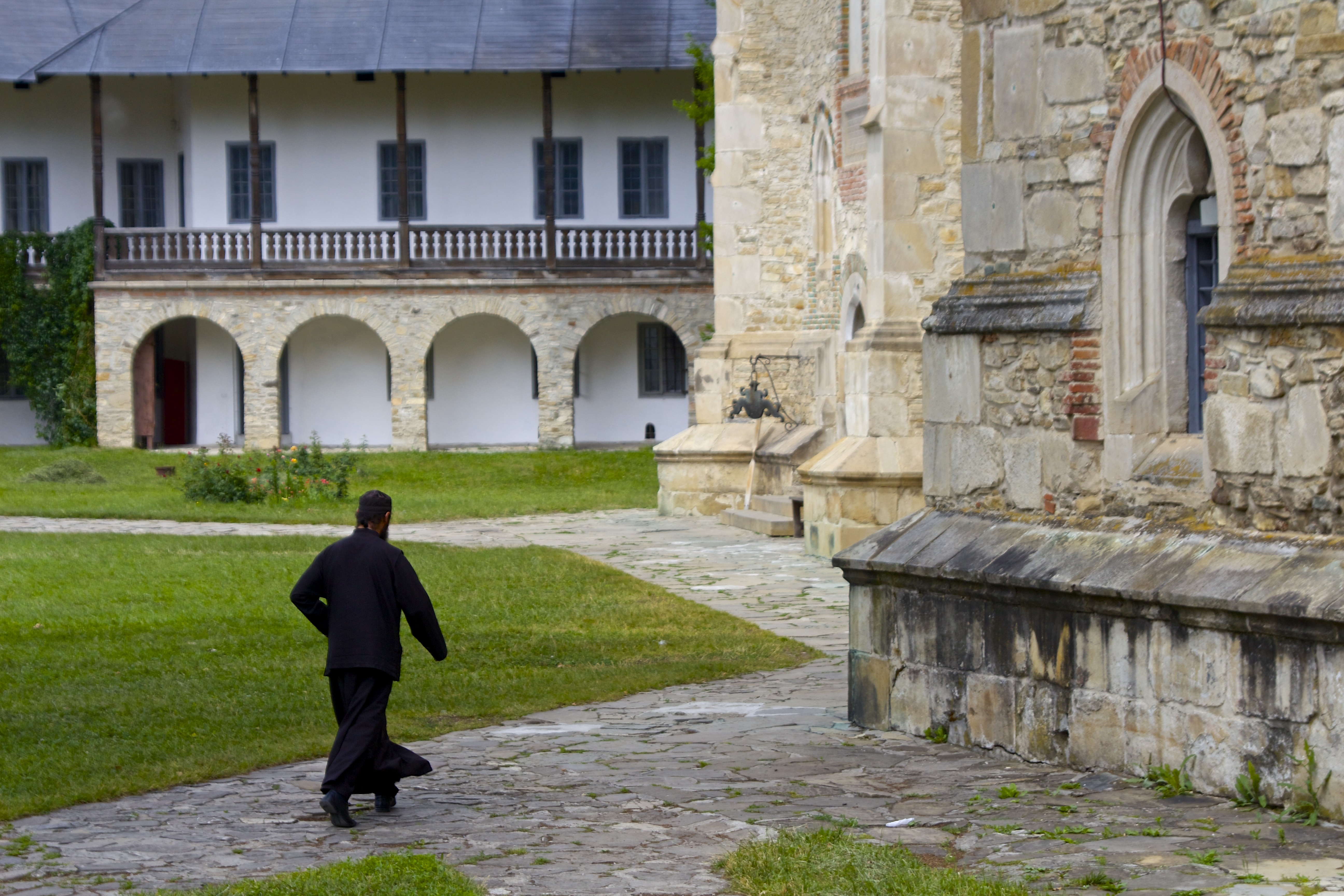
So around victory number 15 was the Ascension of the Lord Church Stefan endowed in 1497, at Romania’s oldest and largest monastery, Neamt. This place reminded me of nothing so much as an Oxford college, with largely older men drifting around and sunning themselves, not unduly oppressed by the cares of the world.
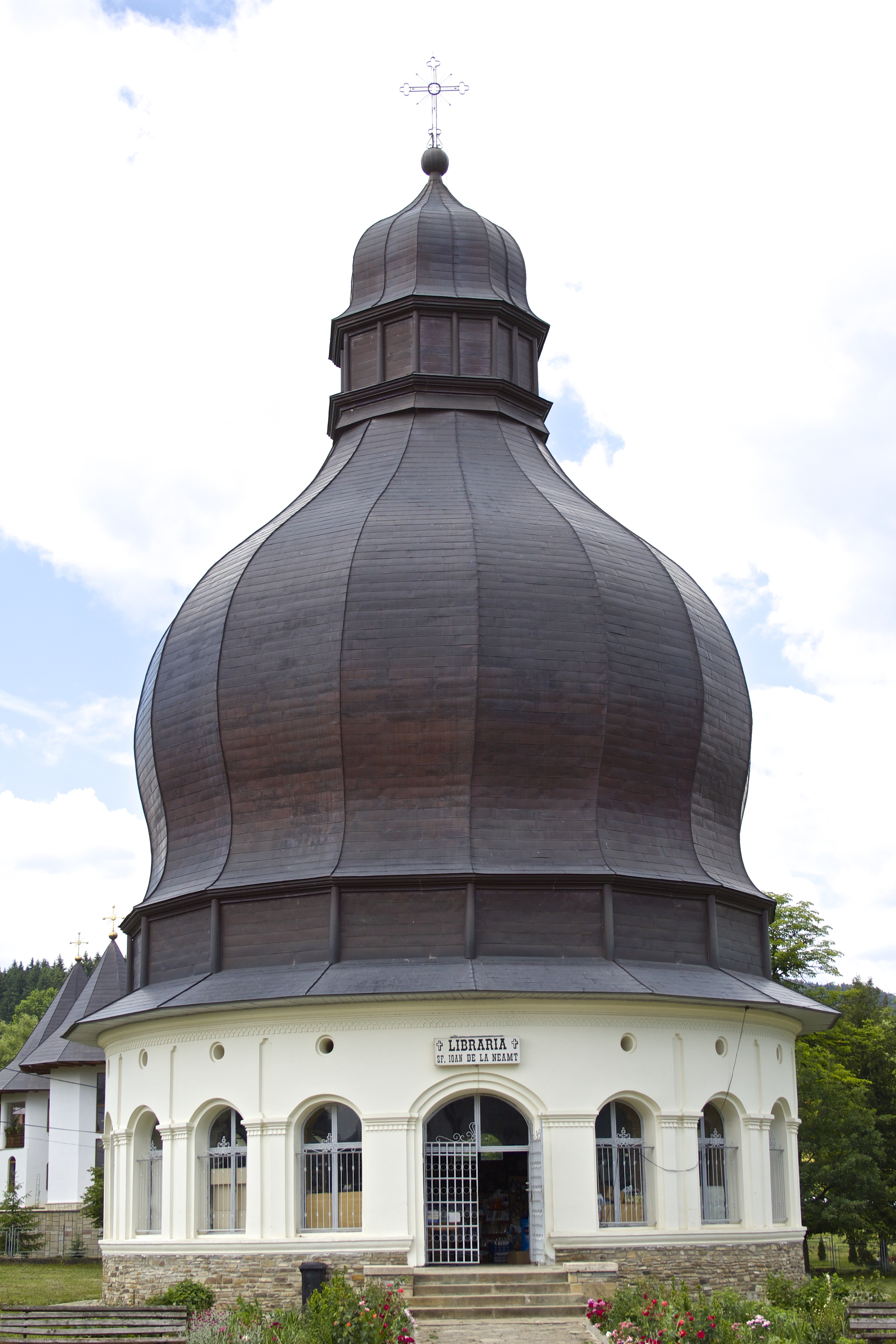
I had to remind myself that Libraria meant bookshop, because it really was full of religious pot-boilers and junk, plus lolly-pops. But they also have a real library, the largest of any Romanian monastery, with 18,000 rare books, which of course I may not photograph.
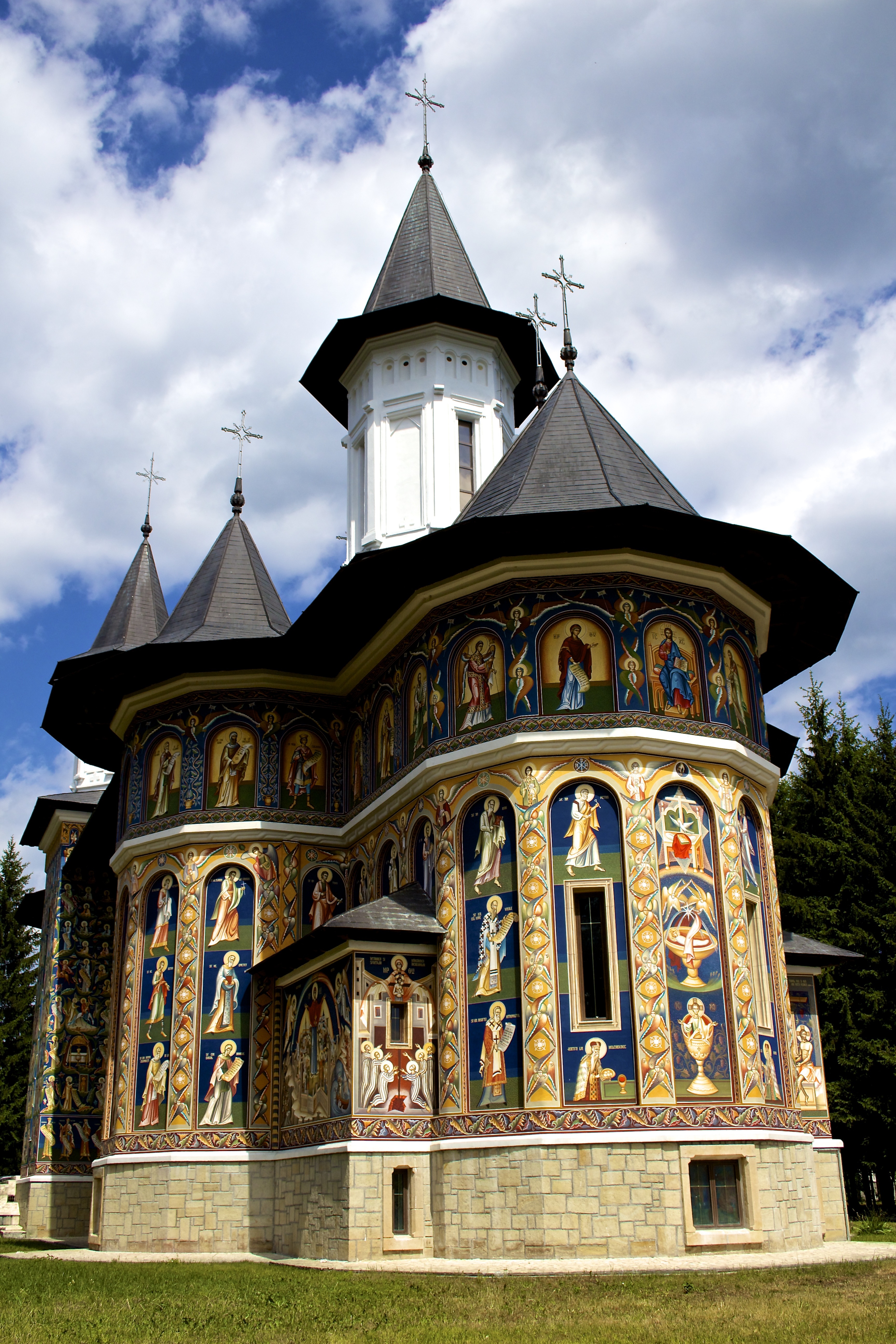
Not content with their substantial 14th century spread, the Neamt monks celebrated the revolution by building themselves a brand new church twenty-two years ago and – unusually, because presumably extremely expensive – dressed this both inside and out with painted frescoes like the more famous churches of northern Bukovina I shall be visiting shortly. Yet to weather in and acquire the patina and perspective of age, I am still minded to think: Banksy, you have a way to go.

When it came to founding monasteries, they didn’t just go for one in each area, but once one sprung up somewhere, the neighbourhood seemed to breed others, like multiplying houses on a Monopoly board. In part, it may have been because these were fortifications, built with outer walls to withstand attack, like here at Secu.
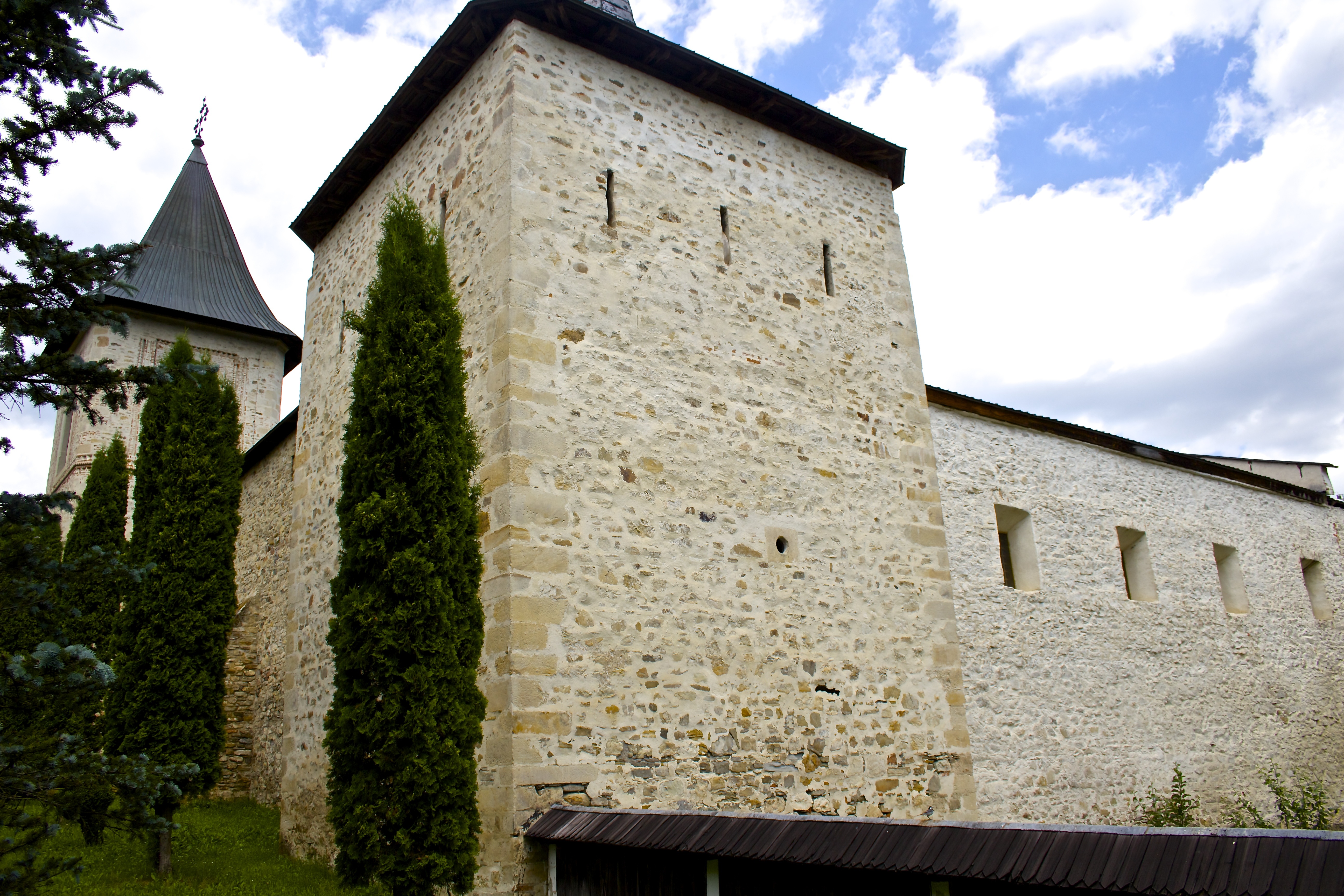
While old monks slept inside:
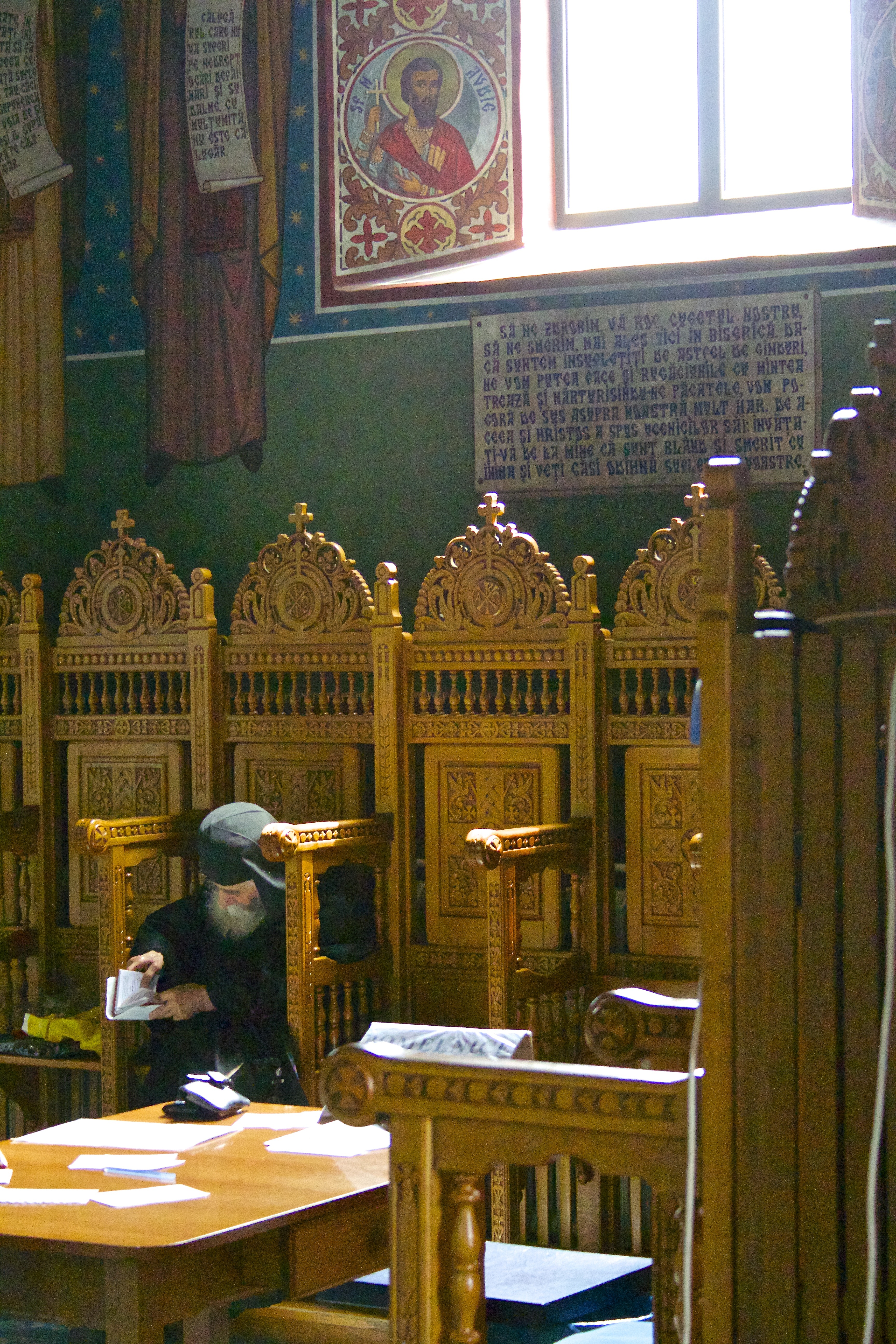
Of course, the Cistercians alone founded 87 abbeys in Britain in the 12th & 13th centuries and the Benedictines over 150 institutions, but we disestablished most of ours while these are still flourishing.
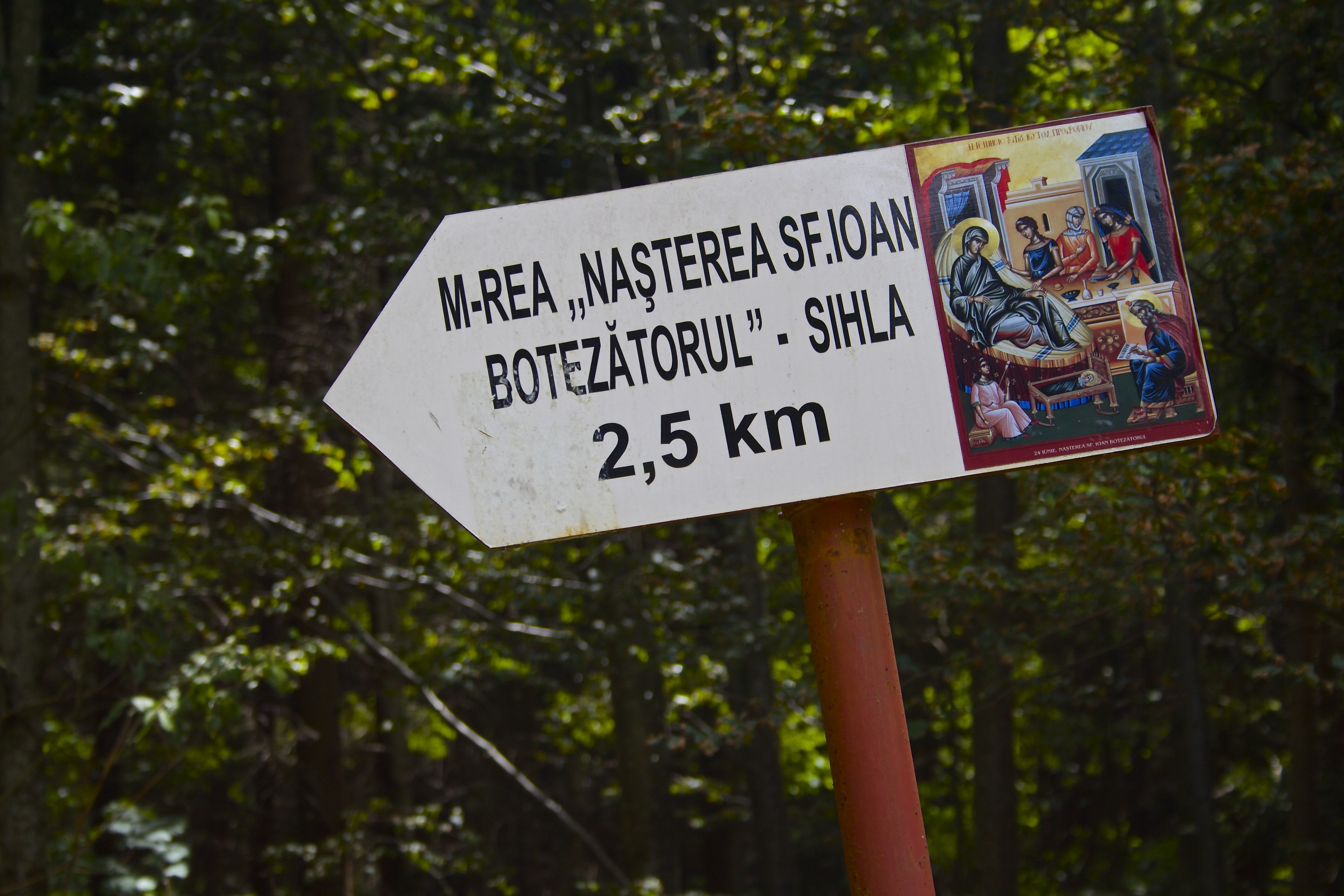

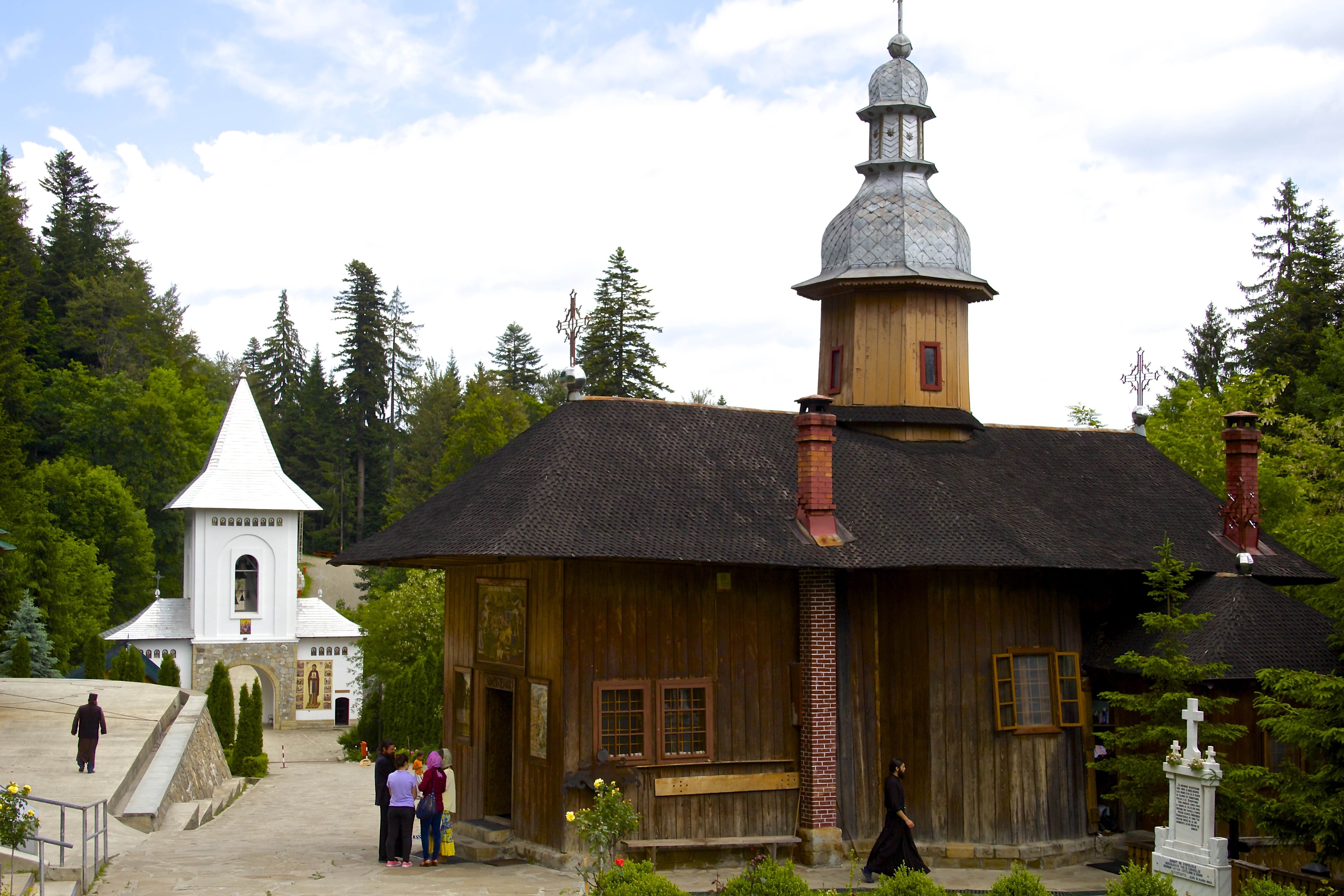
I had to drive 7km up a dirt track to find Sihla monasatery, where I met Lori and Eliza, twins from Iasi celebrating their 25th birthday with an Albanian friend touring monasteries and spending the night with 600 nuns at Varatec monastery.
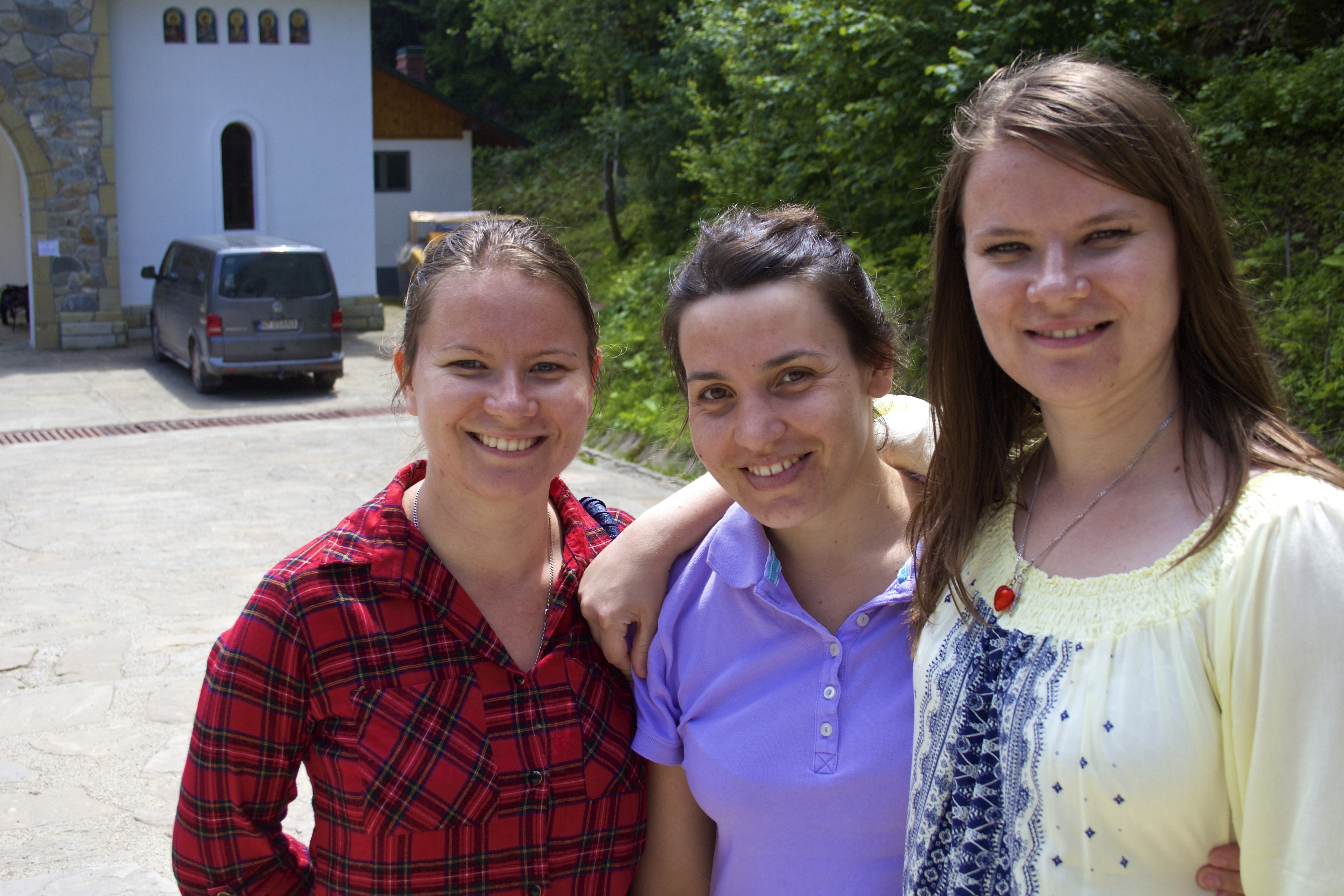
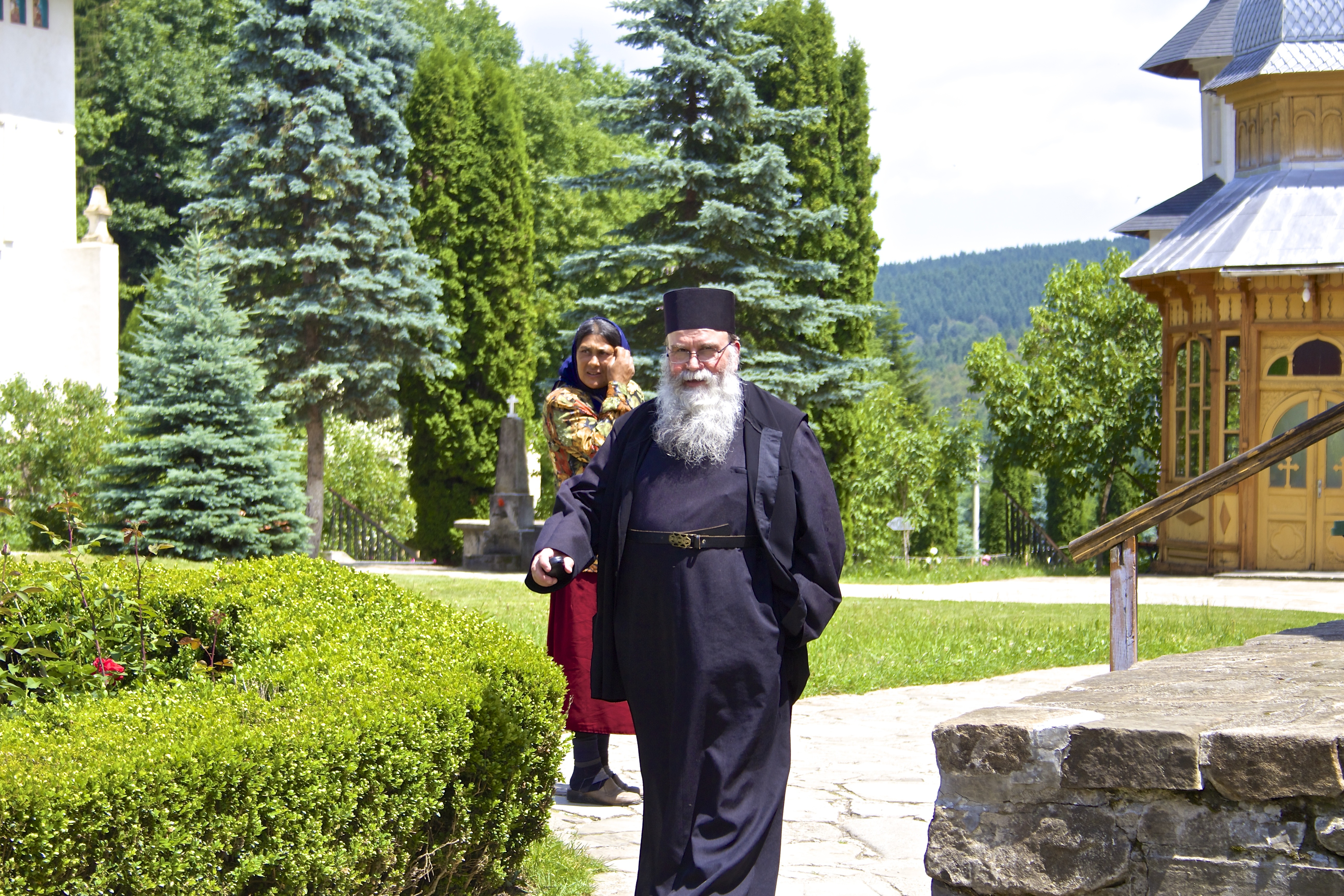
They introduced me to Brother Constantin, with whom they had been having an animated conversation (of course celibacy is only mandated for bishops in the orthodox church). He told me he had been at Sihla for five-and-a-half years and would spend the rest of his life there.

Theirs is a small community of 30, who were busy cleaning the little wooden church today, but run everything for themselves, from timber to a subsistence farm. Theirs is apparently a more extreme observance than some, with some fervent observants kneeling in prayer for hours.
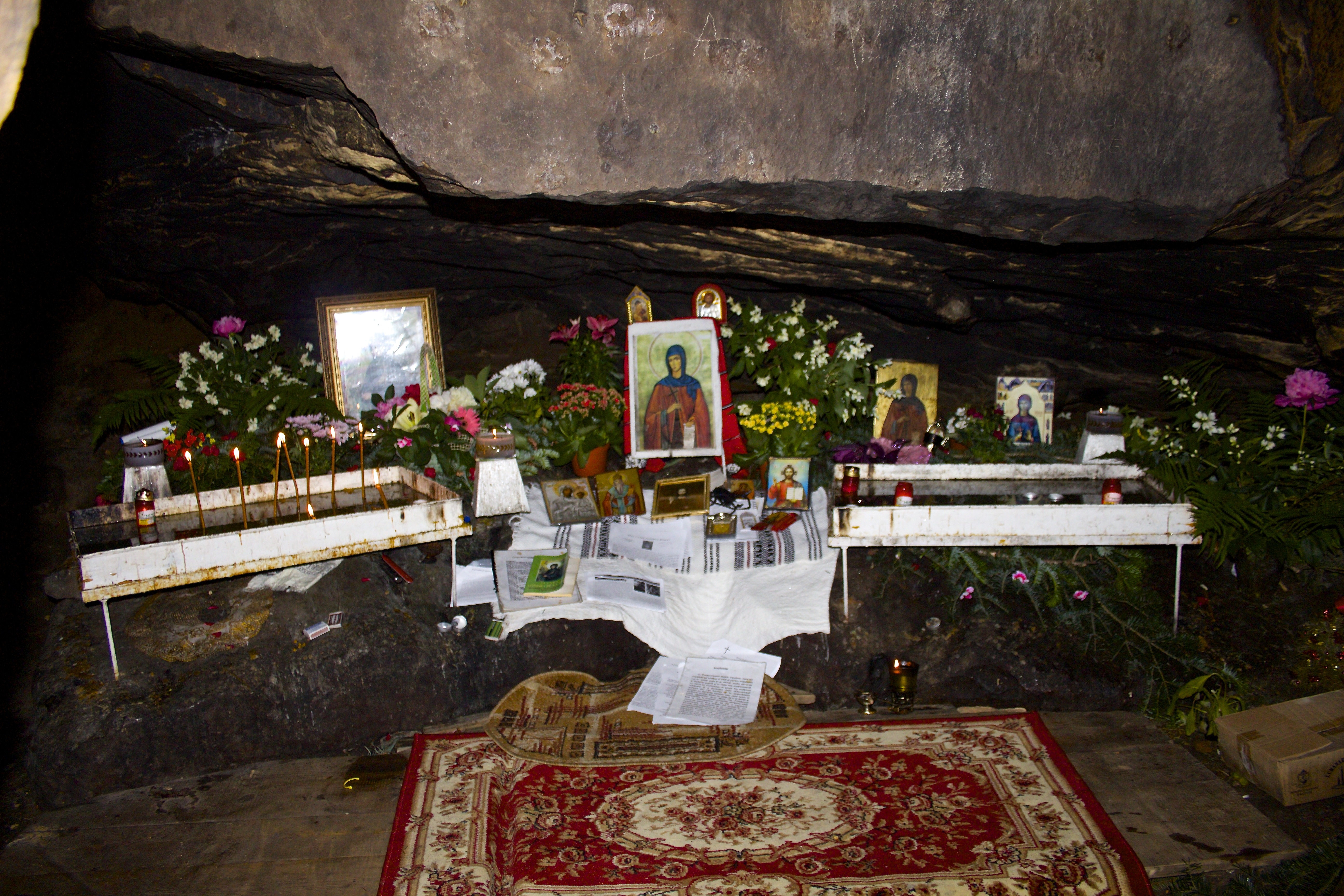
It is no surprise that this is also where the pious hermit Saint Theodora hung out, living as a recluse in a cave for 60 years. I accompanied the girls to visit it, who did all the religiose things of lighting candles, kissing icons and crossing themselves reverently. They liked having a Romanian saint, and a woman, to revere, since most of the orthodox saints are imported, an historical inevitability given the church’s origins in the Roman empire’s spilt in the 4th century. I asked them why they thought these monasteries were still so successful in the modern world. They said it was central to the Romanian soul and identity; they didn’t come to religion but were born to it.
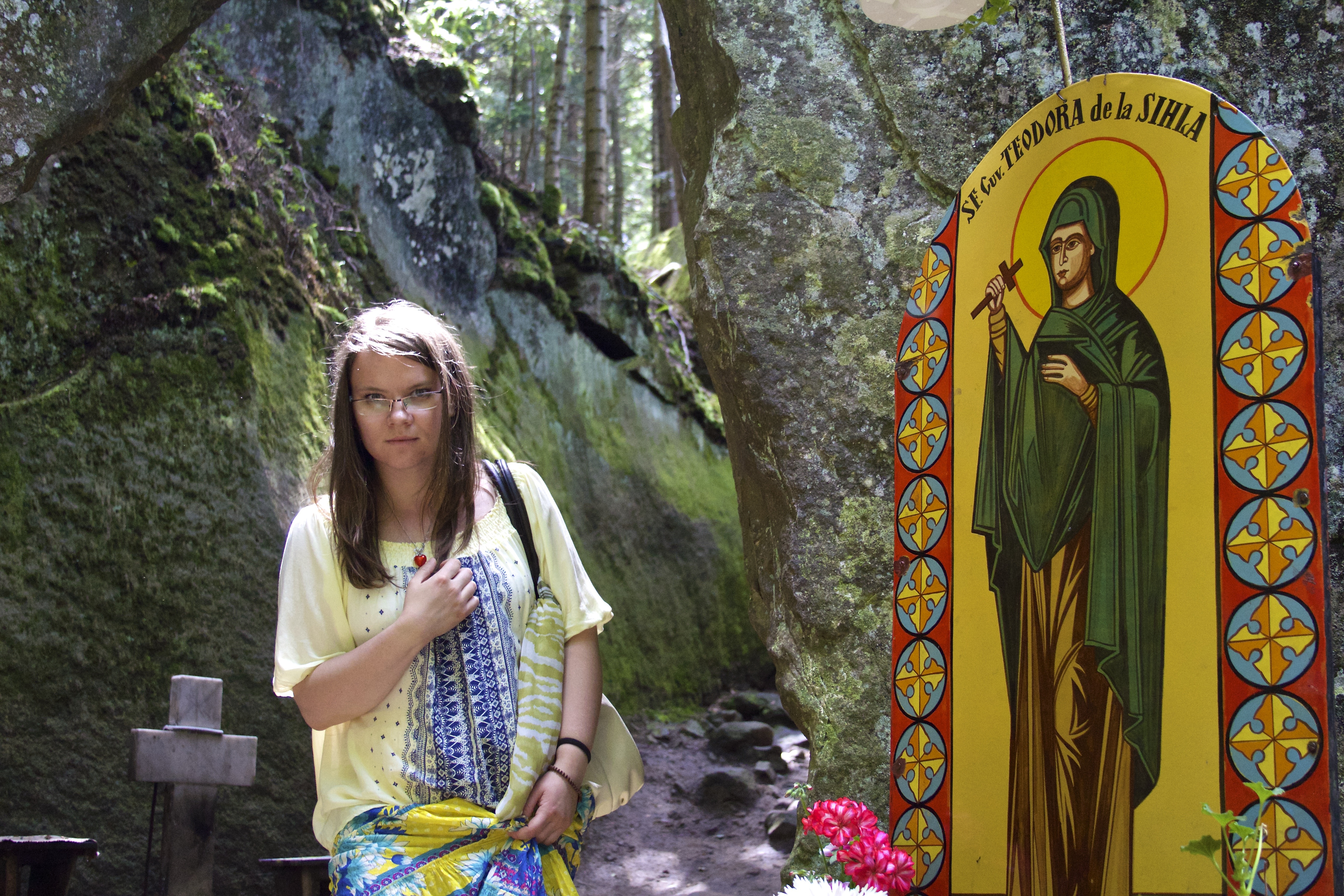
I had a similar conversation with local tour guide and monastery expert Sorin Fodor, who agreed that it remained a religious society, and one which had continued quietly throughout the communist regime. He said the churches and monasteries were allowed to continue as long as they didn’t make a fuss, or incubate dissent. Indeed, he said, many of the party leadership remained devout. However the girls believe many priests and monks were arrested and tortured in the 70s and 80s, before they were born.
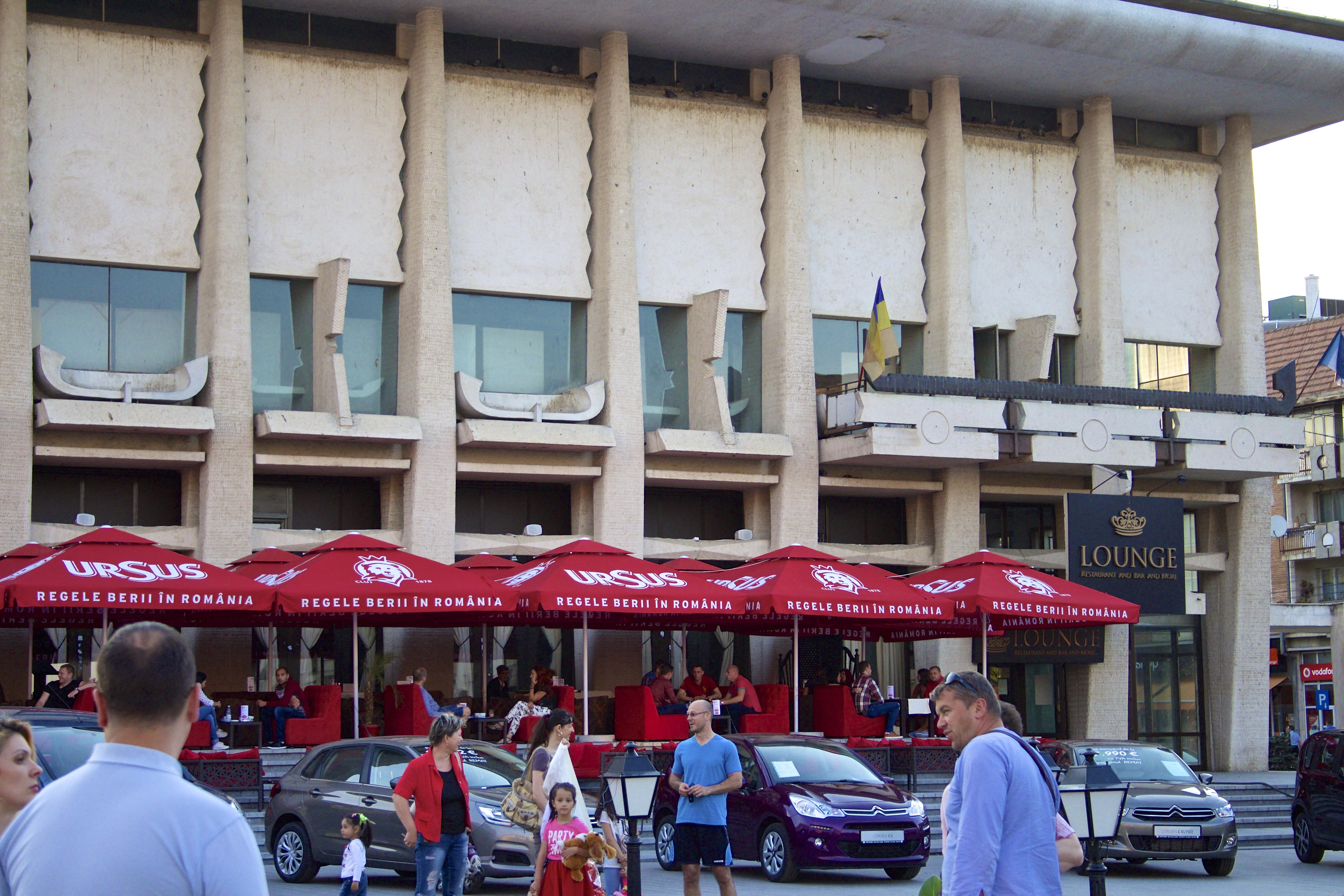
Sorin has lived all his life in Suceava, most of it within eyesight of where we were sitting at a ritzy bar in the main square, beneath where Ceasescu used to address the crowds back in the day. Sorin lived in an apartment across the street, watching the military parades pass below, where today there is a motor show parading the range of commercial vehicles available to these new capitalists. But both the girls and Sorin agree that Romanians are not likely to follow Greece’s spiral into international debt, because the national mindset is much more cautious. Sorin says the saying is ‘to sleep within the blanket’, ie live within their means. Romanians are very fond of these metaphorical aphorisms.

Eating out, I followed my forty year old rule: in the absence of a recommendation, find the busiest restaurant serving locals and you cannot go wrong. Tonight I did just that, eating a traditional Bukovan dish of smoked pork, sausage, fried egg, fermented cheese and polenta which could easily become a Manhattan brunch special. Unlike Croatia, the young do eat out here, even the young with families. Old Fart Point: Whilst I remember a generation ago travelling in Europe with children unused to restaurants fighting to keep them engaged so that they did not annoy others, here the opposite is the rule: with families apparently knocking out a new one every 12-18 months, this is the perfect opportunity to send the toddlers off to shriek around other tables while giving their parents a well-earned rest, chatting with friends and having another smoke. They seem to encourage them, so earplugs with the cruet may be the only solution. Insofar that every bar and restaurant seems obliged to be pumping out banal pop music at conversation-discouraging levels, aural damage is the order of the day. Perhaps that is why so many men retire to the monasteries.
 peterleewright.com