
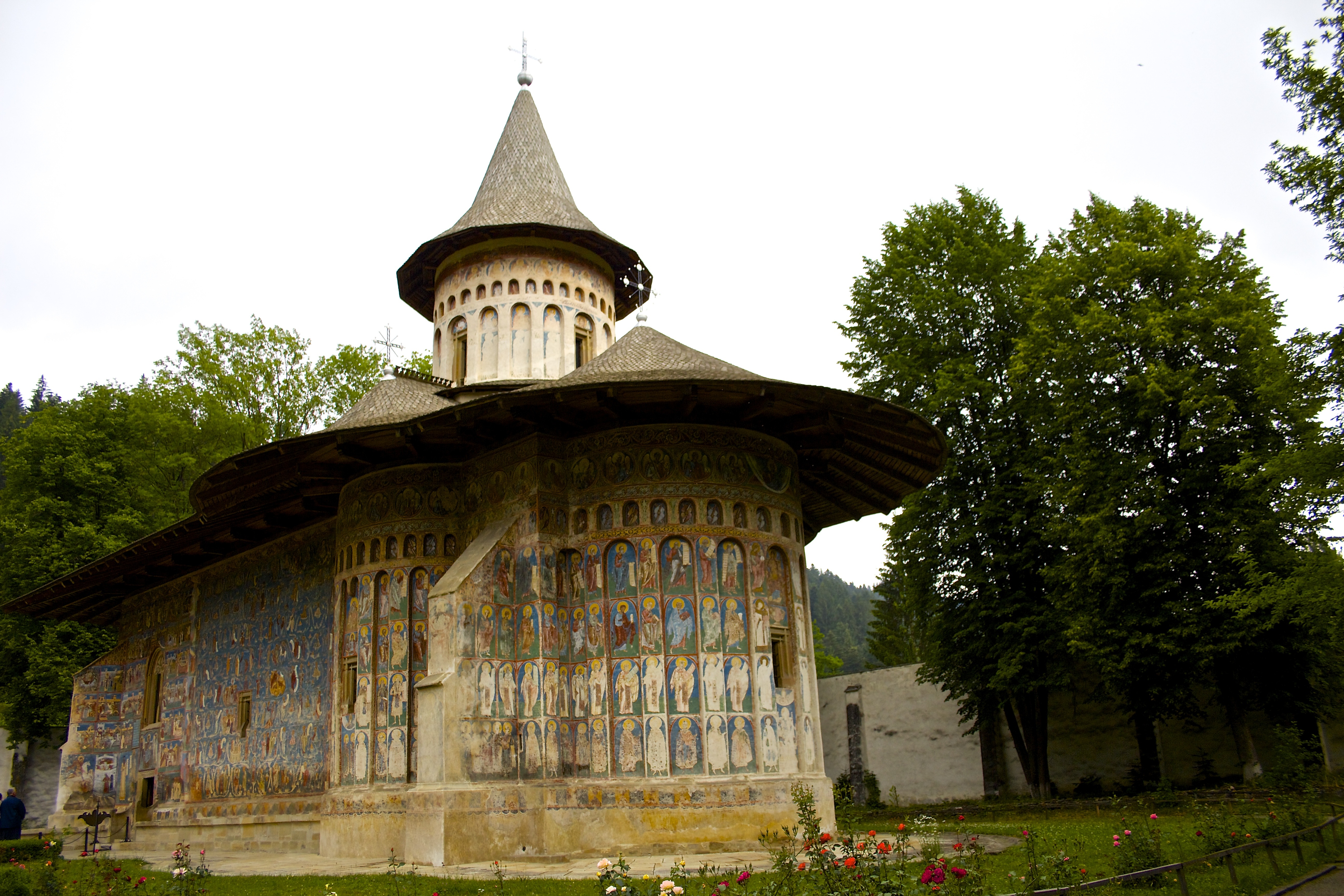
 So I am now back at the heart of the region which initially attracted me, and have started revisiting the painted monasteries I first saw 47 years ago. This is Voronet, built in just sixteen weeks in 1488 to mark one of Stefan cel Mare’s key victories over the Ottoman Turks, which has been restored since last I visited. Then I was an exotic rarity, a foreigner among the few Romanians who visited more as devout pilgrims. Today, the best known monasteries are big tourist attractions, with villages full of guest houses offering everything from “hot water” to “Hot spot” and lots of commercial concessions. Tour buses roll up with holiday-makers from all over Europe and the tacky razzamatazz is painfully familiar. Cunningly placed car parks force you to pay to park and then run the gauntlet of two hundred yards of stalls hawking tat.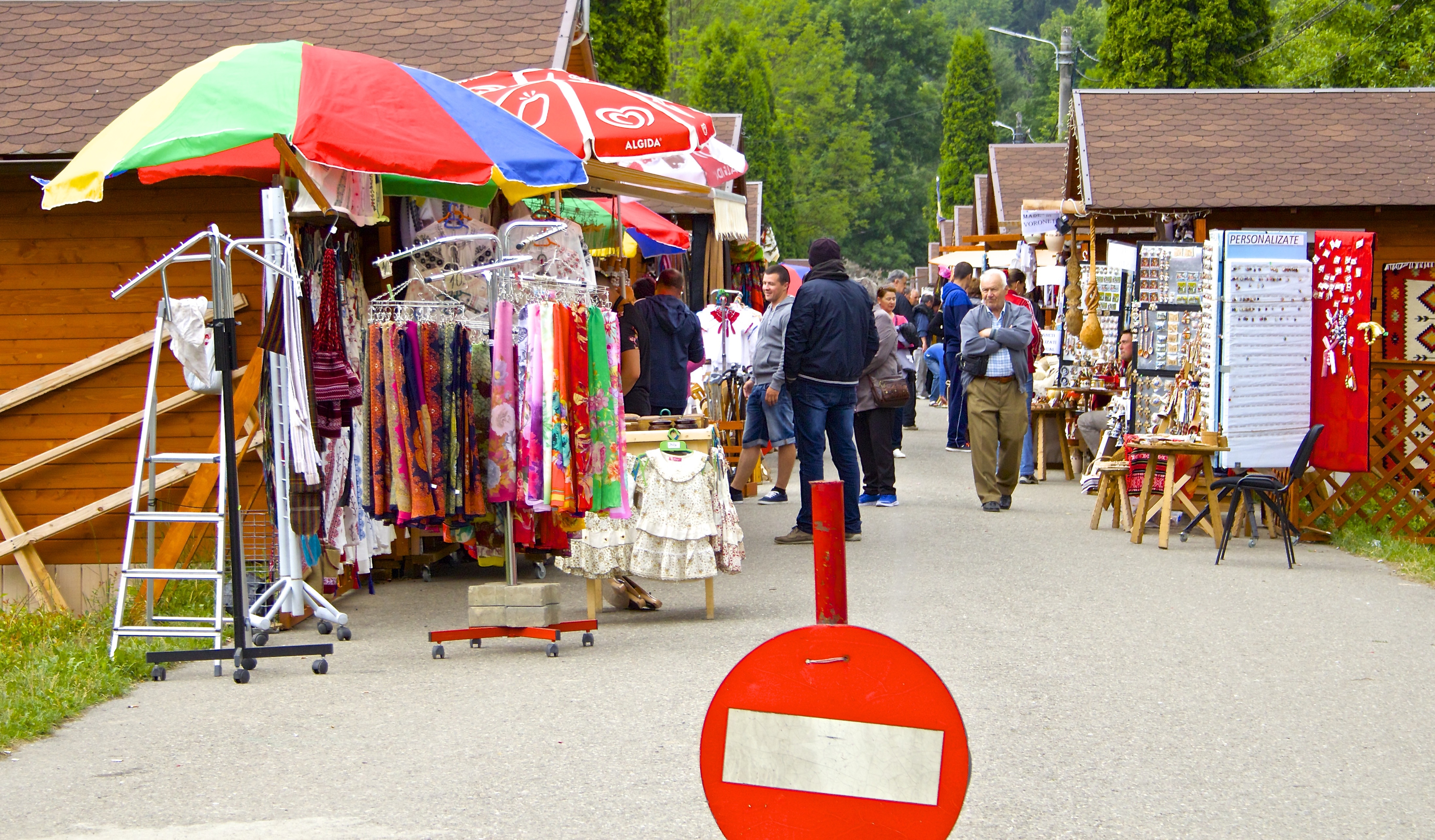
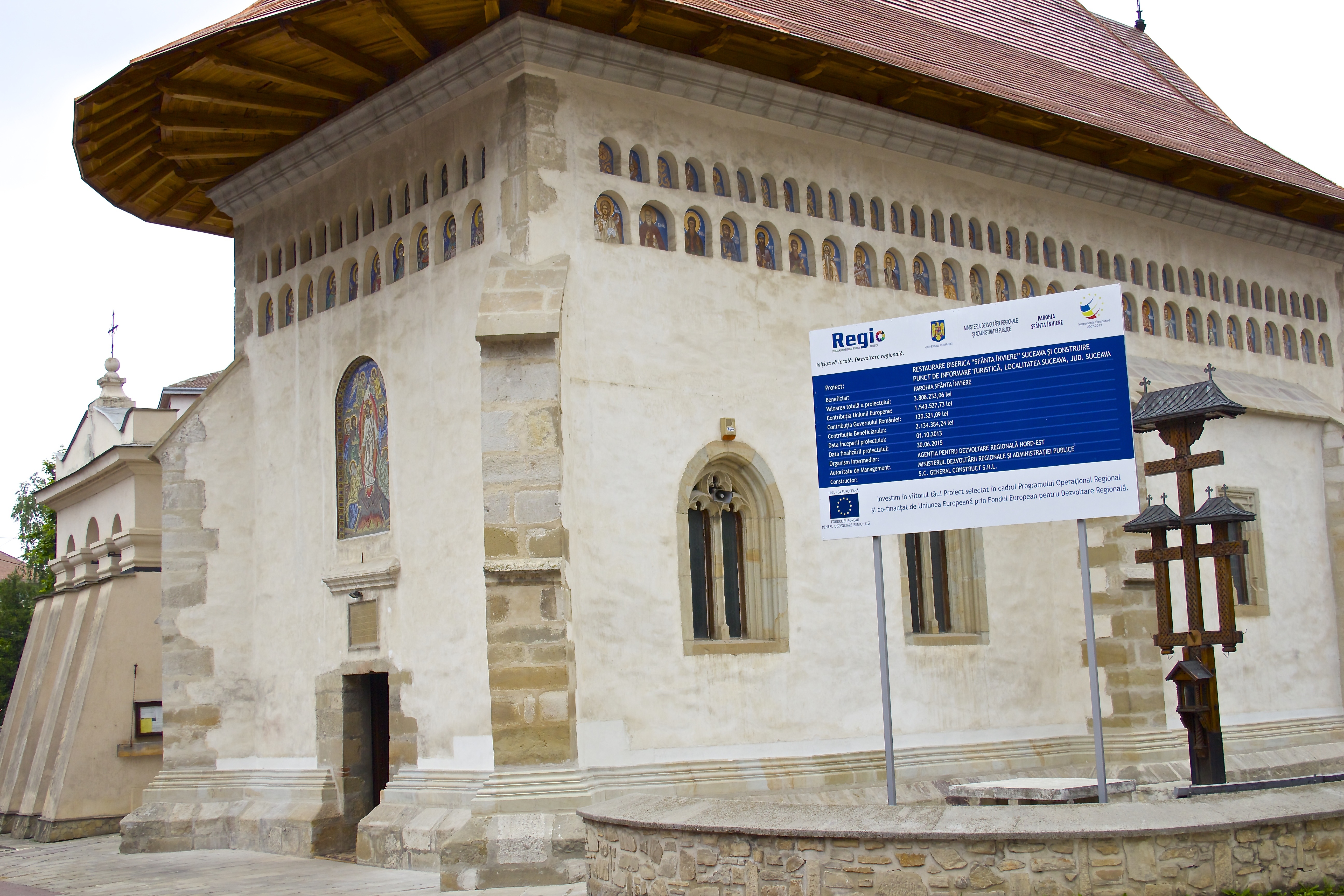 I started the day in Suceava, visiting this little old church just across the park, the 1551 Resurrection Church, which is definitely not on the tourist trail. It is however on the receiving end of EU funding, marked by the familiar notice board like every other cultural institution in this country. As Sorin says, where you notice it most is on the roads and other infrastructure, where villages only reached by dirt tracks and reliant on local sources of water etc. now have good roads and services.
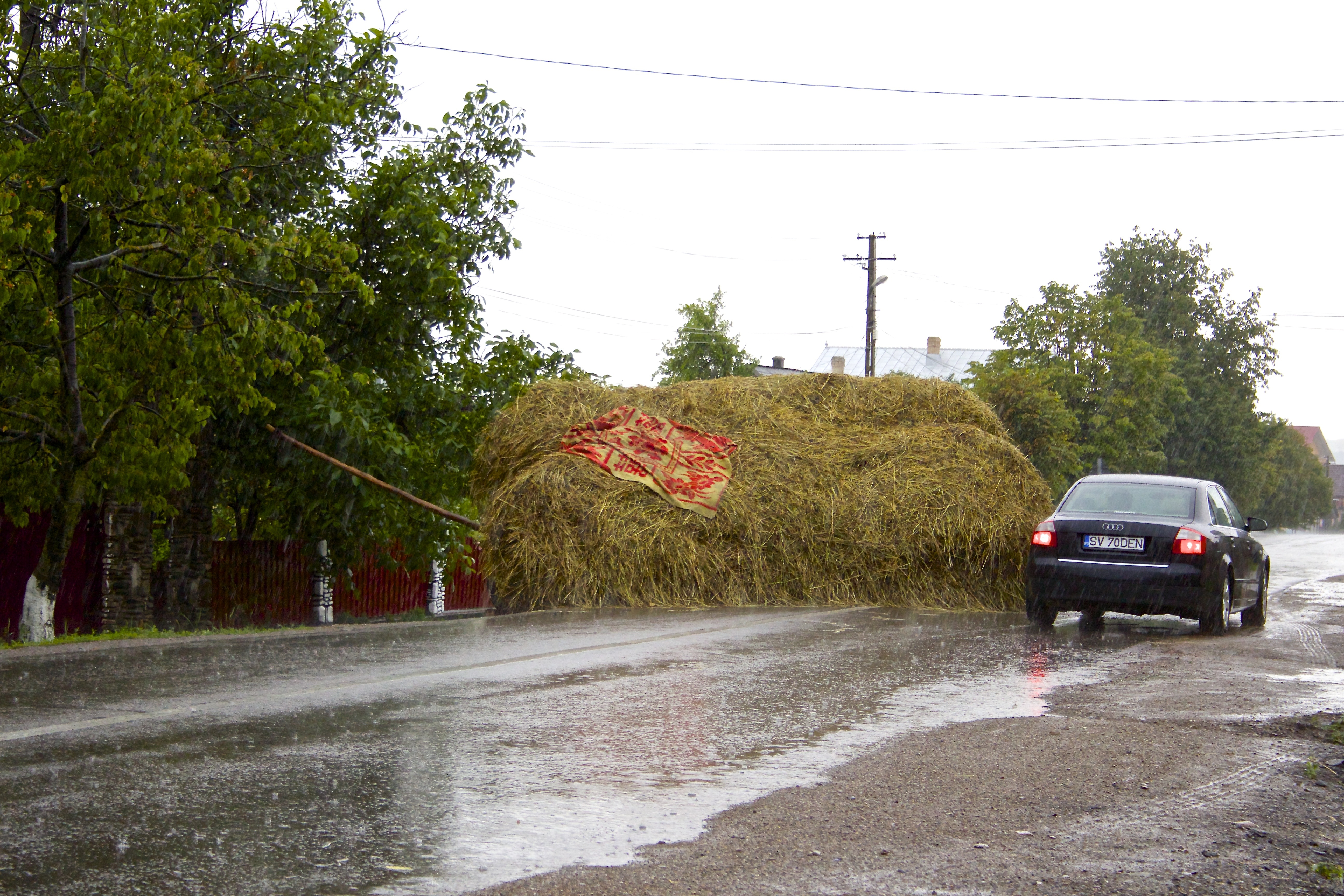
 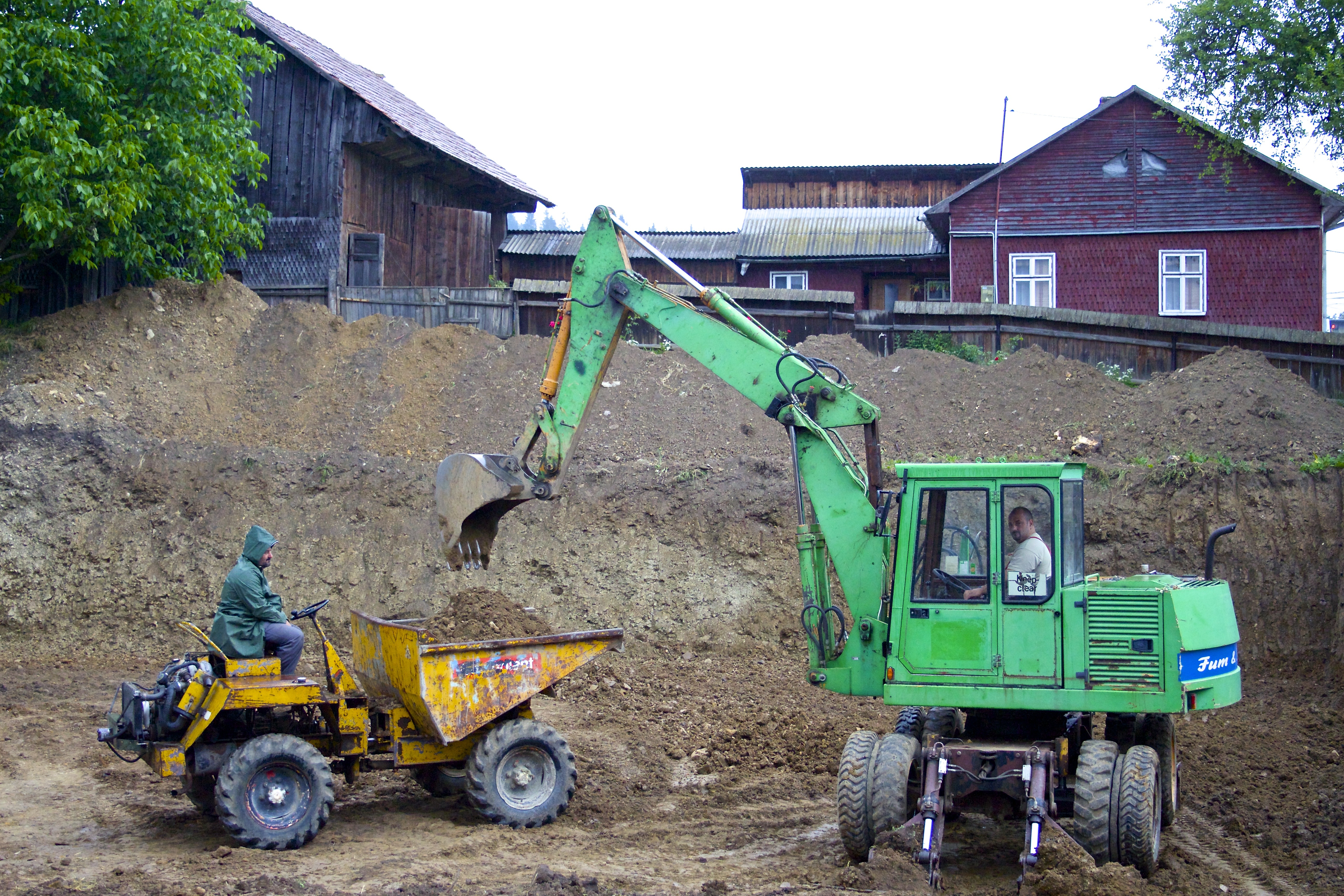 But it leads to awkward juxtapositions. This large hole in the ground being dug beside a traditional old peasant farm and barn is for a new pensione which will dwarf its old neighbour. And this overladen horsecart of hay had become too heavy as a result of heavy rain this afternoon and broke its axle, which was clearly going to cause some problems for the tour buses.
  And new money means hundreds of over-sized houses are popping up in the surrounding fields, though many seem stalled at the half-way point, yet to be equipped and occupied. It reminds me of that period in Spain, when there was a time limit on planning applications for new builds, so everyone rushed to put up some concrete they didn’t have the resources to complete, thus blighting the landscape. These are further advanced, but there is no sign of continuing work.
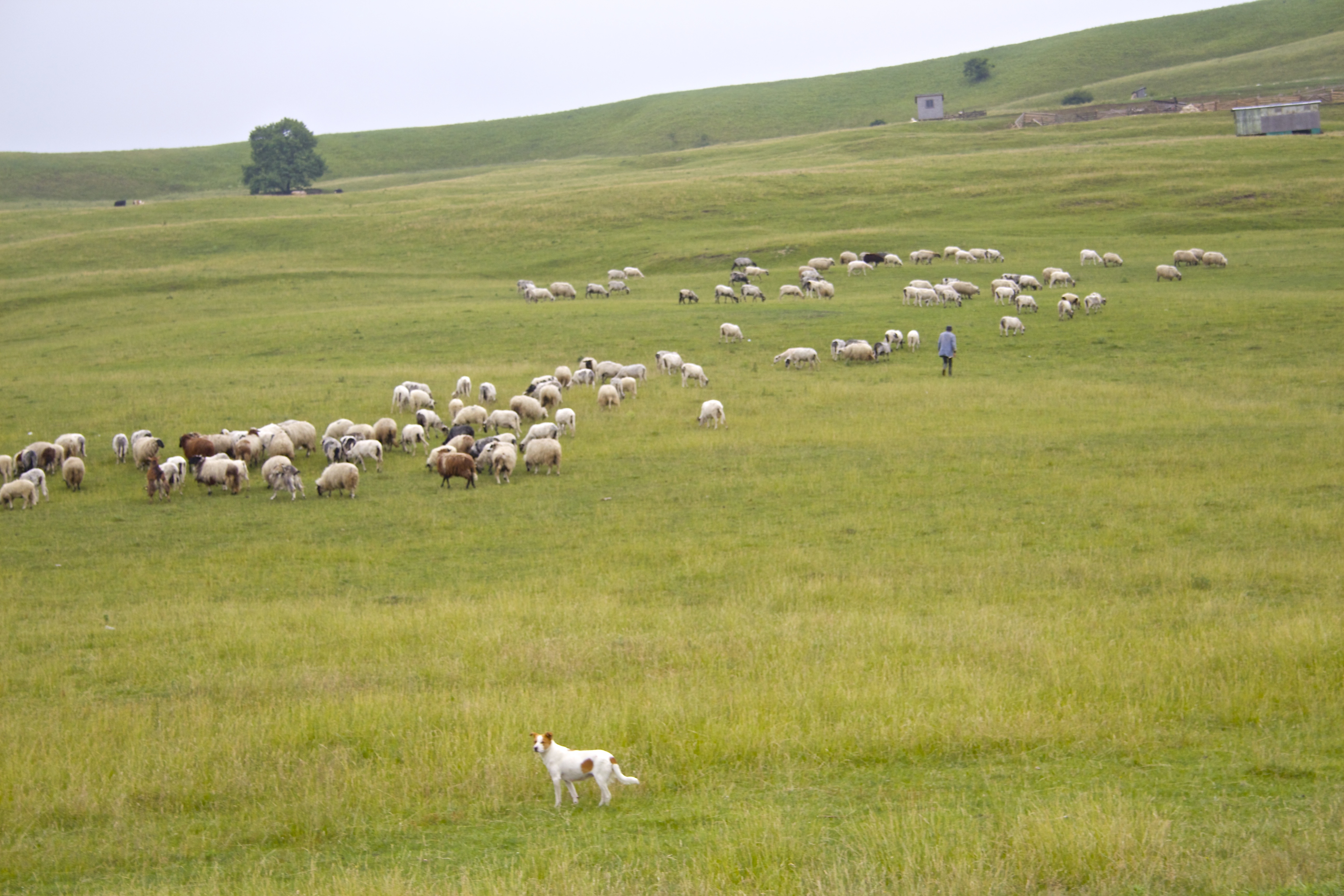
  All this sits uneasily with what these fields have been used for through hundreds of years, and challenges the viability of the peasants’ future. At the moment, the shepherds, goatherds and cattlemen graze their animals beside the road, as the trucks and cars roar by.
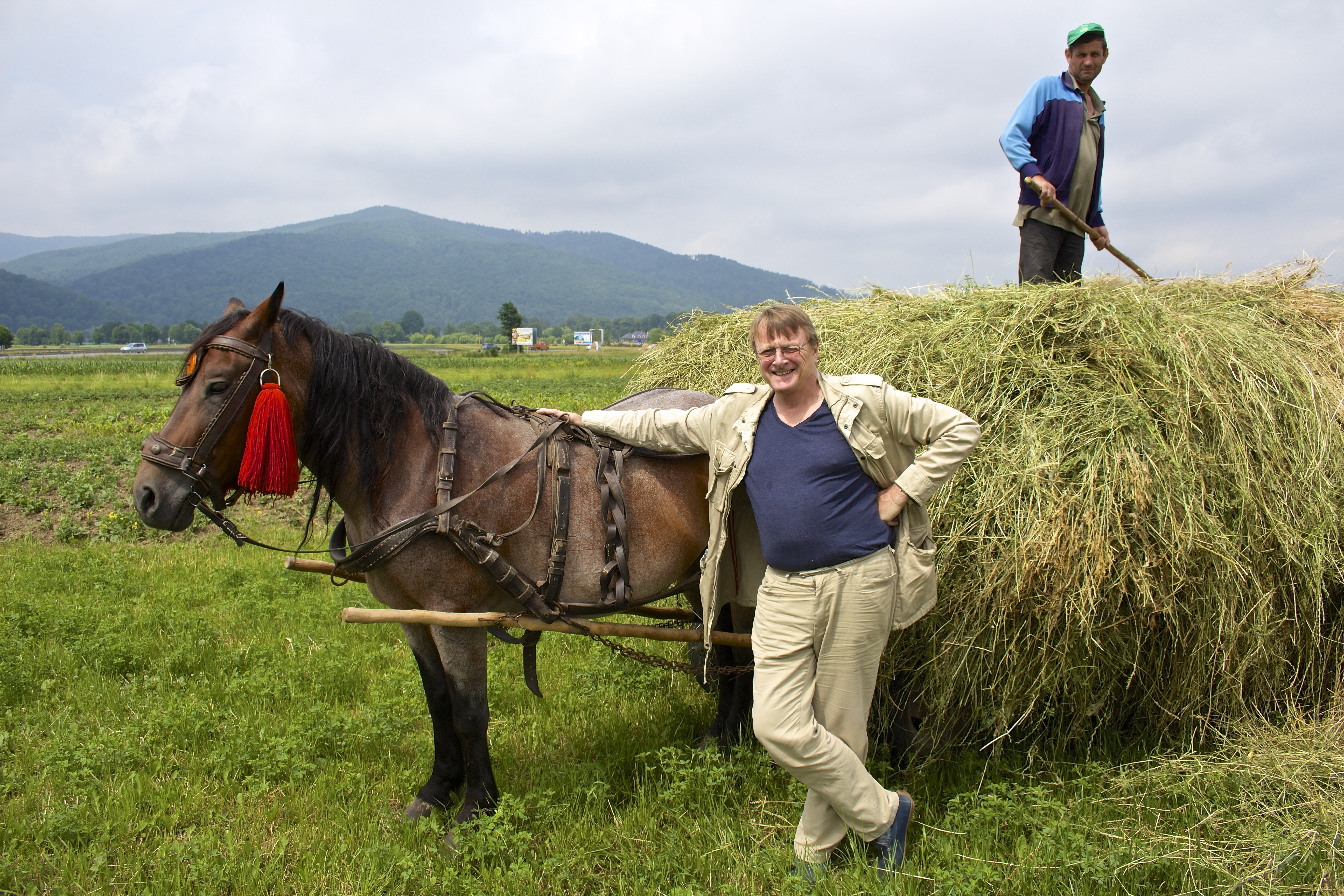
  The farmers are currently mowing their hay, standing it in stooks and bringing it in on the horse-darwn carts. Some of them are old and unchanged, some young, wearing trainers and chatting on their mobile phones while driving their cart through the traffic.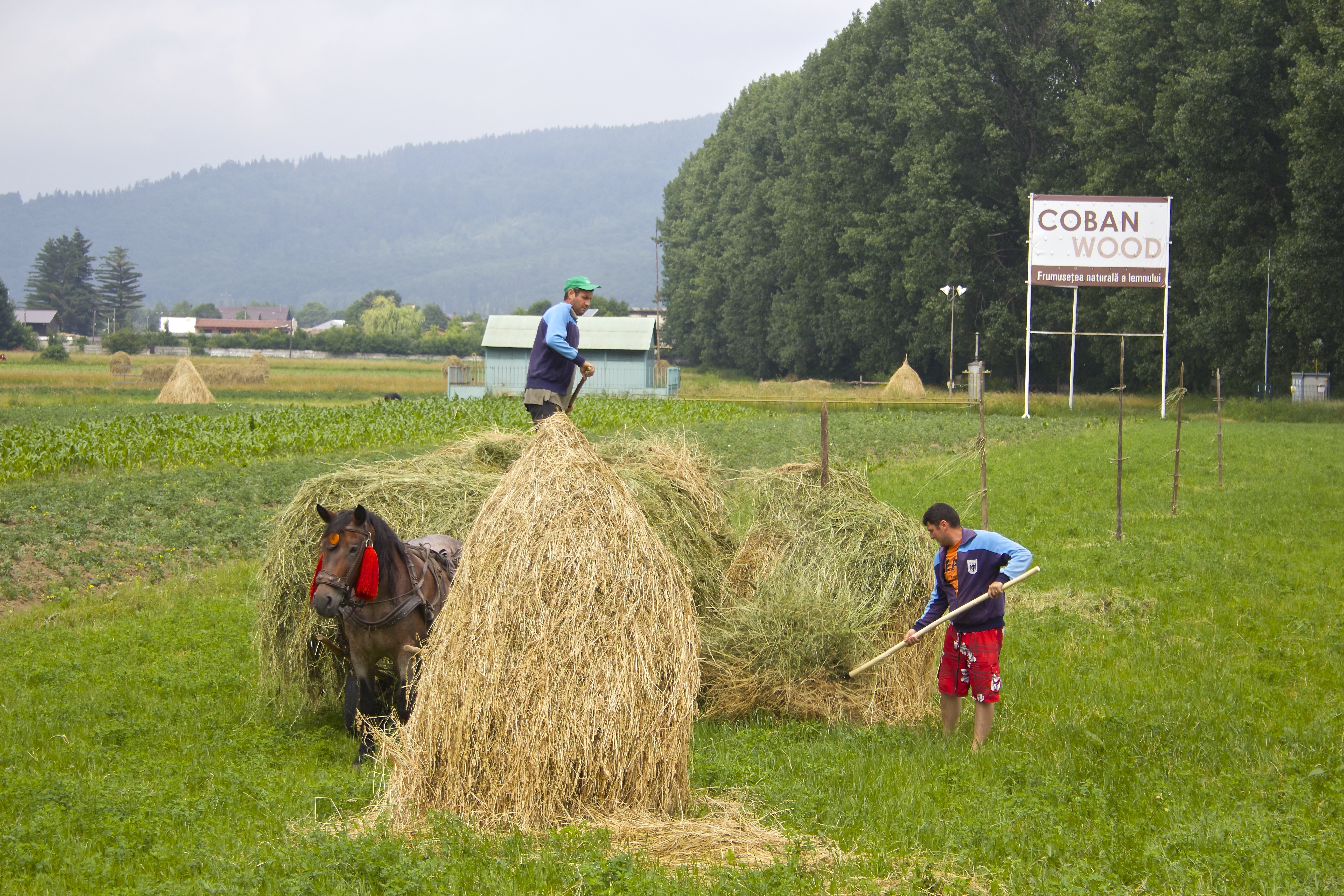
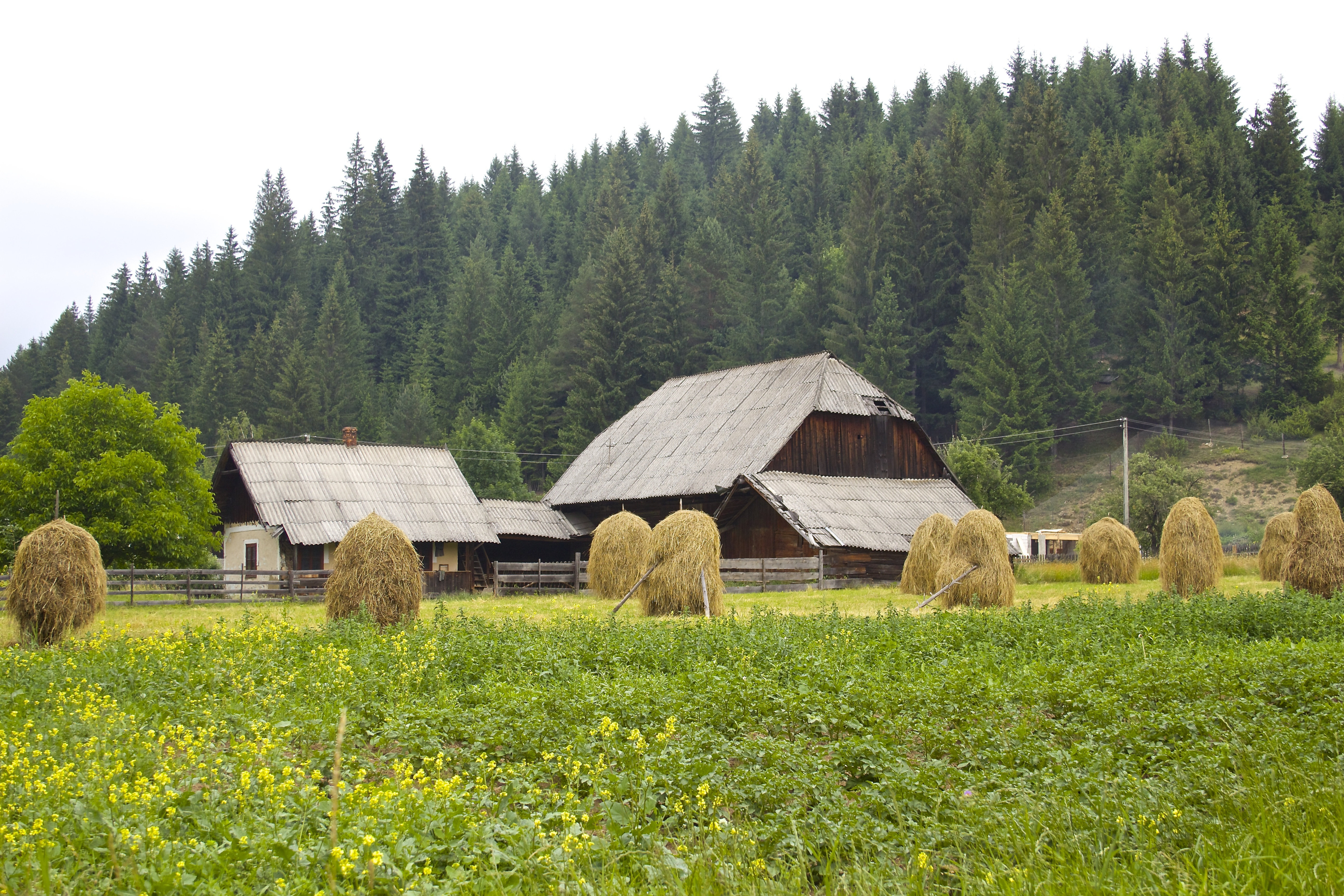 The question which I am trying to answer is whether all this is under more threat from modernity – and the two-way financial benefits of the EU – than it was from the previous regimes of Ottomans, Axis powers, Soviet occupation and Communist dictatorship. None of these broke the orthodox culture and the centrality of monasteries to peasant life, but the EU’s freedom of movement has seen many of working age leave these villages and the commensurate freedom of European capital to move in and buy land cheap is a prospect as worrying as the sale of British assets to foreign multinationals. Inevitably the European giants have moved in on such key industries in a rapidly evolving country as construction resources. This giant cement factory in Tasca, Carpatcement, is as it announces, ‘Part of the Heidelberg Cement Group’.
 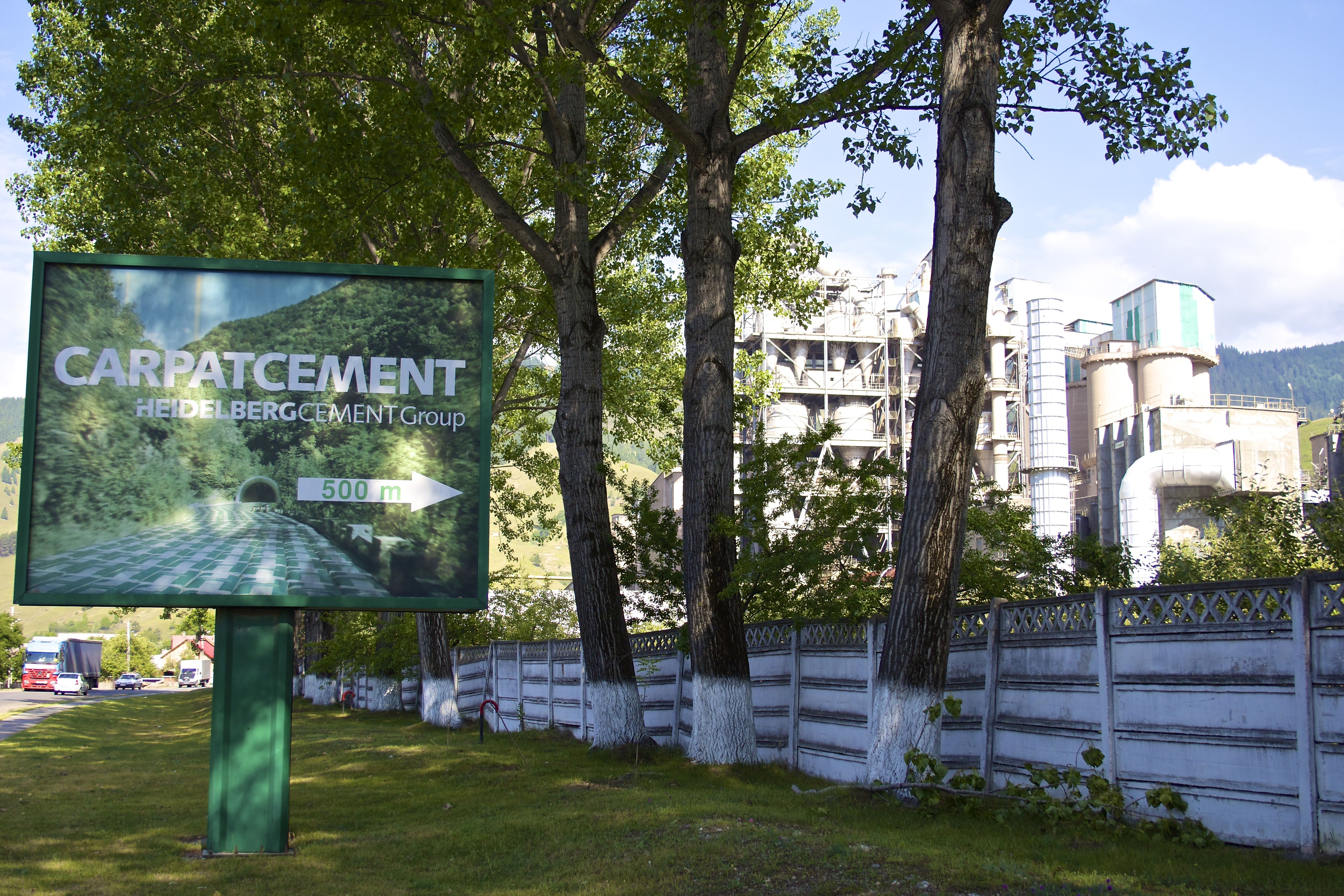 One can only hope they don’t concrete over all of Romania. But the problem with the heritage industry is that it can only save so much, and pickling the past may keep the nuns and monks in business, but won’t save the way of life for the villagers who still support them.
 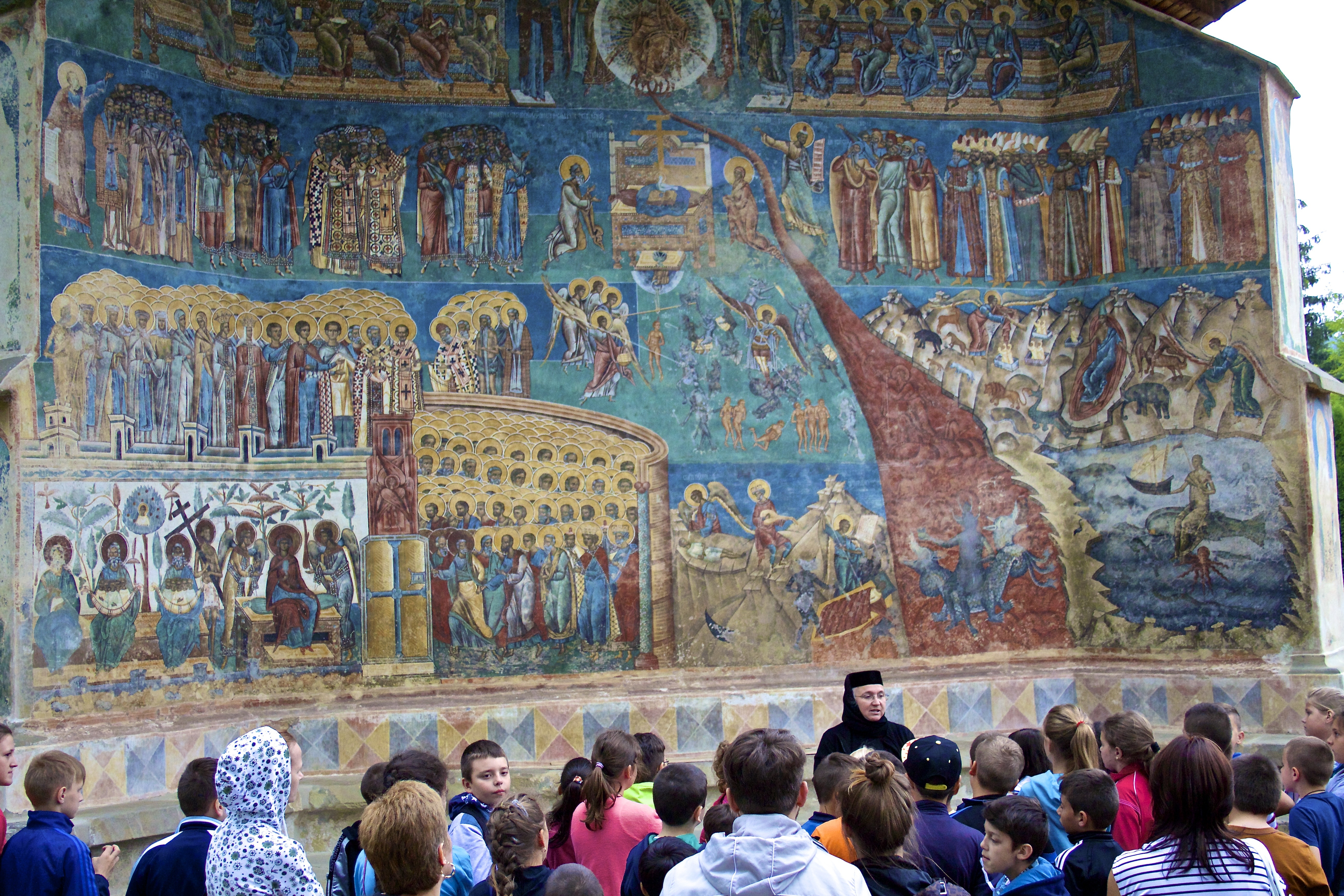 This nun had a captive crowd of children and their parents beneath Voronet’s Day of Judgement – arguably the finest fresco in Bukovina – but it’s only a matter of time before peasants face a temporal day of judgement. They have benefitted from the EU’s Common Agricultural Policy subsidies, but will that be enough? I hope to meet some more people tomorrow to discuss this, so let’s end on the stuff which hasn’t changed much.
 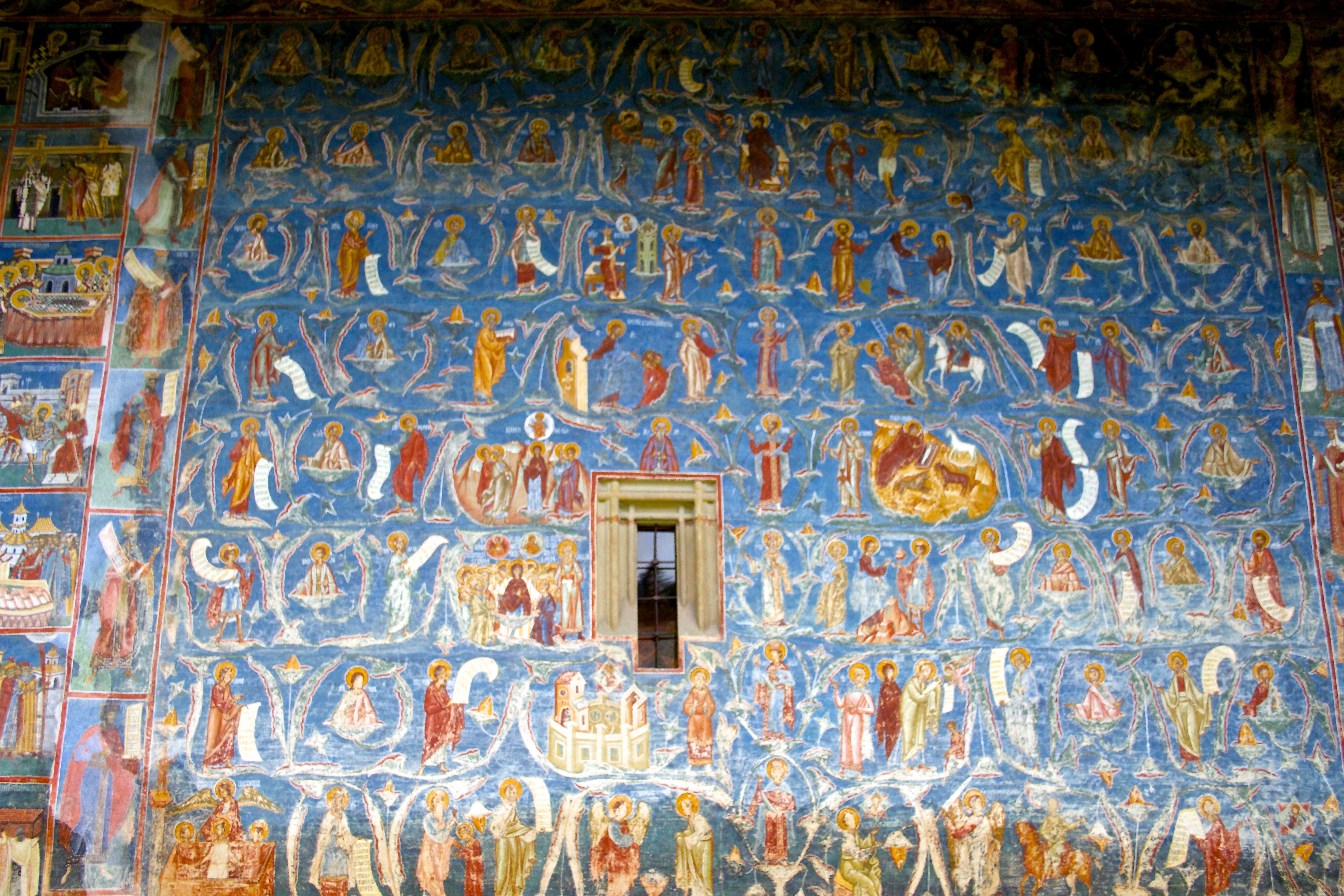 Voronet’s southern wall depicts the Tree of Jesse, and also features the dominant colour blue, which particular tone is known as Voronet blue. Each of the key painted monasteries has a dominant colour theme, thus Humor, which I visited earlier today, favours red and brown.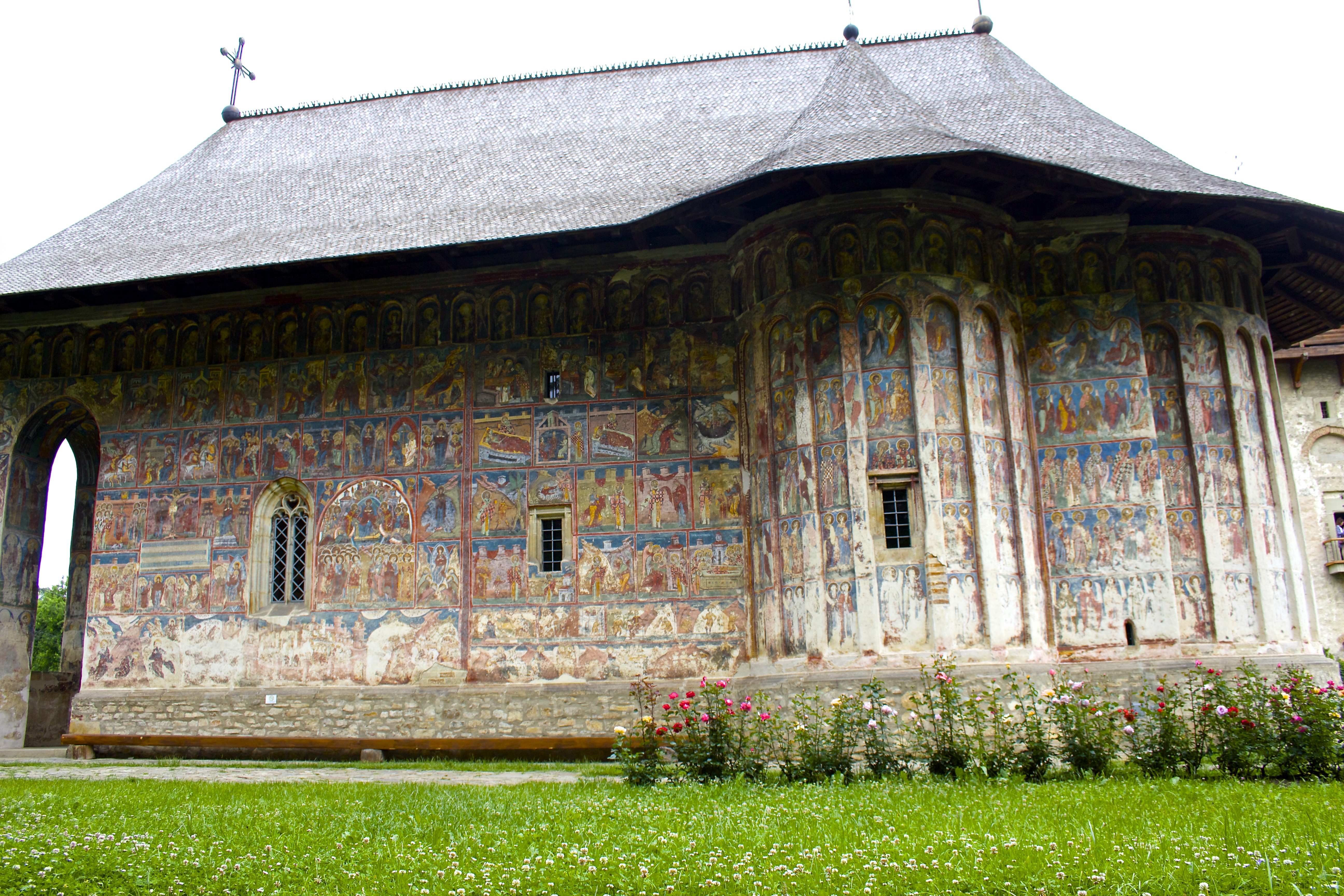
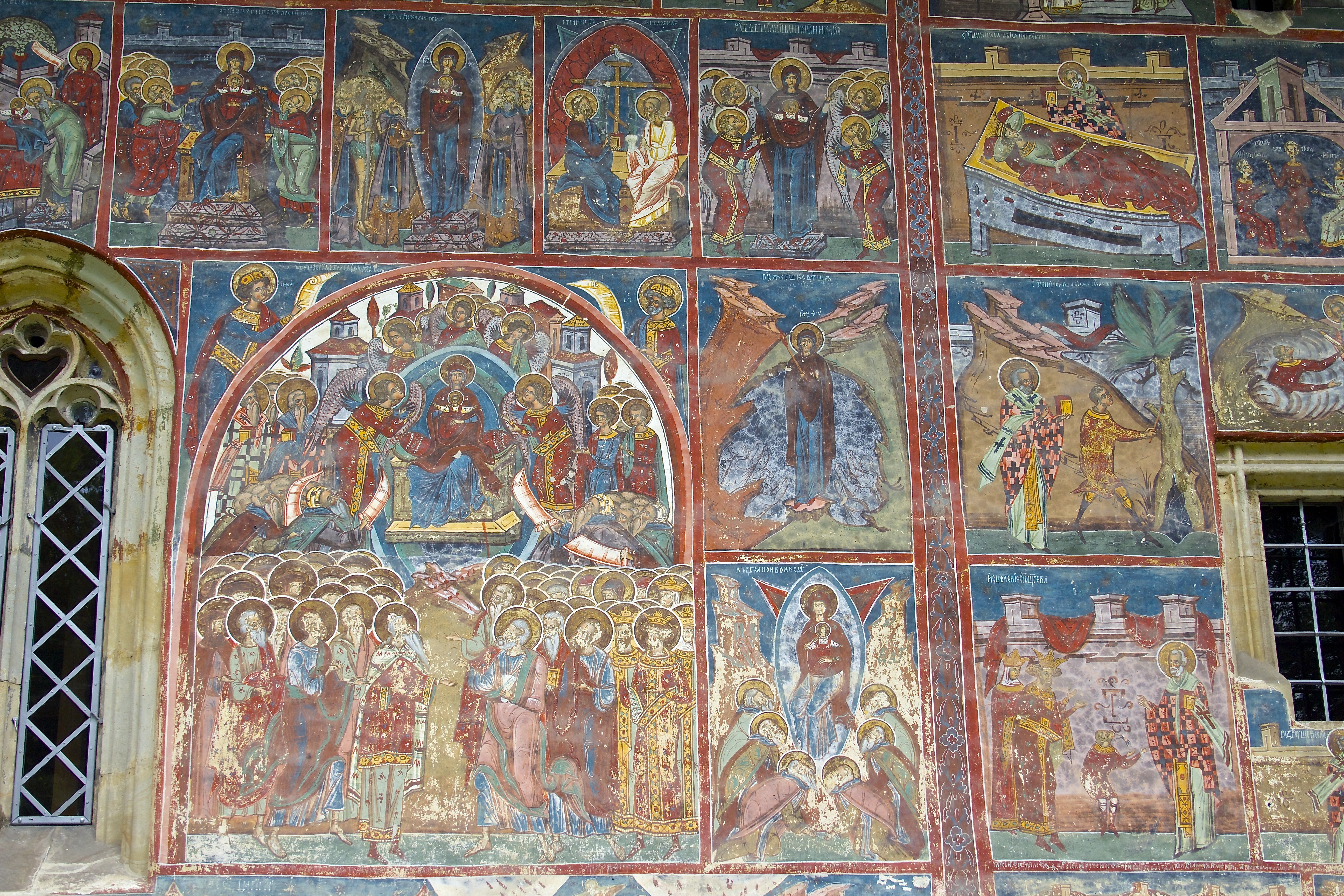 A lot of the monasteries were walled fortifications to see off the Turks, and Humor has this fine watch-tower, with an increasingly narrow and steep interior staircase, so that they could kill off invading soldiers one by one. It nearly killed me climbing it. It will be some years before Turkey fulfils the entry requirements for the EU, so it won’t be needed in the near future.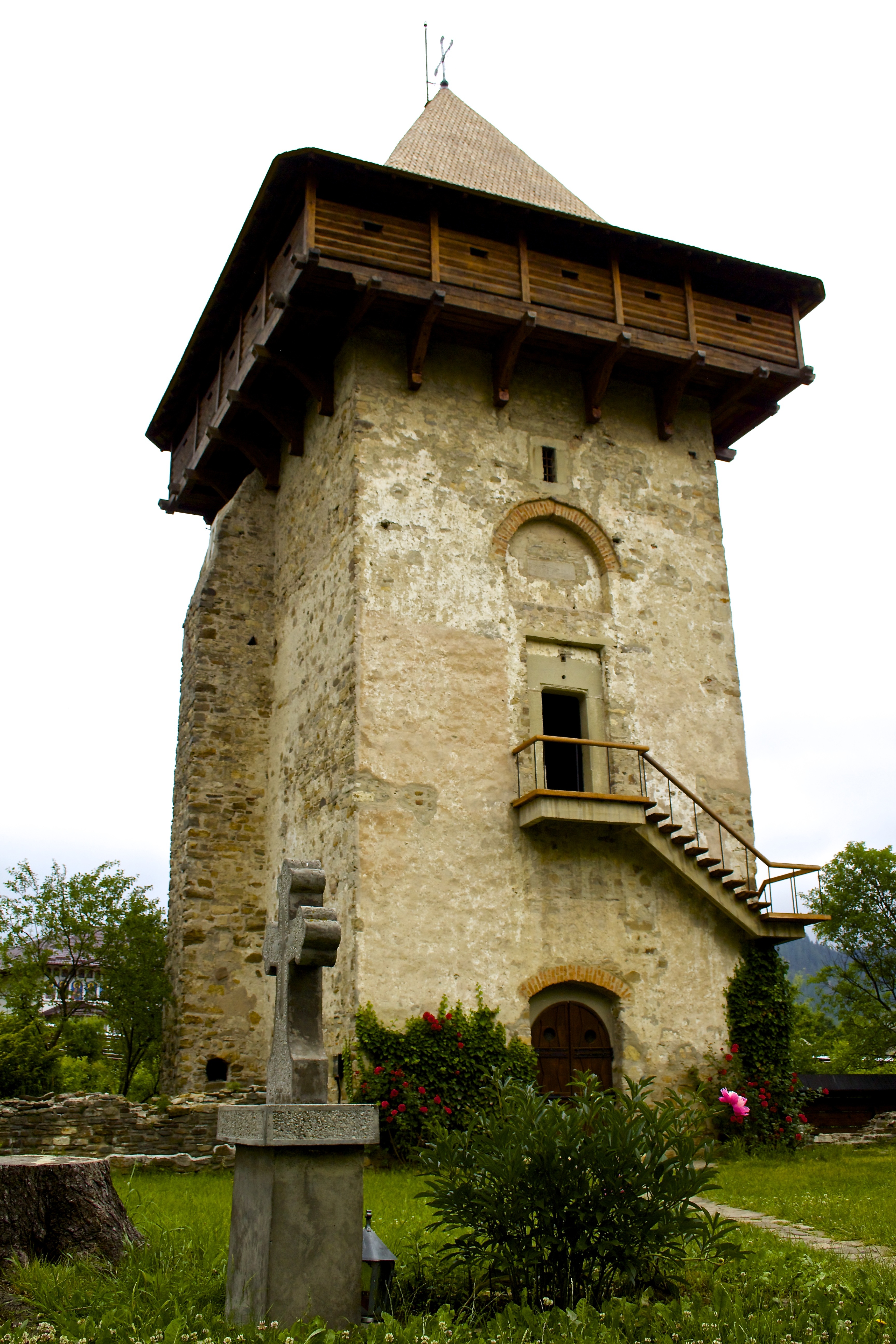
 peterleewright.com