
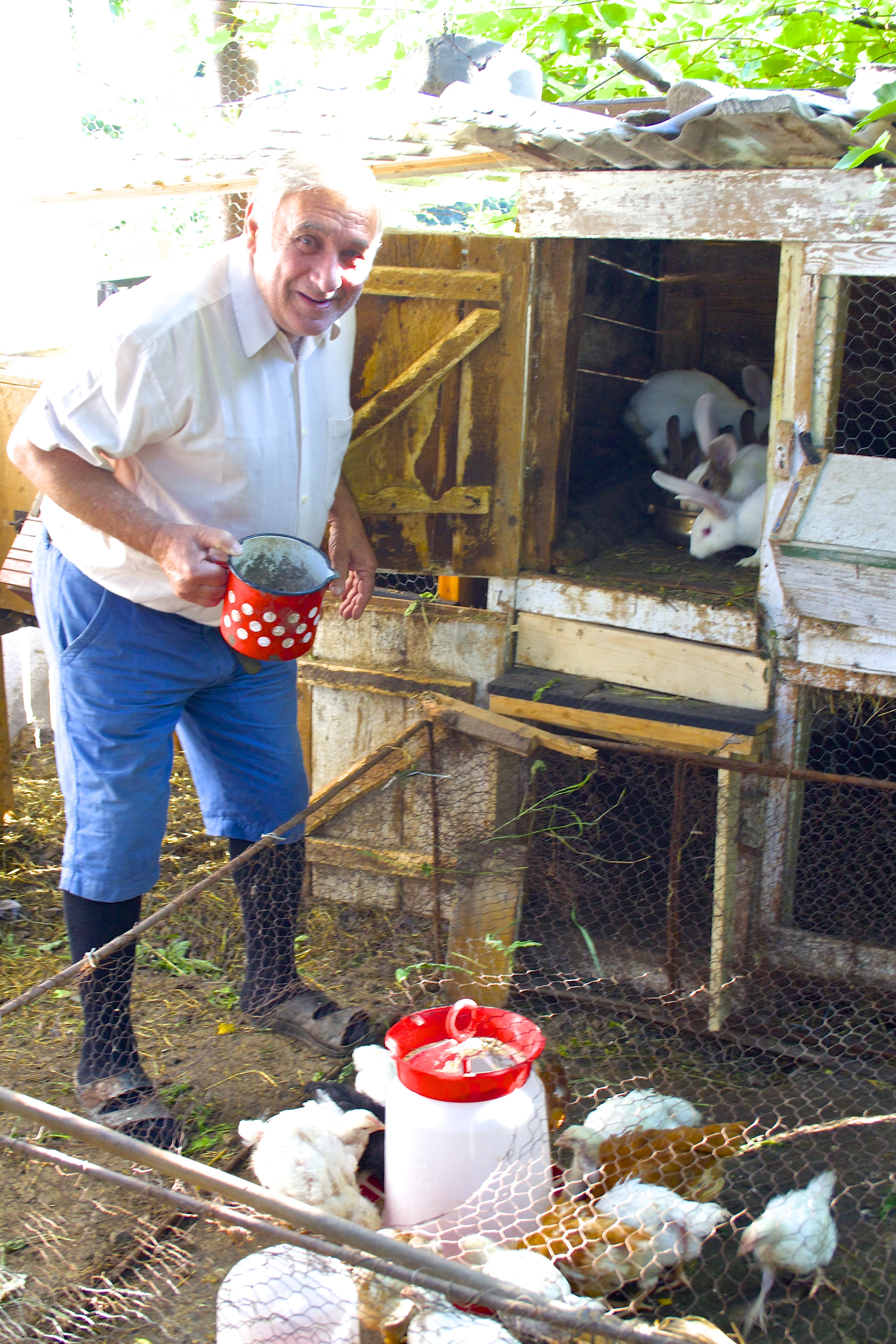
Ioan has to feed his chickens and rabbits before Maria can give me my breakfast, with a very fine egg included. I don’t think the rabbits are pets either. The downside is a distinct faecal fume at breakfast when downwind of the hutches, which turned out to be a portent of things to come.

I mentioned before that the police seemed fine and I can now confirm from first-hand experience that they are. I was caught this morning in a radar speed trap. I was unaware that the road passed for a built-up area, thus a mandatory 50 kph limit, whereas I was cruising at 81 kph. So it was a fair cop and so was he: polite and courteous, even apologising for his imperfect English. I cannot imagine one of the Met’s finest apologising to a Romanian he’d booked for not speaking his language. He even said: “Have a nice day”, which seemed a bit improbable in the circumstances. The fine has to be paid within two days, a fairly steep 292.50 lei, a substantial chunk out of a worker’s weekly wage here, but only £46.60 in sterling. I did think to suggest he would be better employed catching the lethal lunatics who insist on overtaking at breath-taking speed on blind bends – the kind I spent most of the afternoon avoiding, even in driving rain – but thought better of it.
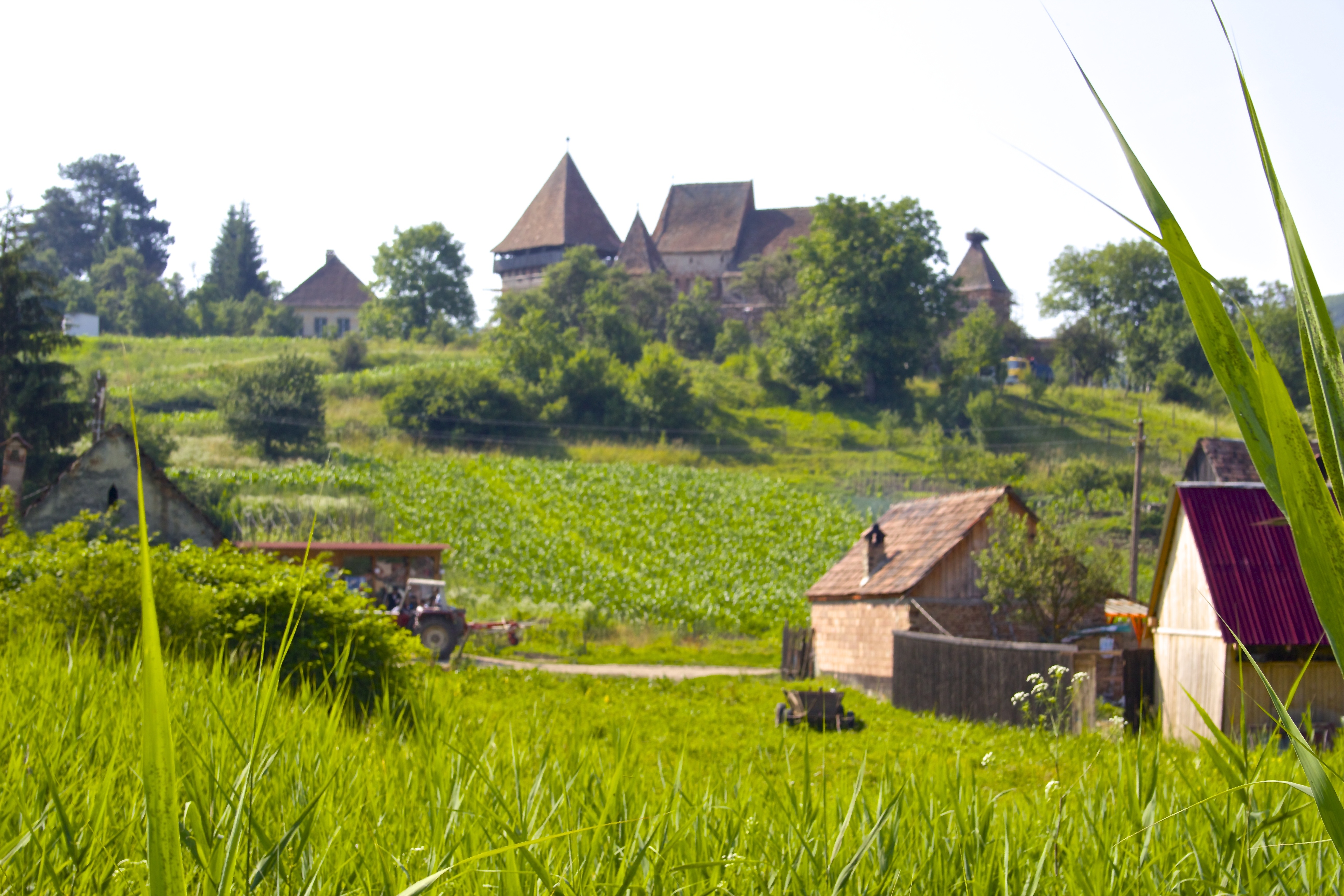
The morning had been pleasant until then, with a brief foray into the Saxon land of the Tarnave plateau, the area Prince Charles has taken to his heart and started buying and restoring property. The houses here are, predictably, more solid and stolid than those in Moldavia, built of plastered brick rather than wood.

These villages are chiefly famous for their fortified churches. Whereas Stefan cel Mare built fortified monasteries to withstand the Turks in Moldavia, the Saxons were apparently imported as a defence force and the churches built as local fortresses. Of the three I saw, the most impressive was at Mosna, with its extraordinary outward leaning nave pillars, the work of master builder Andreas Lapida between 1501 and 1520.
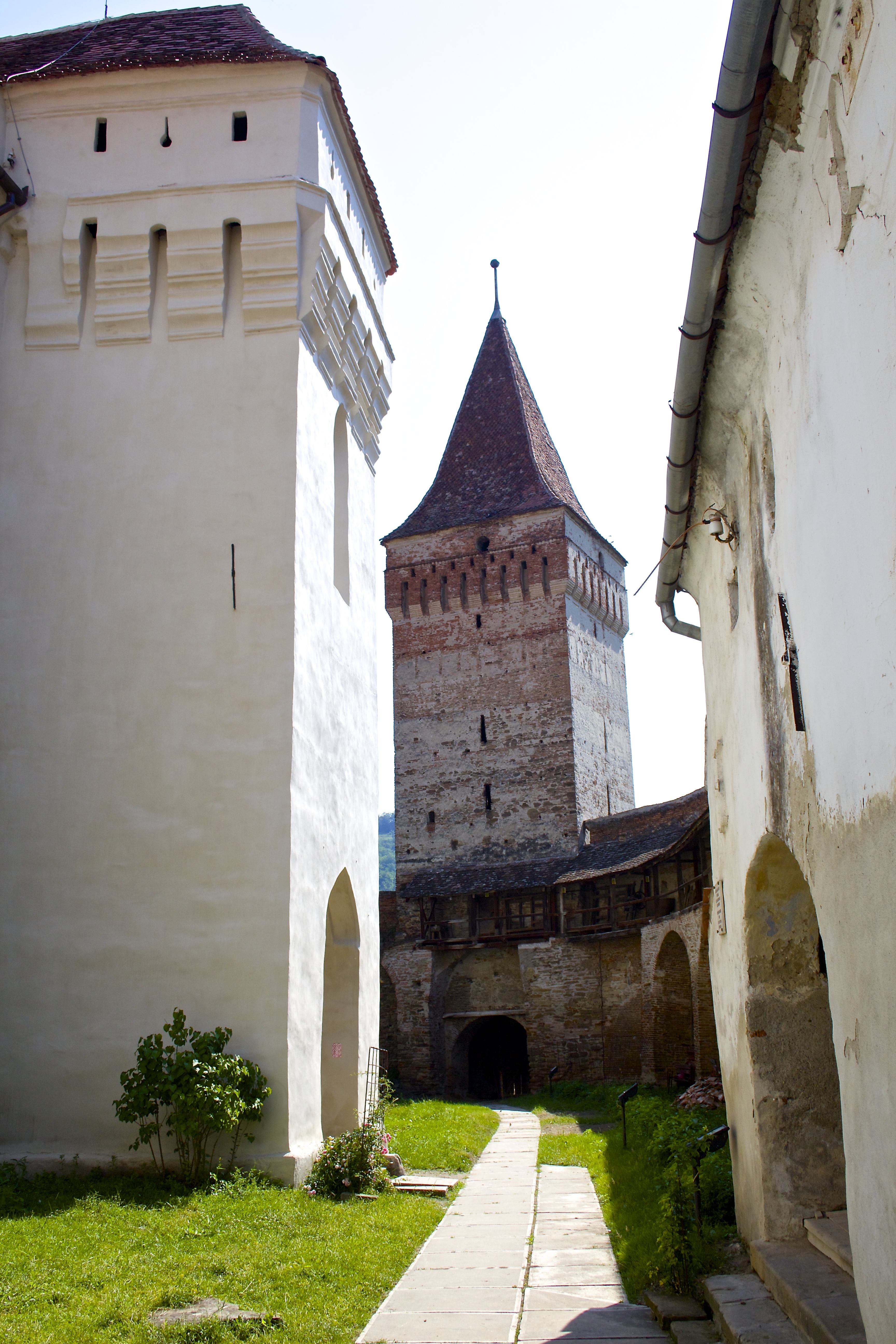
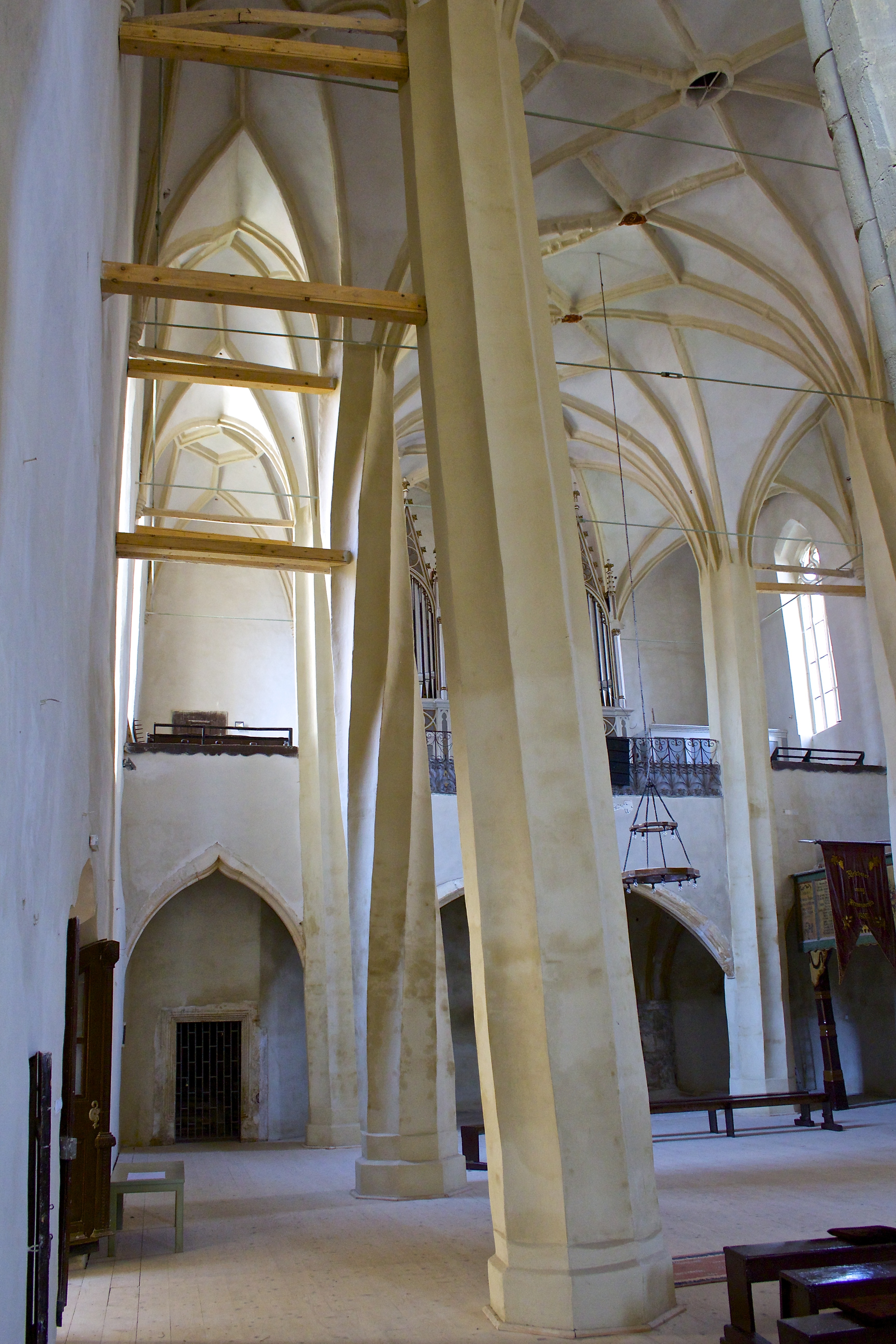
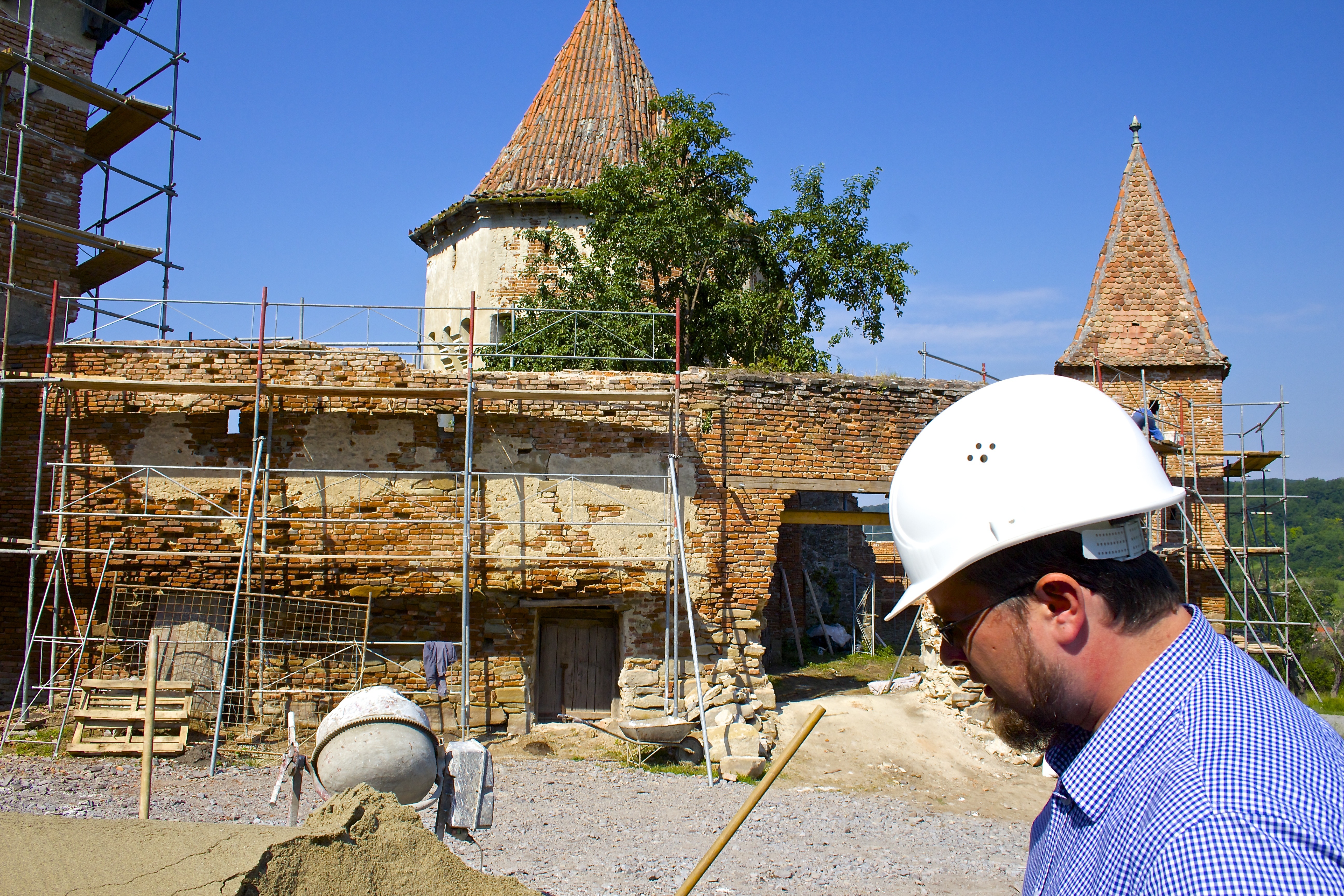
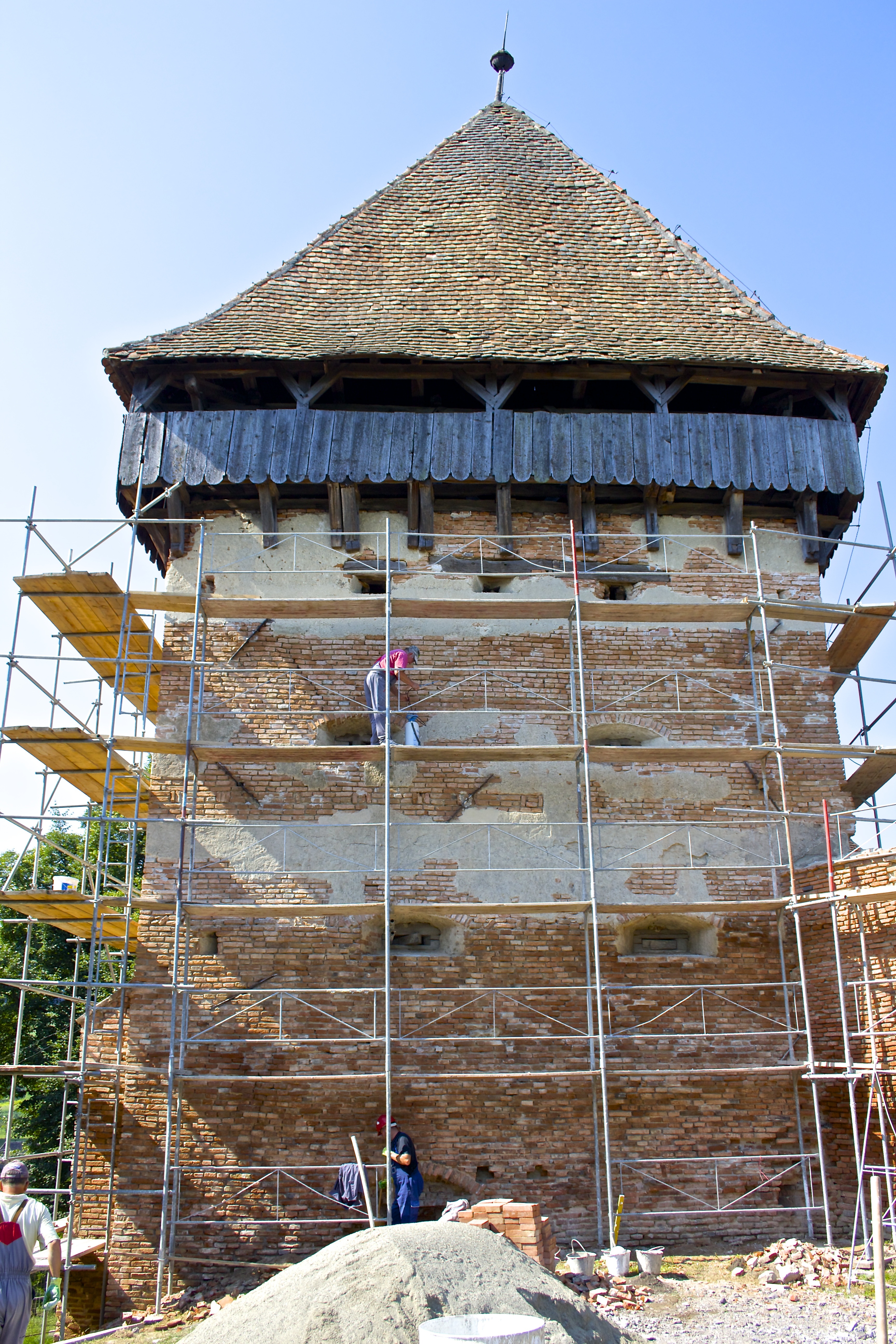
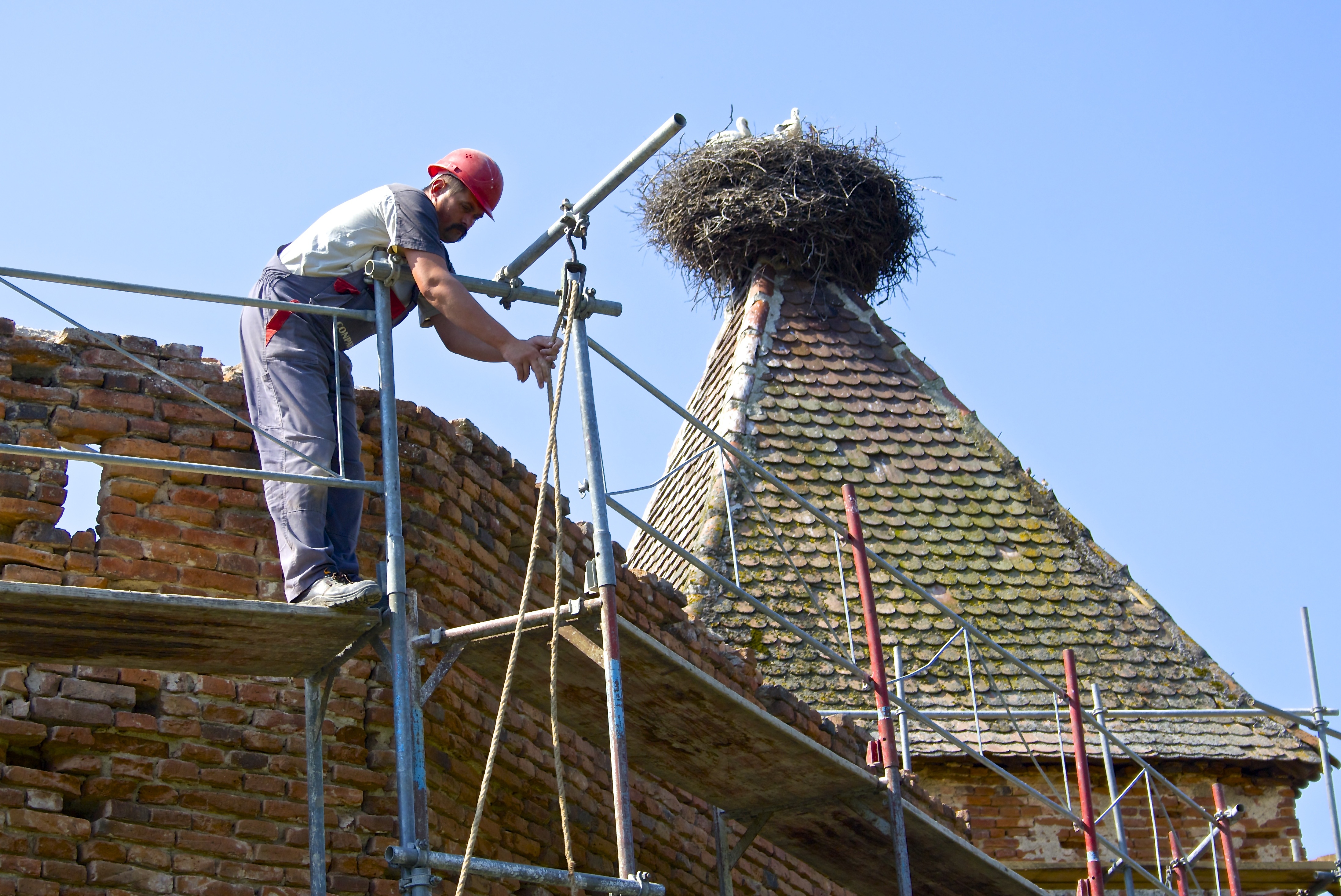
Up a small side valley was the little village of Alma Vii, whose 14th century hilltop church and its 16th century fortifications are being extensively restored, again with EU funding. I spoke with the conservator in charge, Soltan, who explained their use of traditional materials and the difficulty of sourcing the right kind of bricks. His attitude and principles seemed very much in line with a friend of mine who does a lot of Britain’s historic conservation work. Soltan is on a tight schedule to have the work completed by next March, or face financial penalties. He agreed there is a lot of such work in progress now, a great improvement on the anarchy he said prevailed after the revolution, instancing one ruined antiquity whose stones had all been removed by locals for their own building projects. He was not the first to volunteer support for the Prince’s initiatives in the area.
In Sibiu, I met Constantin Chiriac, Director of the National Theatre of Sibiu – there are four different regional “National Theatres’, reflecting the complex web of nationality Romania contains – and the man who started and runs the annual International Theatre Festival of Sibiu, which finished just last week. Now it is the turn of the Sibiu Film Festival.
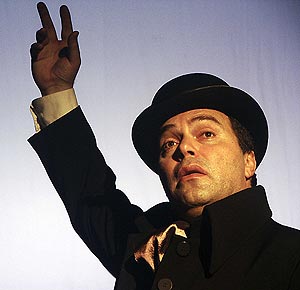

Constantin tells me that his is now the biggest theatre festival in the world, bigger than the Edinburgh Festival, with 427 shows in 65 venues attracting a sell-out audience of 65,000 a day. Unlike Britain, where he reminds me most audiences are preponderantly over 50, he claims 78% of his are under 30. During the year, they not only mount 400 theatre shows, but free outdoor multimedia events attracting big crowds.
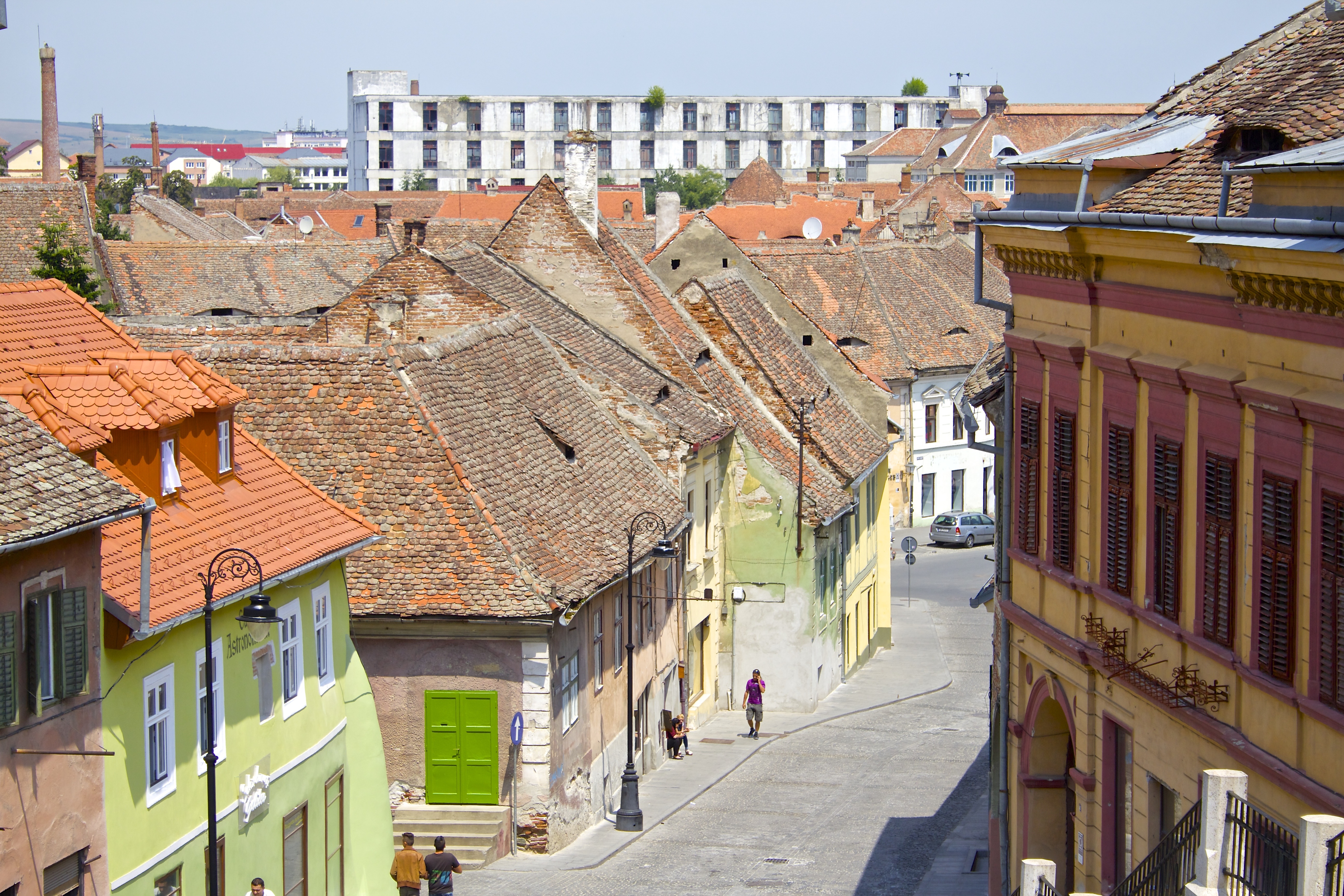
Sibiu, he says, is exceptional in spending 12% of its city’s budget on culture, with spectacular results locally, nationally and internationally. He sees that as integral to the rise of Sibiu’s former mayor, Klaus Johannis, to the Romanian presidency. This kingmaker was involved in productions under the Ceasescu regime – which he dismisses as philistine, but dangerously censorious – which mounted Richard III as a satirical comment. It is similar to the use of crime literature as a ‘below the target’ Trojan vehicle for satire, the samizdat literature of Eastern Europe. However, Constantin feels that new freedoms have brought new perils. Just as the corrupt concession of the forests to multinational rapacity threatens the patrimony, so he feels does EU bureaucratisation. He looks at Western Europe and descries a creeping conformity, which in turn has give rise to the new identity politics which is skewing Europe, from Catalan to Scots nationalism. He sees this reductionism as gravely regressive.
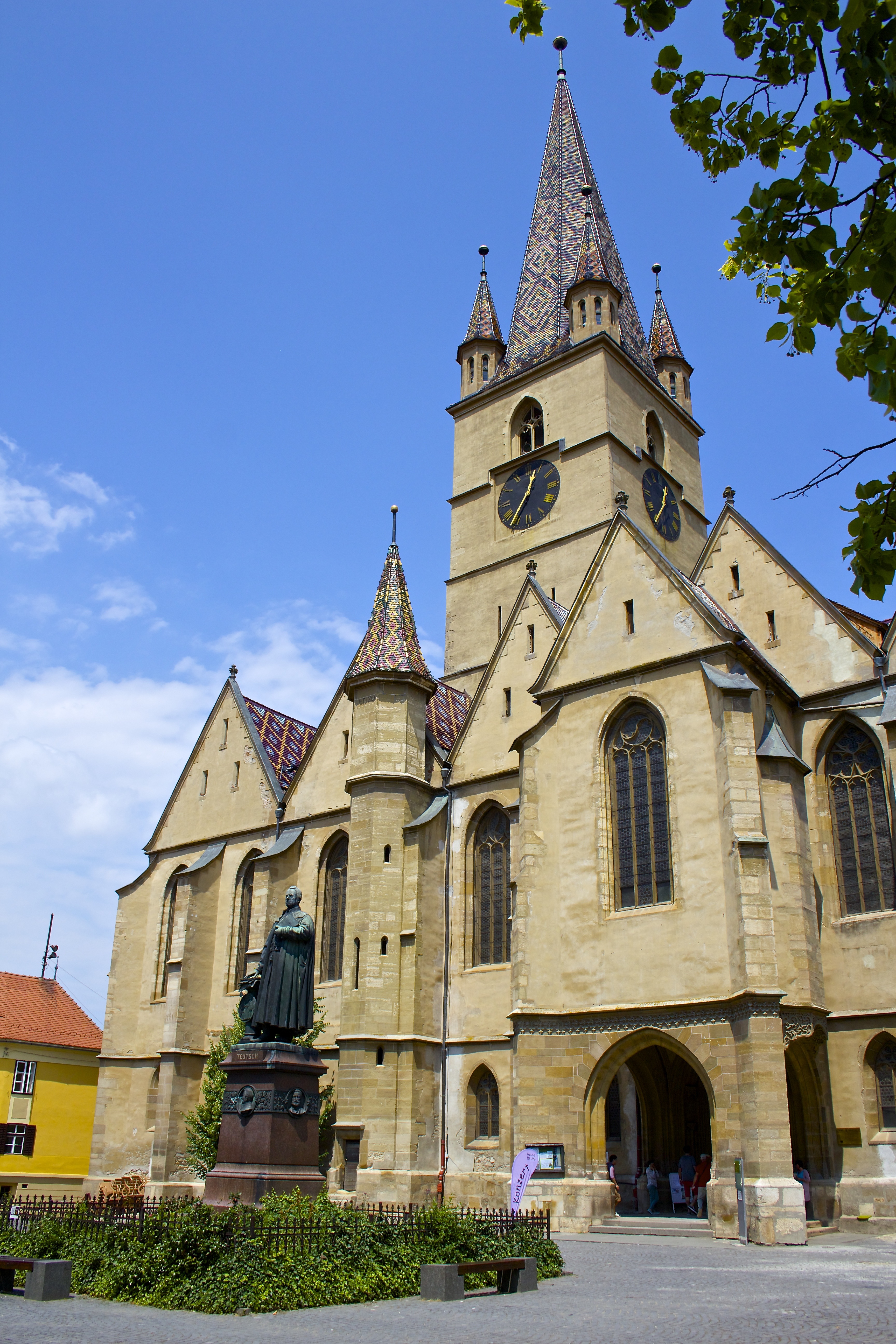
Constantin recommends Sibiu as a model of integration, even from the time that the Hapsburg supremacy would not allow Romanians to live within the walled city. He points to the street which has long had seven places of worship, from Orthodox, Protestant and Catholic churches to Jewish synagogue, living peaceably side by side. He said that in 2007, Sibiu had been a triumphant European Capital of Culture, and had managed to keep an all-inclusive buzz going since, unlike so many towns who enjoy the moment, then close down thereafter. (I was reminded of Glasgow, where I was working the January after their year of culture, and all the bars had already returned to their Presbyterian 11 pm closing.)
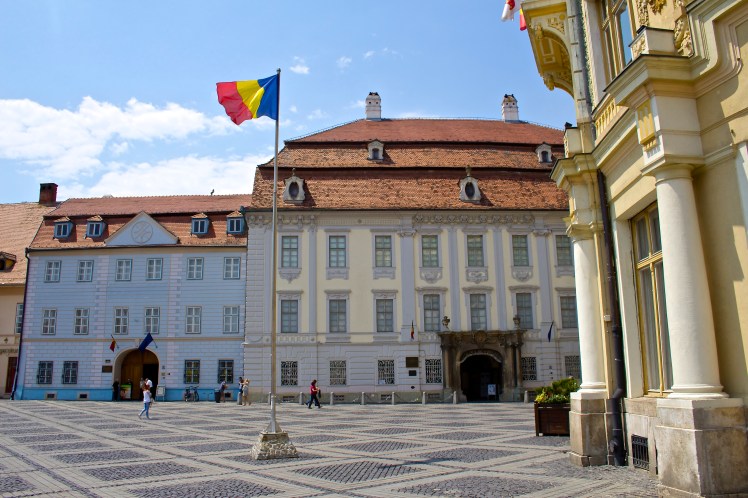
We agreed that Romania was still searching for a cohesive sense of national identity, and that a largely inert Ministry of Culture since 1990 was not helping. He agrees that museums lack any of the entrepreneurial and presentational skills which distinguish British collections. Constantin is particularly concerned about the brain drain abroad, and has done much to develop formal academic training for actors and theatre professionals, ensuring employment here for them. But rolling this out nationally faces formidable obstacles, with culture still seen as a small adjunct to real business, rather than as a real business in its own right.
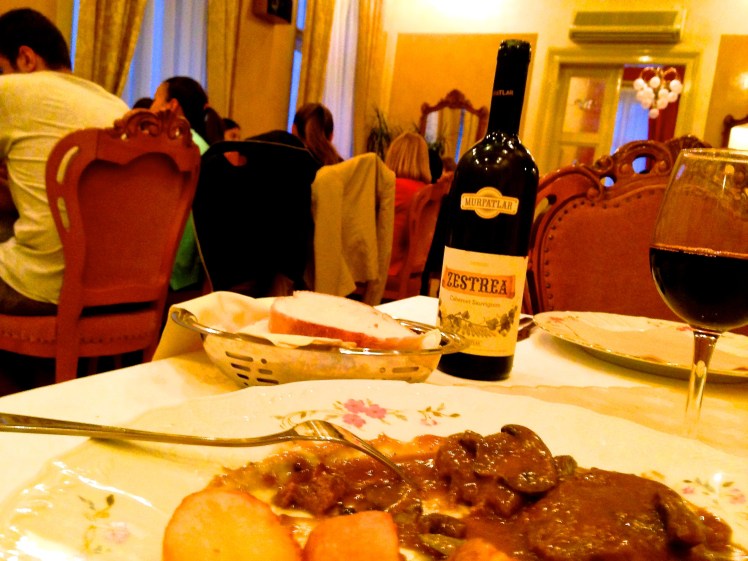
I am spending my last night in Romania in Timisoara, enjoying the faded grandeur of a city, a hotel and a restaurant which clearly looked westward for its cultural references in the late 19th/early 20th centuries. My hotel room is large and tall enough for royal tennis. For dinner I had Romanian versions of goulash soup (Hungarian), tournedos and sauté potatoes (French), with a Cabernet Sauvignon from Romania. The large party at the adjoining table were obviously work colleagues, apparently celebrating a female manager’s birthday or promotion. The awkwardness of their desultory conversation, and the forced laughter when someone raised the temperature for a moment, reminded me of other Romanian restaurants where I had seen large parties almost eating in silence. Here, one young couple arrived late, he in tee shirt and shorts and then spending the entire time on his mobile phone, before leaving even before the meal arrived. The food the party had ordered ranged from substantial main courses to ice cream and cake, all served at the same time. The gaucherie of the entire event was intriguing, a Mad Hatter’s tea party for people unaccustomed to socialisation. I don’t know how true that is, but the metaphor for a culture still struggling to find a coherent form seemed most apt. I detect a sense of Waiting for Godot, just as so many peasant women spend the entire day beside roads, optimistically hoping to sell some fruit, honey or jam.

 peterleewright.com