
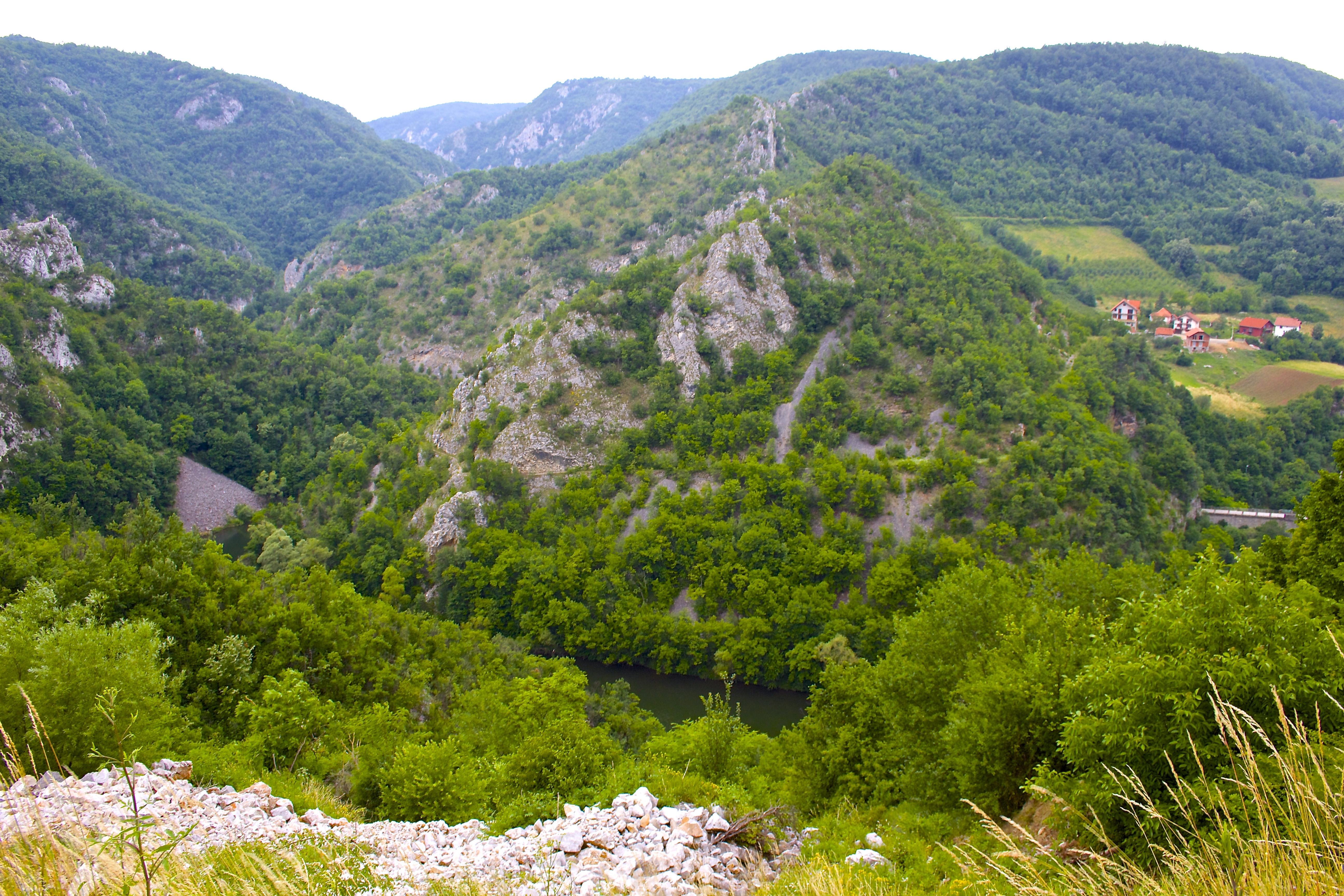
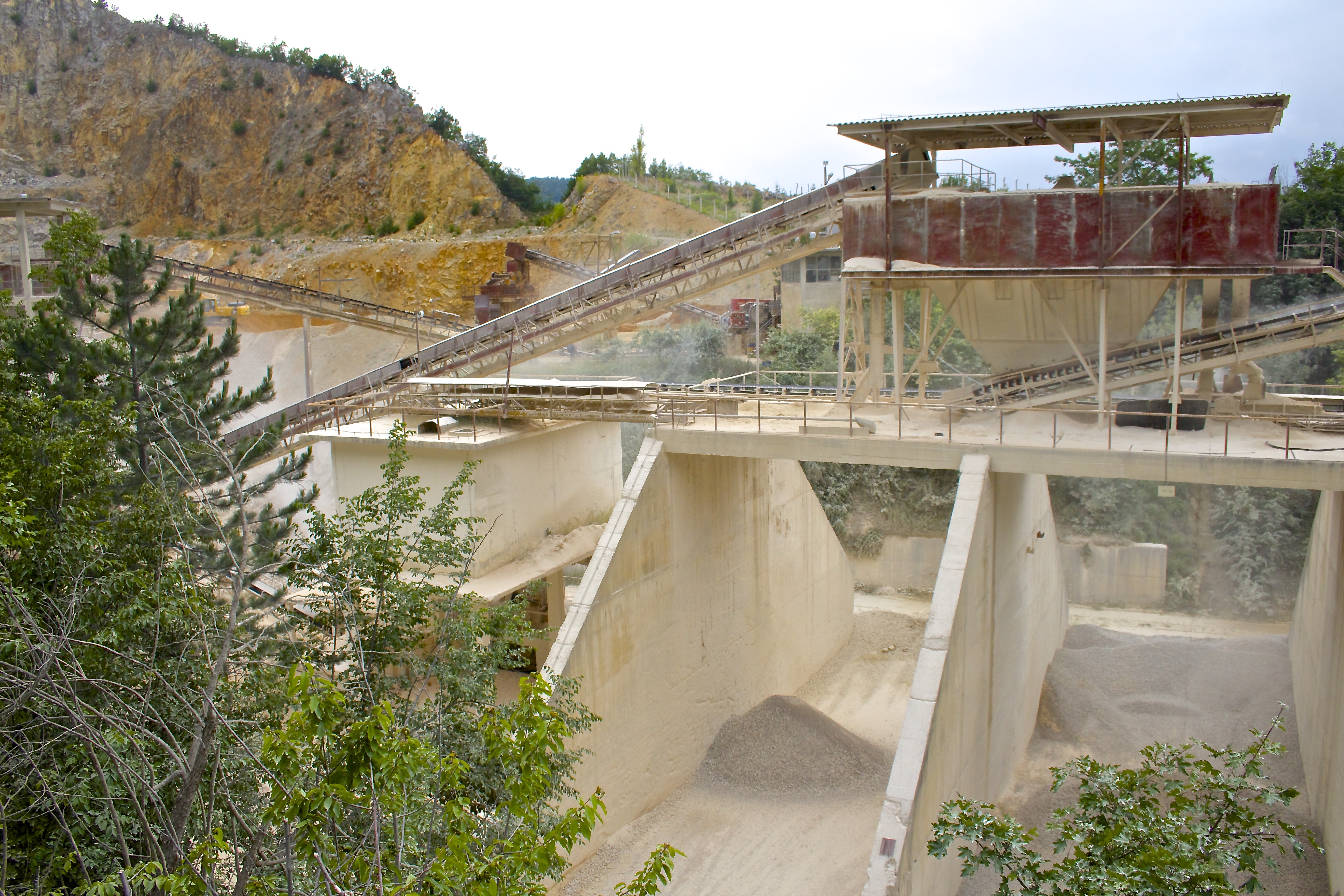
Uzice is a town hewn from the harsh vertical rockface of the Detinja valley. That rock is still being hewn, mountains ground into stone chip for construction use by Piteve.
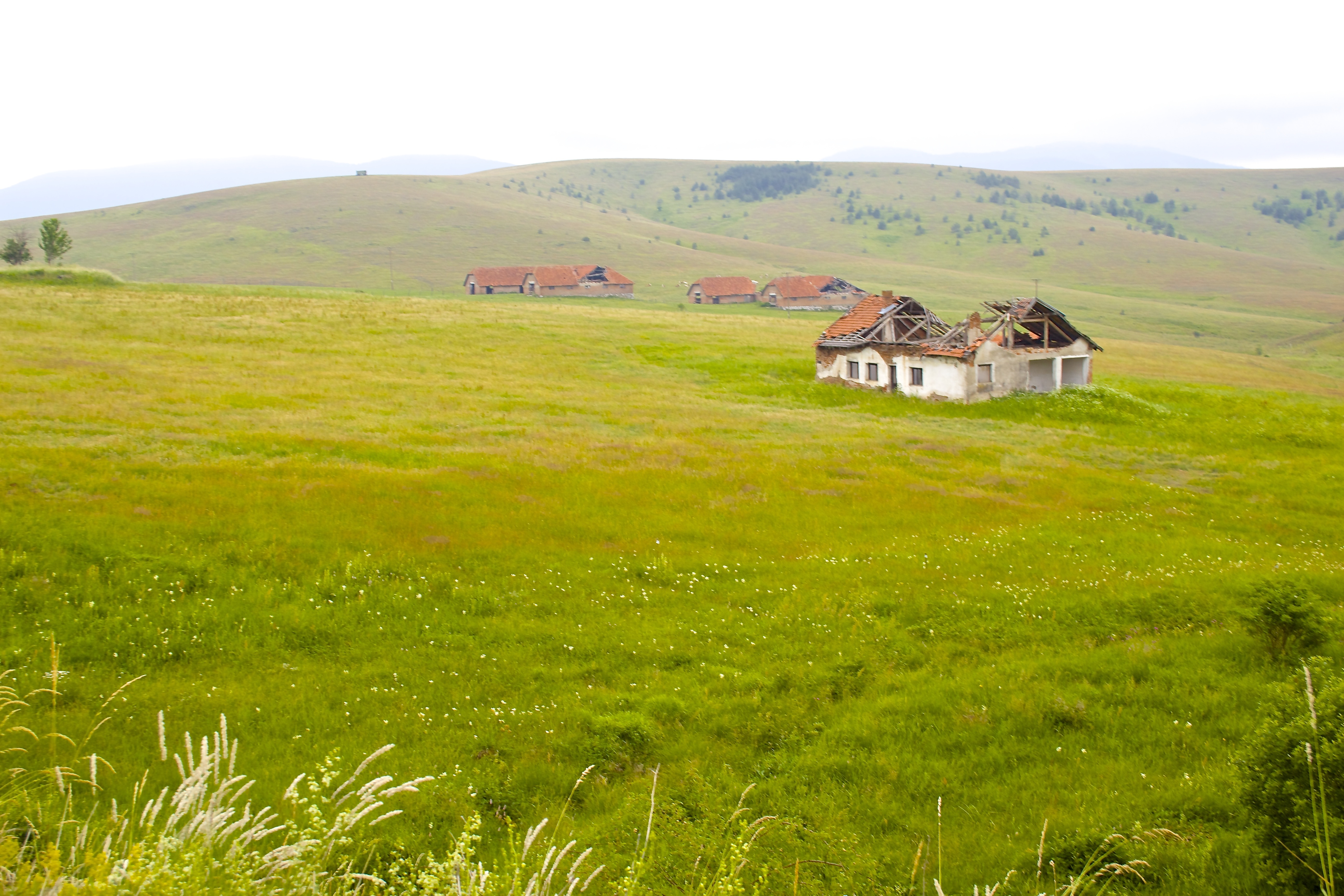
It is a simple trope that such hard ground produces hard people, but I feel there is something in it. Uzice is also gateway to the Zlatibor country park, a mountain area with hotels and other attractions. It seemed to me a rather desolate expanse of hotels in otherwise open country, with deserted open air swimming pools looking as attractive as the Arctic winter on this glowering, cold midsummer’s day. The area is also a winter ski resort, when I expect the weather is more appropriate. The road crosses a bleak mountain plain of deserted farm buildings.
A new road then cuts through the mountain forests of pine and larch, and along lakesides created by dammed reservoirs, and it is this majestic scenery which is the attraction, rather than the ill-judged excrescences of concrete.

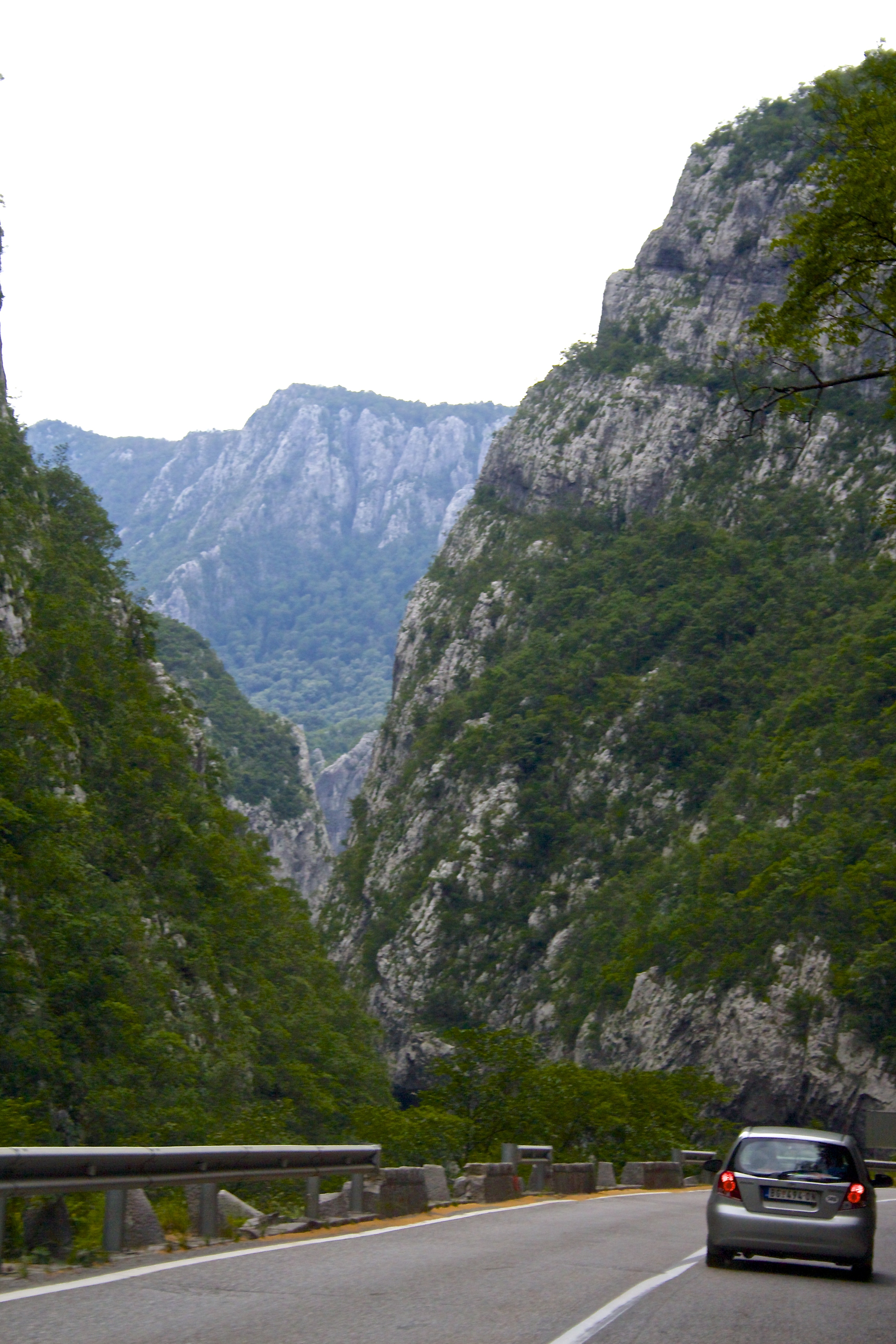
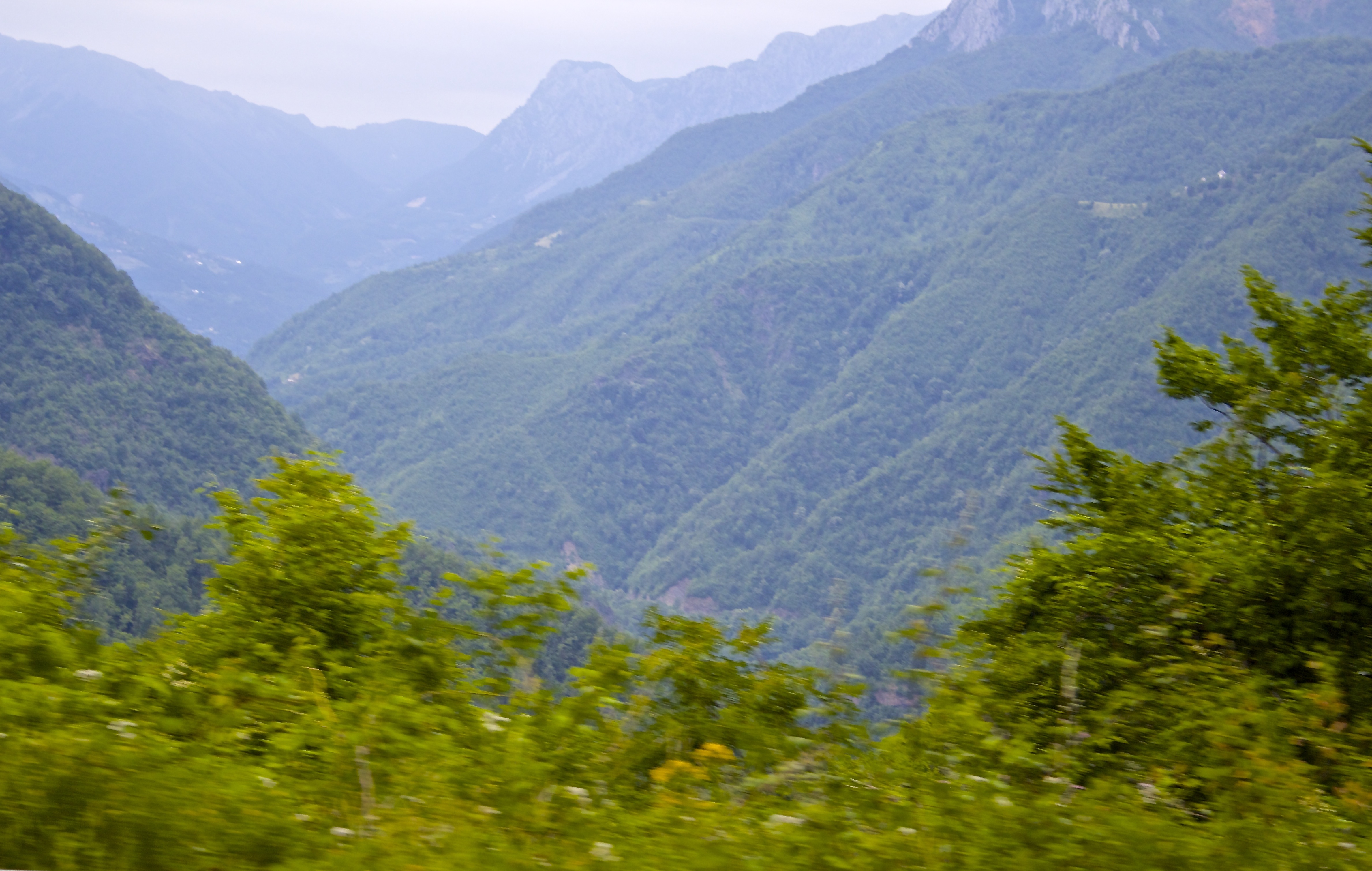
This is the start of the demanding but dramatic drive of 160 miles (five hours) through the mountains to Montenegro’s capital, Podgorica. It is one of the most spectacular mountain roads in Eastern Europe, an initial ravine on the Serbian side of the border easily matching Romania’s Bicaz Gorge, but without the annoyance of strings of tourist tat. The road skirts large reservoirs and ploughs through miles of forests of larch and pine. The towns on either side of the border, Prijepoilje and Bijelo Polje have nothing to recommend them, but then you really get going in Montenegro with the Bjelasica massif, a towering range with ten peaks over 2000 metres.
You then emerge from the pass at about 1000 metres into an enormous basin, encircled by mountains, and slowly curl down, as a reluctant insect might creep down the rim of a giant’s bowl. Today it was overcast, but still impressive.
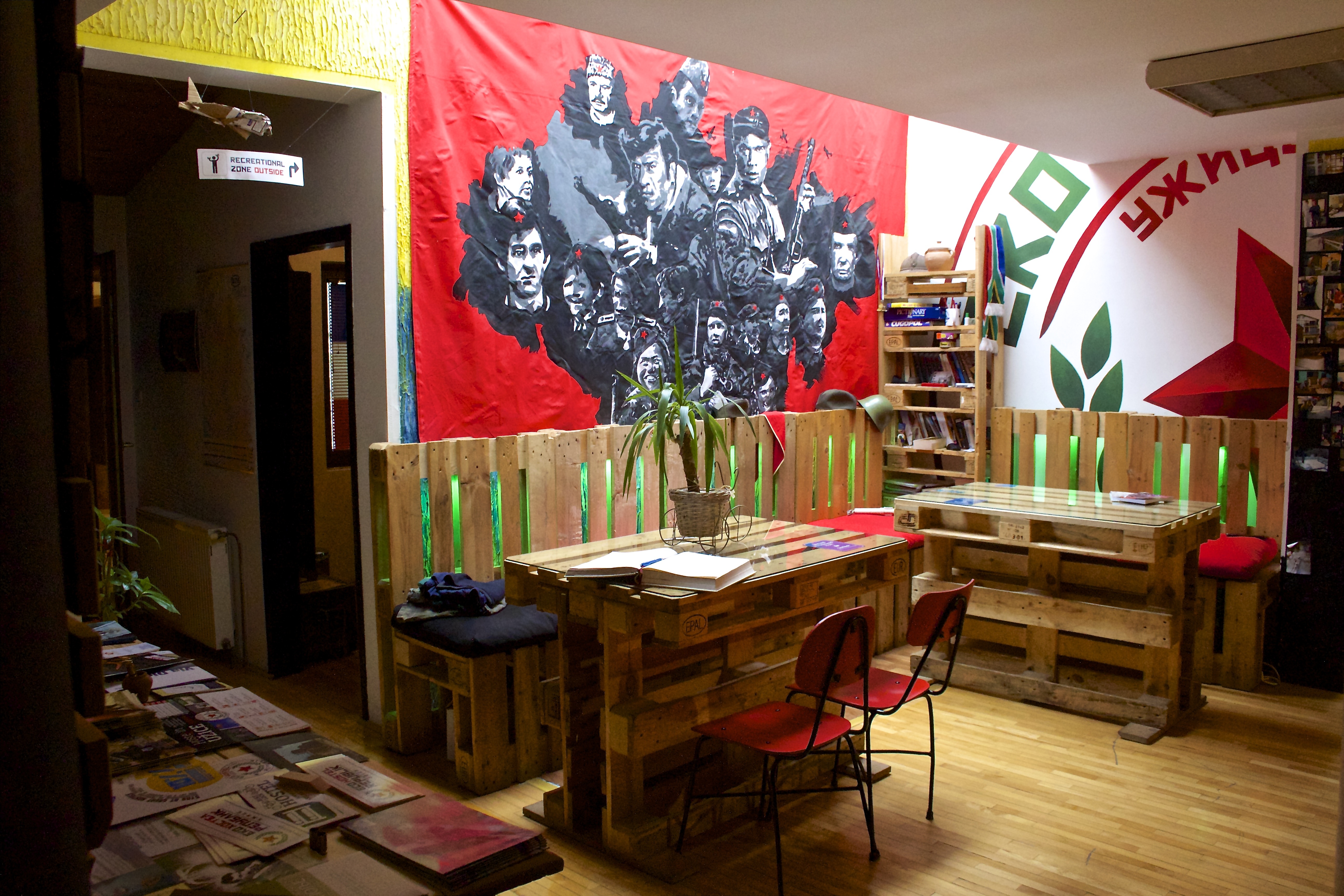
These regions are ripe for tourism, but their development needs to be carefully master-minded (if that is not too gender specific), co-ordinating transport and planning policy. There are tourism offices in the main towns, but these seem semi-detached and, quite frequently, closed. The main tourist offices in Suceava, Sighisoara and Timsoara were all shut when I called during the advertised hours. Another occupation still employing the apparatchiks. Coincidentally, Jeanne, a French student doing a Masters in Tourism at Toulouse University is currently on a three-month internship at the Eco Hostel Republik in Uzice, having fallen in love with Eastern Europe. She wishes to work in consultancy, and it is precisely her expertise these countries need, while her boss’s military memorabilia is more backward-looking.
On the Serbian side, on the road after the unlovely town of Nova Varos, you pass through ravines and along the side of the green waters of reservoirs, but then are confronted with a car-breaker’s yard proudly sitting atop a promontory commanding the valley. Later, what is clearly a civic refuse landfill site is almost spilling on to the road. I am all too aware of the potential charge of seeking to impose extraneous aesthetic standards. In Siberia, a local pointed to a patch of frost-blackened scrawny grass and said: “Isn’t that lovely?” Not to me but, in a region covered in snow for half the year, any resurgent growth is to be cherished. But unsightly and industrial processes cannot sit easily with natural beauty and attracting tourists. The Serbs have significantly improved the road, but may not have investment or impetus to coordinate a development strategy.
When I reached today’s destination, Cetinje – the ancient capital of Montenegro and briefly capital again from its recognition as an independent state in 1878 until its incorporation into the Republic of Yugoslavia after the First World War – I met Peter, a graphic artist who is leaving shortly for Canada, disgusted at the corruption and complacency of a government who he says have merely changed their name from communist to capitalist, but done nothing but enrich themselves, while selling off the coastline to Russians. Beaches he could enjoy as a boy are now off limits, just as NHS car parks and other public spaces in Britain have been privatised. Furthermore, he says that the Germans offered Montenegro a multi-disciplinary masterplan to develop their tourist industry fifteen years ago, but the government has failed to implement it. He says next to nothing has gone in to infrastructure development, in contrast to what he sees in EU neighbours.

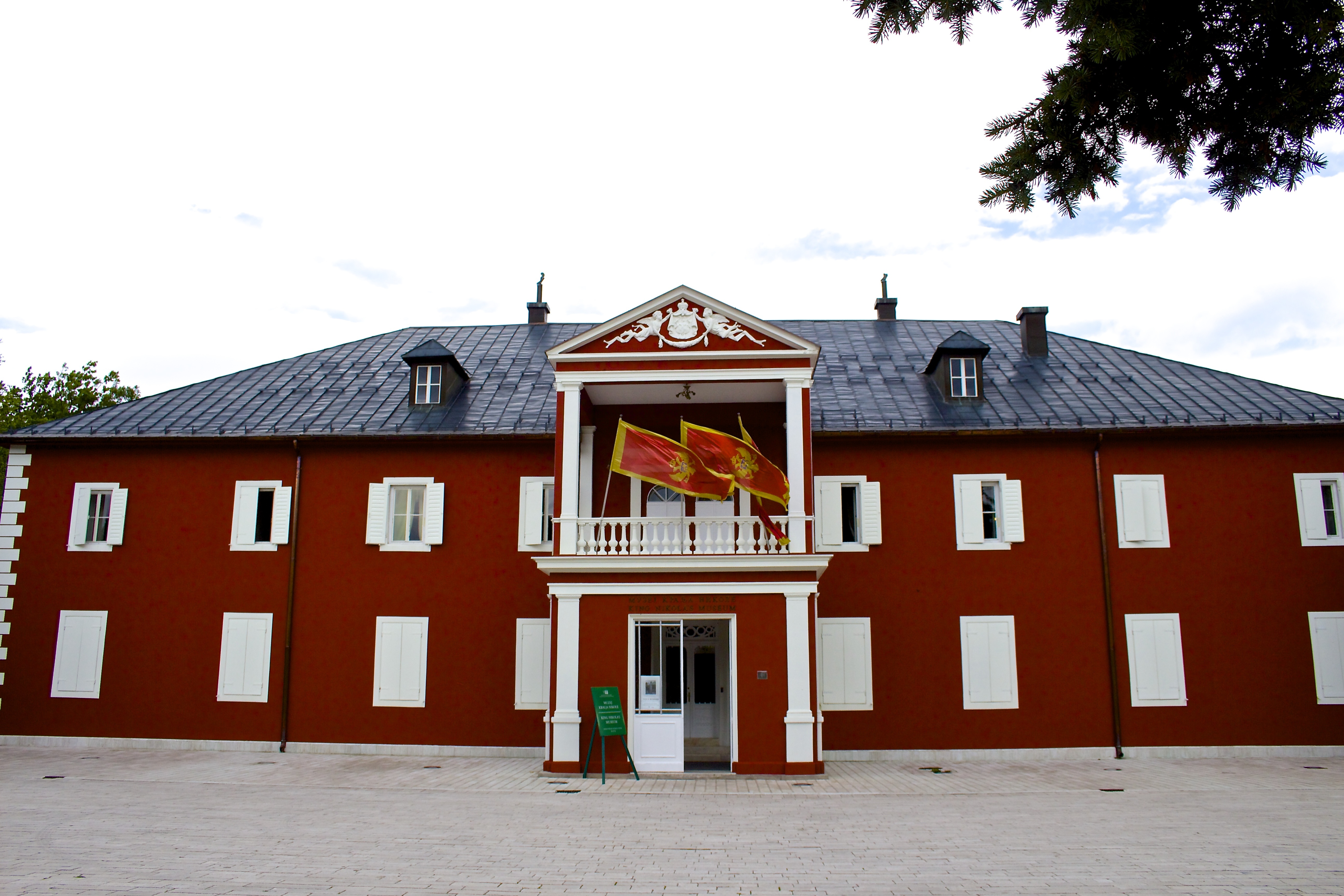
Cetinje is delightfully weird, a small town with a host of rather grand buildings, built as embassies by the key powers at the end of the nineteenth century, in recognition of Montenegro as then becoming the 27th independent state of Europe. When it became a small part of the larger Yugoslav whole, the diplomats scarpered, leaving all these grand embassies. This is the British embassy, now the local Music Academy, and distinguished by being less pompous than most, designed to reflect the country vernacular.

There remains a striking residue of pride in Cetinje, perhaps best enshrined in its new National Museum of Montenegro, currently showing Skopje’s collection of Picasso drawings, prints and ceramics.
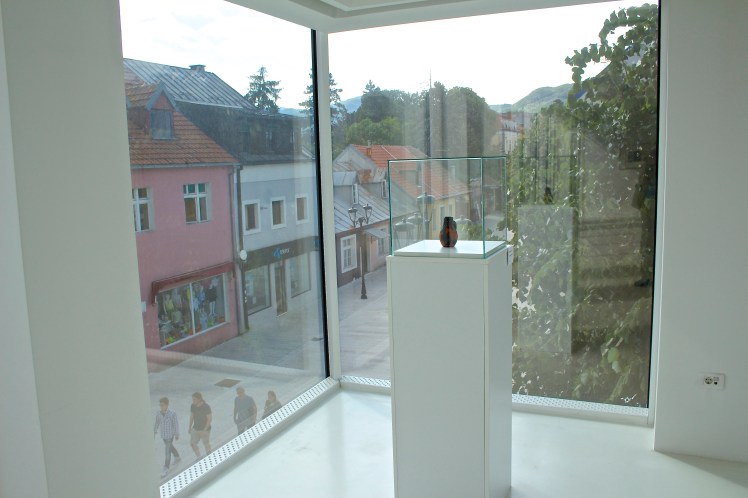
Among my favourite pieces was this dish, etched with Face of a Woman (1955).

My favourite dish tonight was a local speciality, Mala Karadordena, a veal escalope rolled and stuffed with cheese, then deep fried in a breadcrumb coating and served with a sour cream sauce. They also serve freshly baked flat bread around here, a huge improvement on Romania, where the bread was generally large loaf, undistinguished and often stale. I only had one decent loaf in two weeks, and that I bought in the Gora Humorului market. Even mid-market hotels served packaged bread I would only feed the dog. This may be another example of my importing extraneous values, but the quality of the bread staple does seem a perfect international marker, irrespective of nations’ variable wealth.
My admittedly brief experience of Montenegro is that it is distinguished by three things: mountains, wine and traffic jams. The latter were caused by i) incredibly inept management of roadworks; ii) ten-second traffic light changes when that is what it takes for the average old banger to engage gear; and iii) inadequate parking at some event, so people decided to park in the middle of a main road. I shall be returning to Montenegro in a couple of days, so I shall reserve judgement until then.
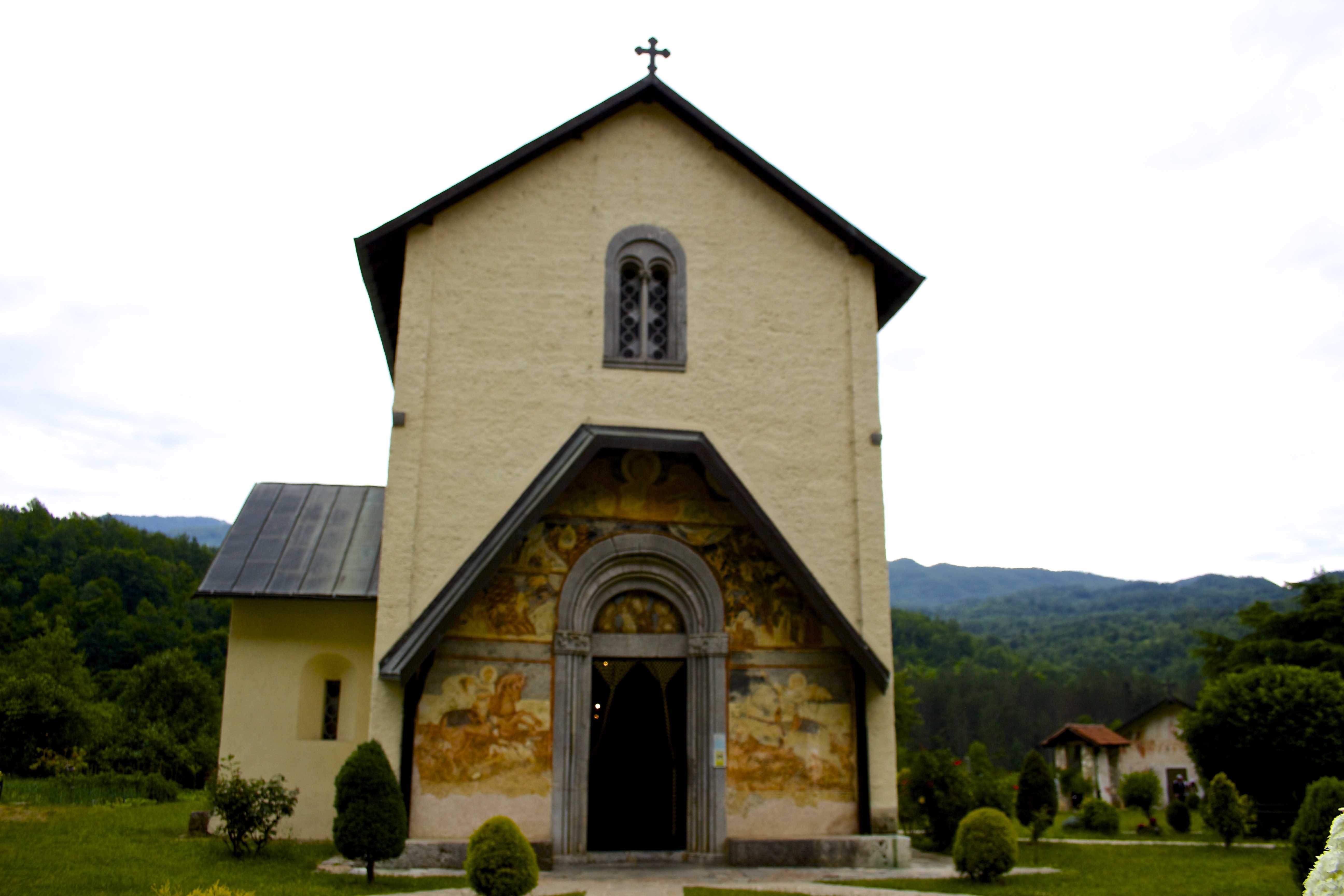
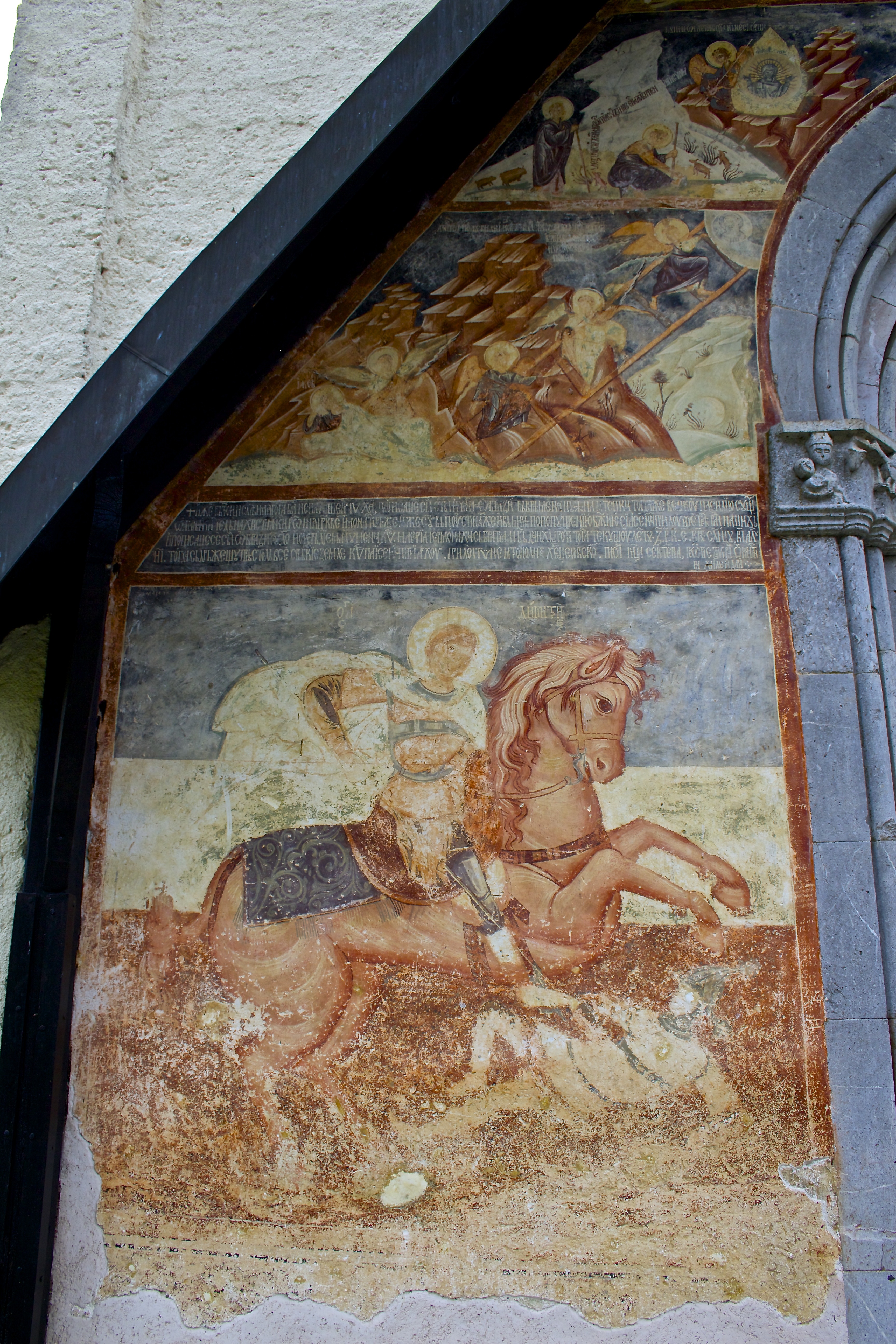
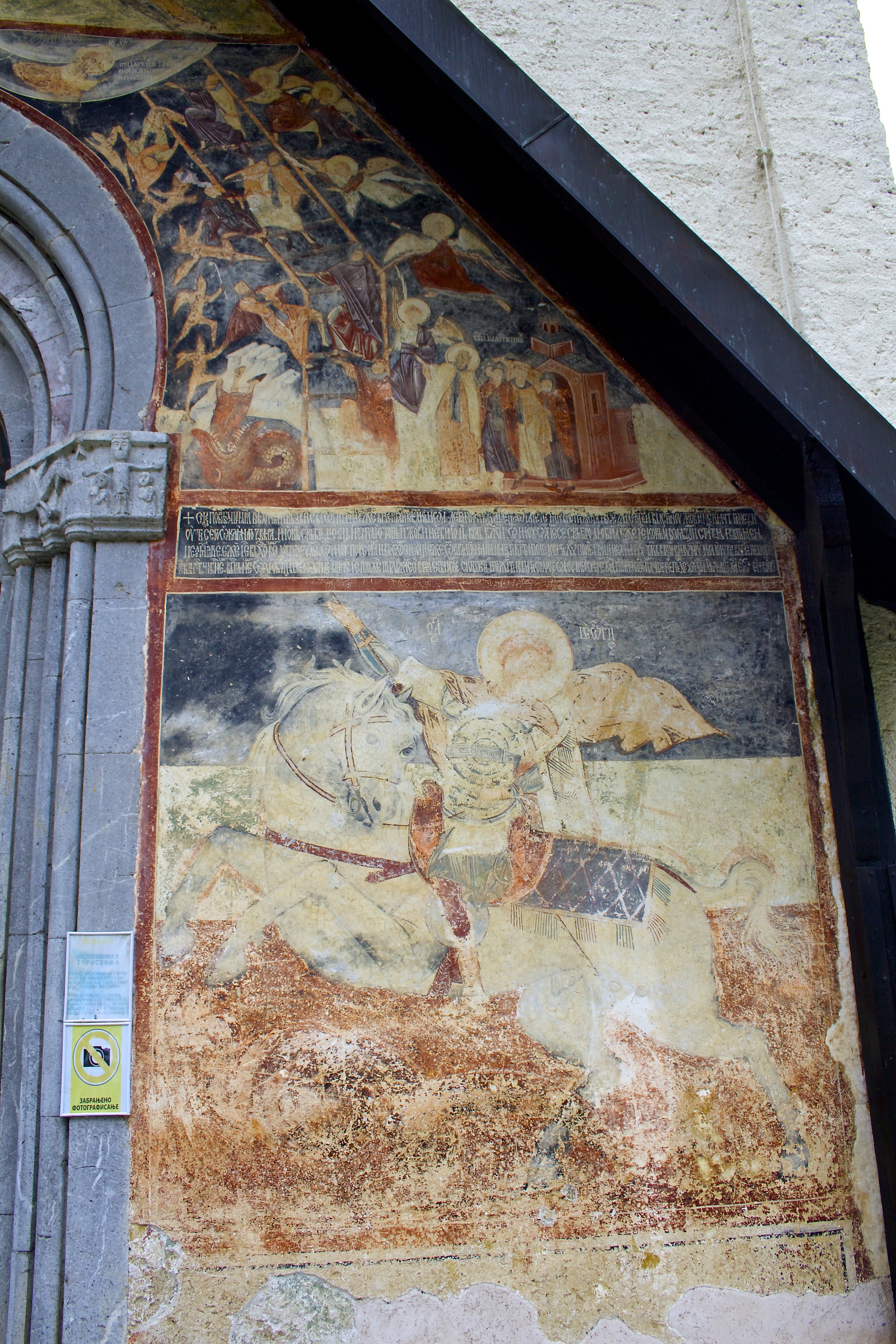
On the way here across the mountains, there are another superfluity of orthodox monasteries. One I happened to stop at revealed that Moldavia was not alone with having had painted frescoes on the exterior walls.
 peterleewright.com