

Just follow the umbrella like a crocodile of schoolchildren or, in this case, the dangling heart and listen to the enhanced commentary delivered on the built-in portable sound system. I once saw a woman completely covered by a swarm of midges in September in the Scottish Highlands, an unwanted version of those lunatics who cover themselves with bees to get in the Guinness Book of Records. That’s what some of these towns are like. To avoid the pullulating masses, with their ice-creams and sunburn, you have to look upwards, at the glorious stonework whose beauty notionally attracted them in the first place.
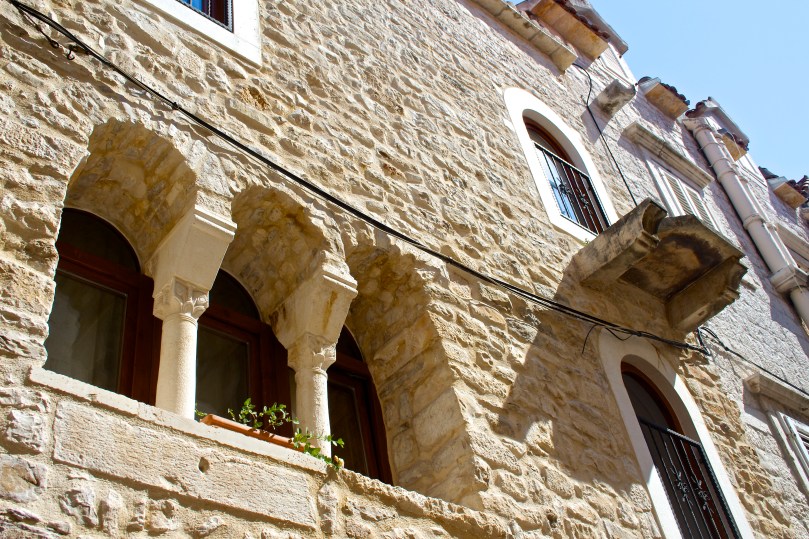

My general plan of action has been to stay in smaller villages or towns near to the main attraction, ideally by boat, thus avoiding the hordes in Cavtat near Dubrovnik and Dobrota near Kotor. However, Trogir, a small walled town across the bay from Split, turns out to be more infested than its more famous neighbour. Its small streets are even more crammed with tourists and restaurants noisily trying to attract them, and there is less room to escape. But if you keep your eyes up, there is still much to attract:
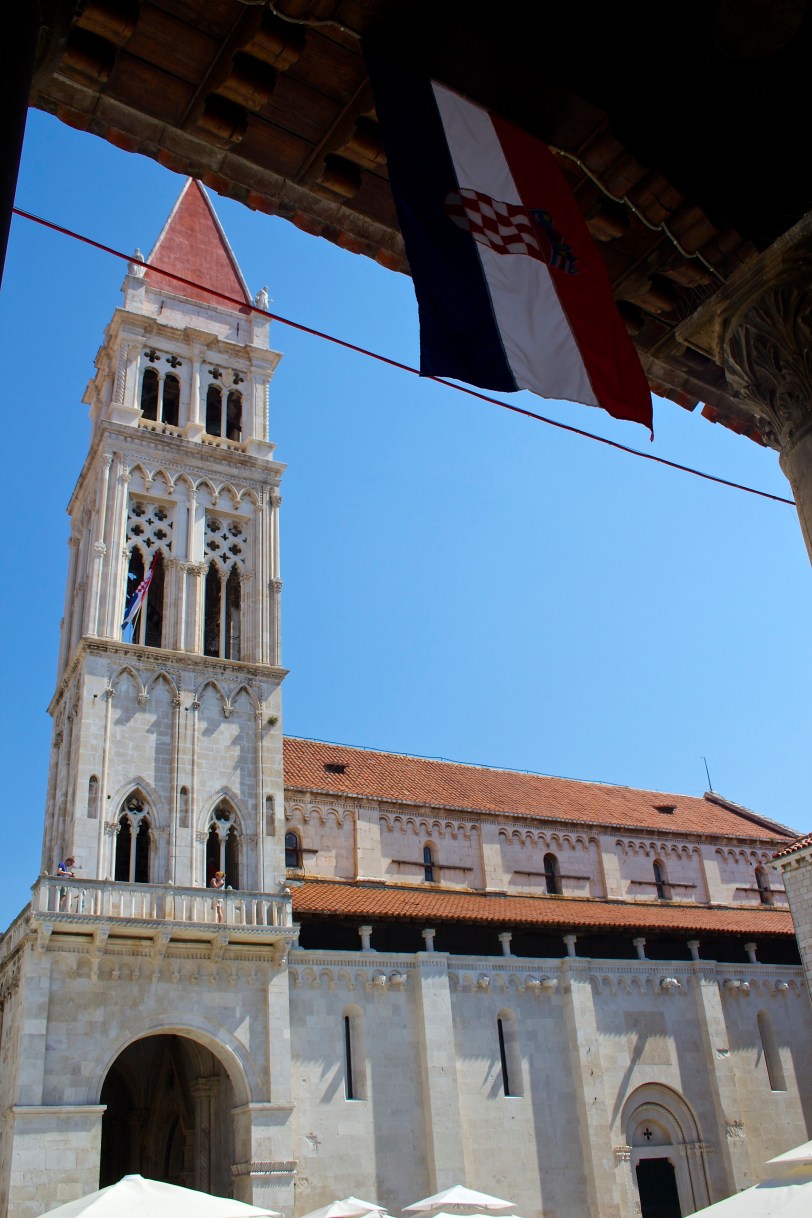
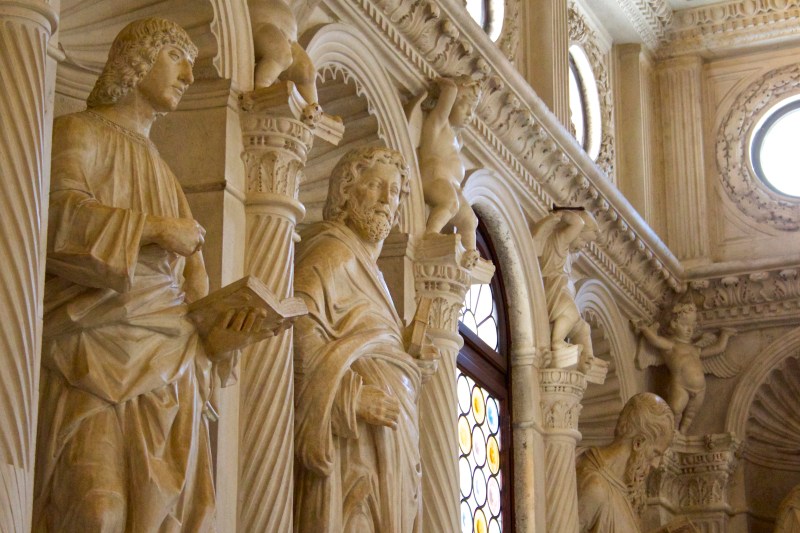
Not least in the 12th century Cathedral of St Lawrence, which continues the tradition of fine stone carvery and boasts an unusual three-dimensional Christ as a ceiling rondel.

The 15th century carved wooden choir stalls are also very fine.

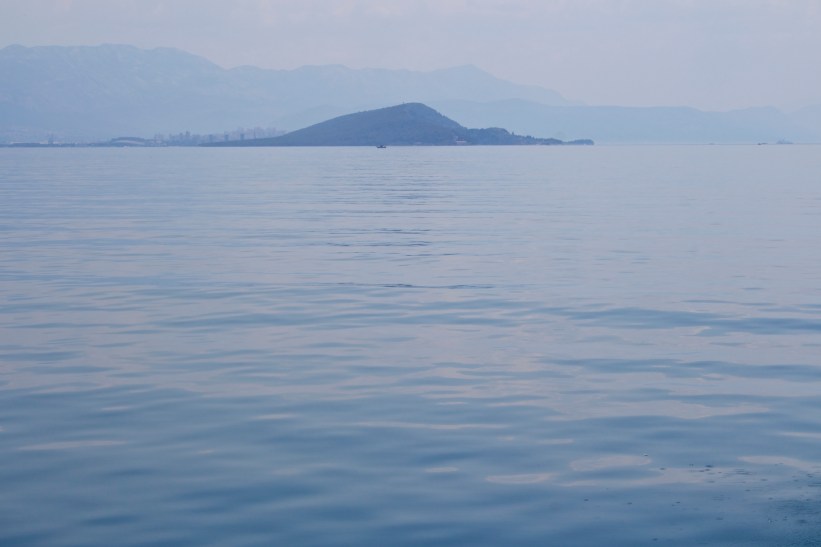
Nonetheless, we took a ferry across the bay to Split, several miles of eerily glasslike stillness. The headland eventually arose out of the morning sea mist like a slumbering humpback whale.
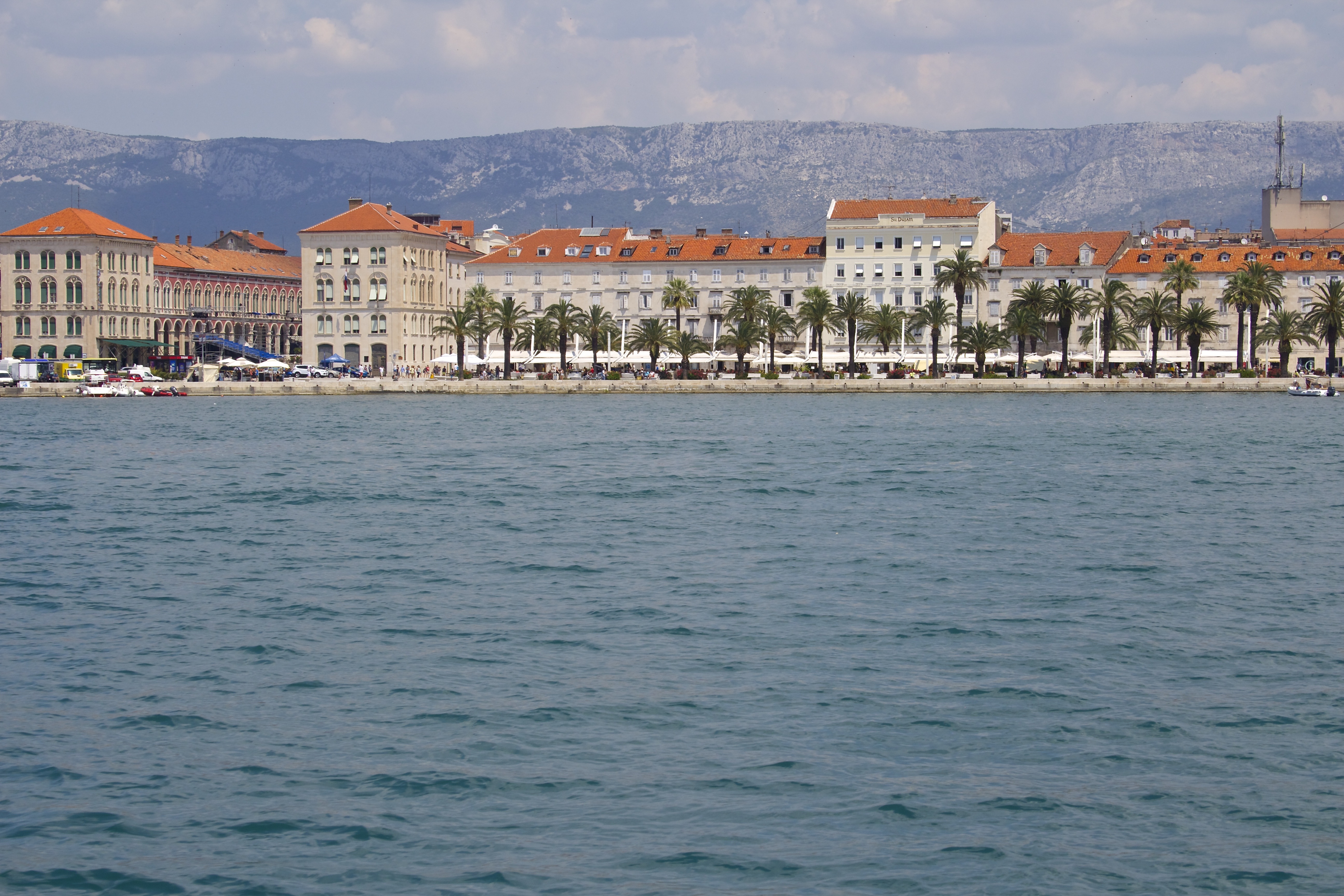
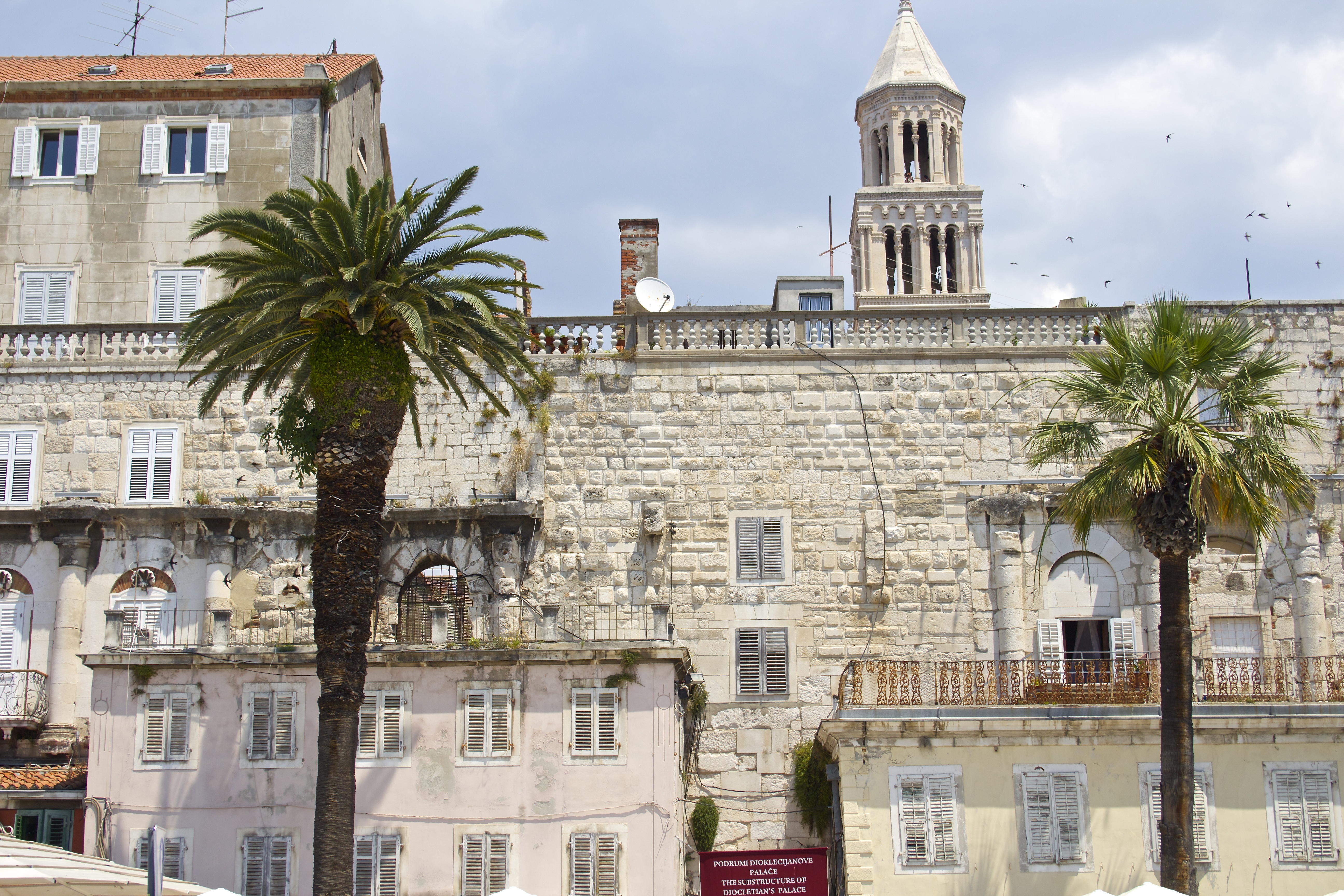
Split presents as a a kind of mini-Venice without the canals, but its unique attraction is that its central core is built in and around the remains of Diocletian’s summer palace. Diocletian, after 21 years as Roman emperor, was the first to abdicate voluntarily, in 305 AD, and spent his retirement here growing vegetables, so there is hope for us all, although he only lasted another six years. Unlike most other Roman ruins, these were not knocked down and materials used for other purposes, but the main structure has been retained and new buildings inserted and added over the centuries, so that 3,000 people still live here.
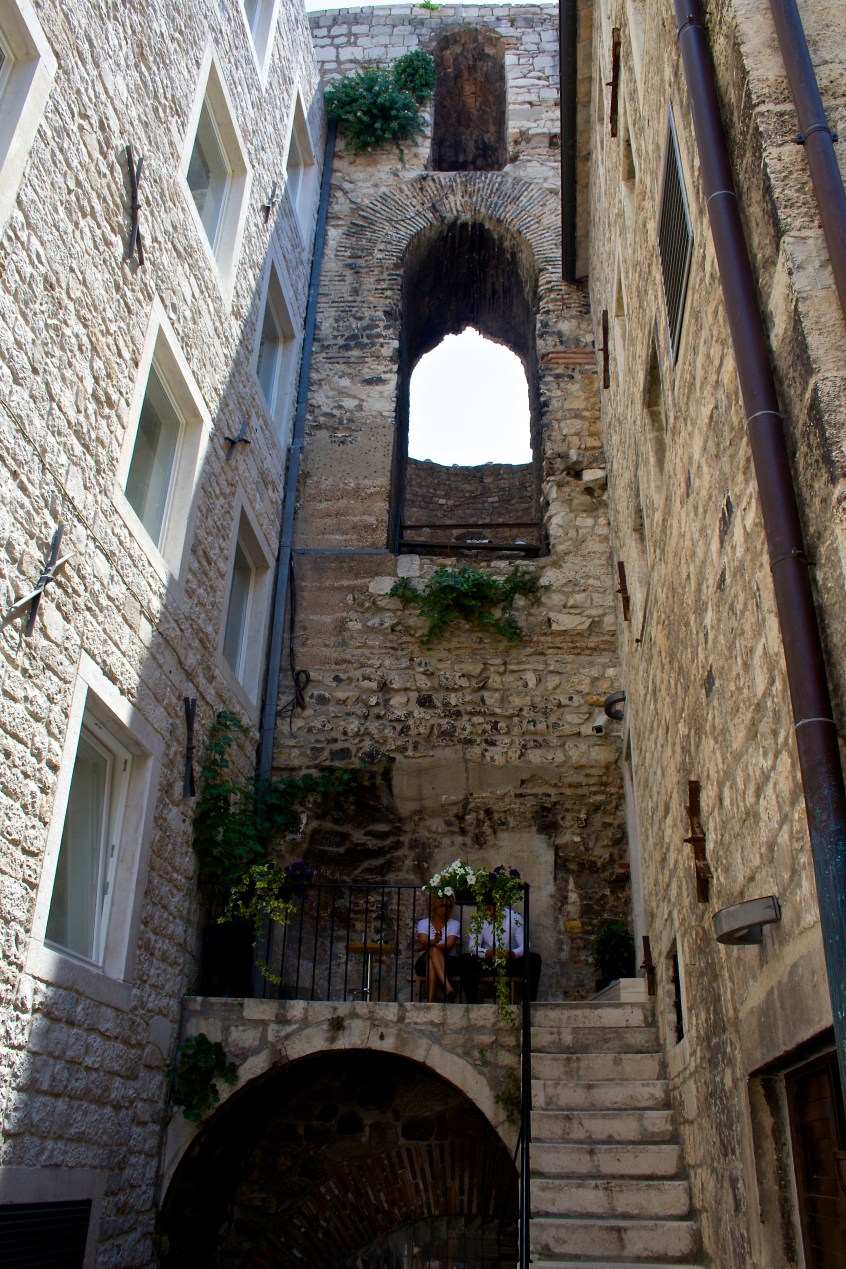
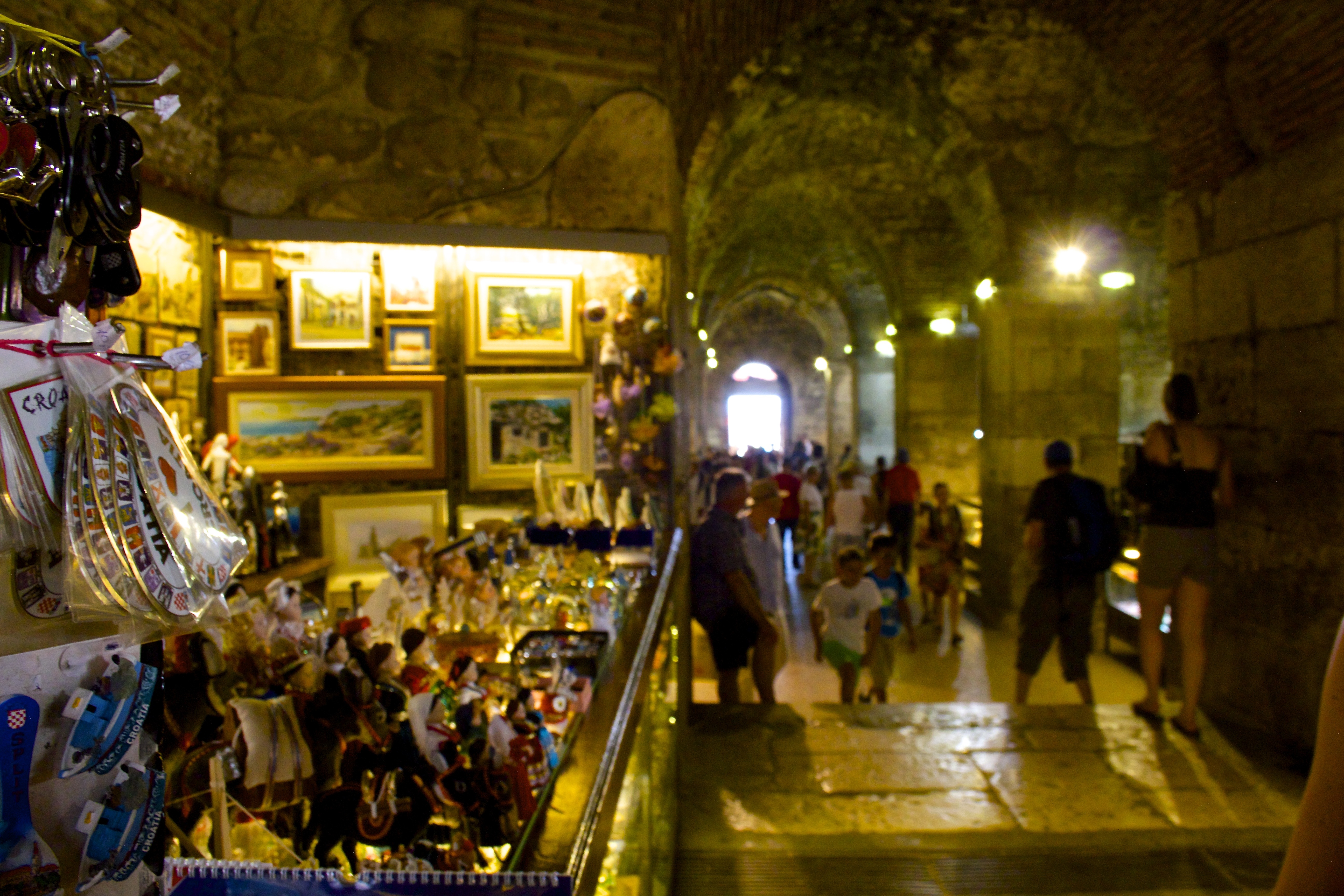
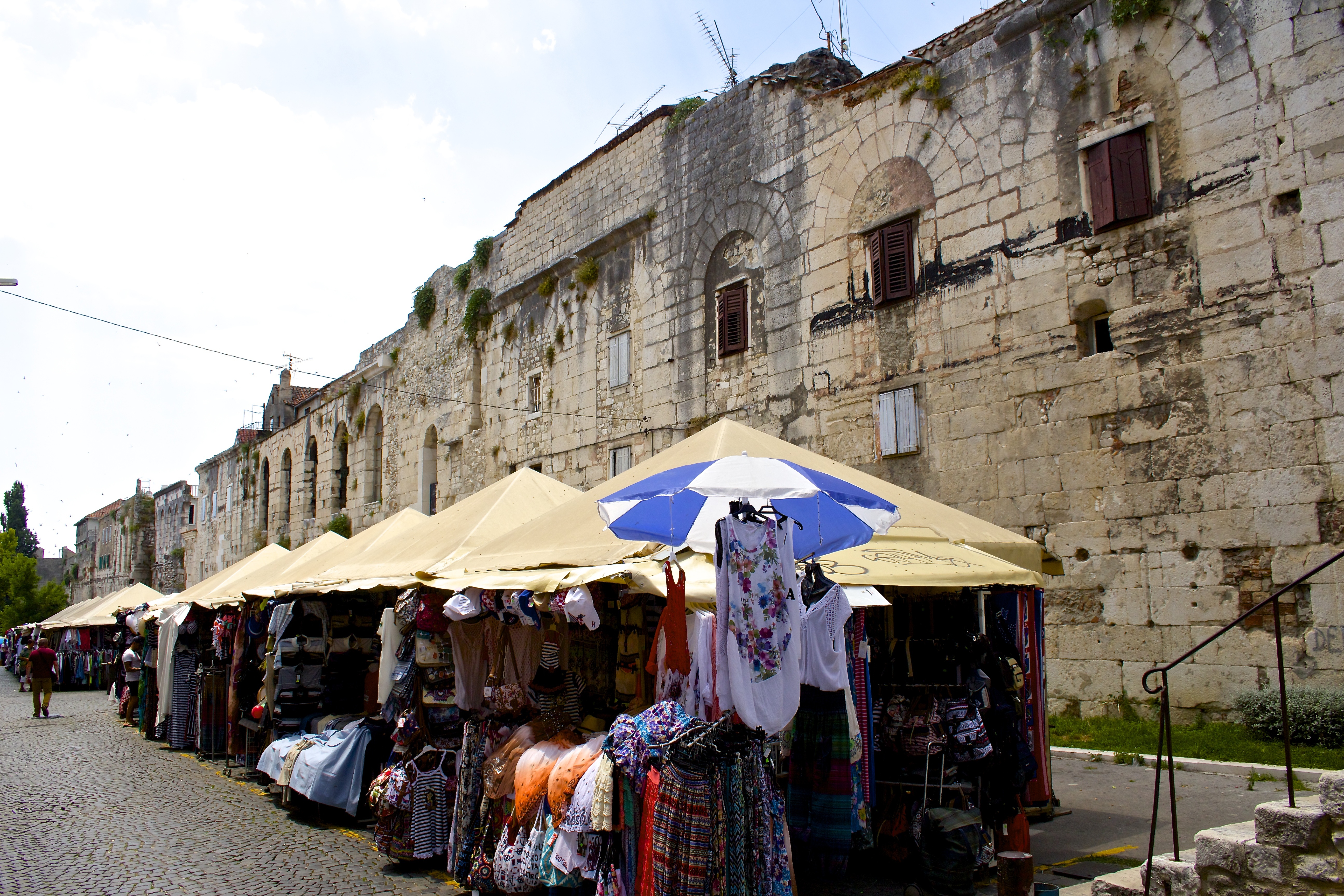
The problem is that most of them are energetically involved in the selling of old tat, both in the massive underground complex and around the walls. It is as if they had opened a Tesco Express at Stonehenge, or a flea market inside Rome’s Pantheon. But even this cannot detract from Diocletian’s Palace remaining one of the largest and most impressive surviving Roman buildings, and exceptional in housing a living city, rather than being a dead mausoleum.
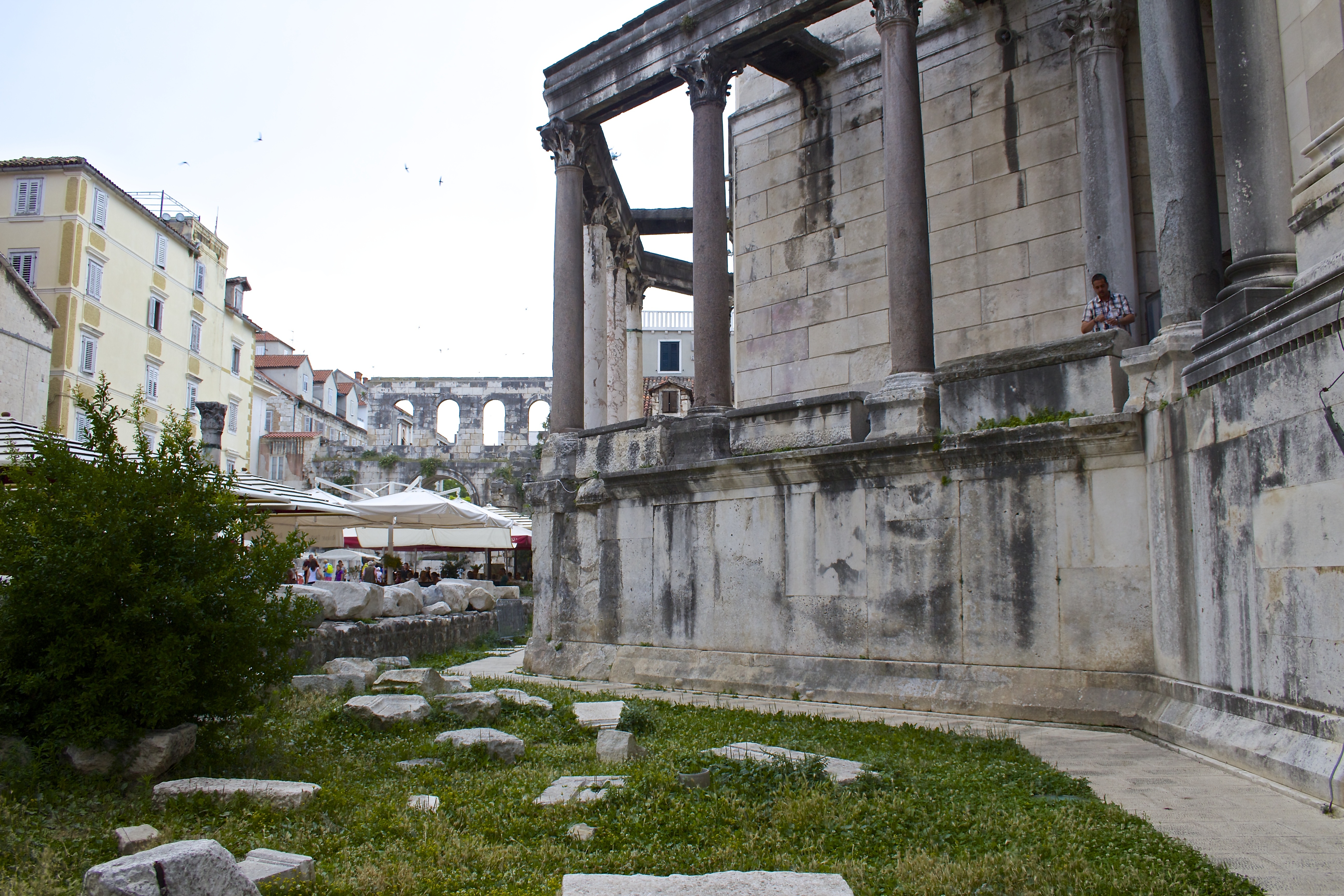
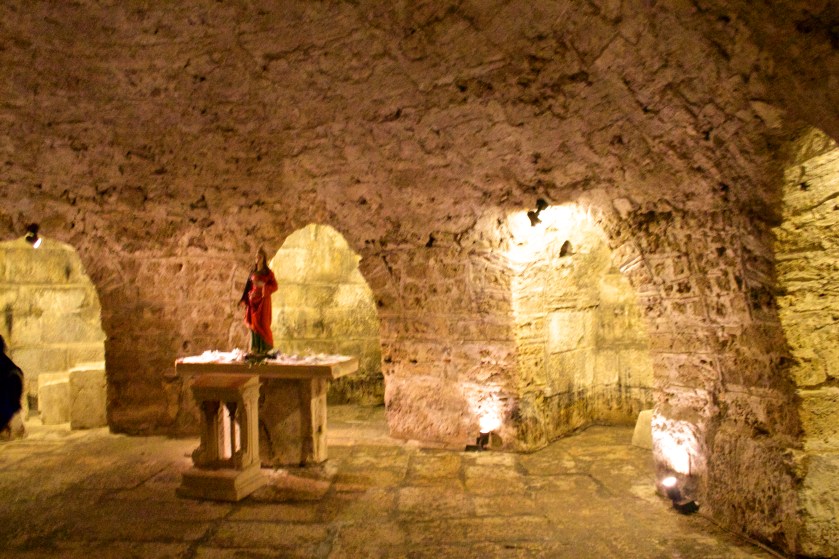
The Cathedral of St Domnius is built upon the foundations of Dicoletian’s mausoleum, and the crypt has now been expropriated by St Teresa, around whose rather naff statue people still leave written supplications on behalf of sick or dead relatives, just as they do in the Orthodox church, as I witnessed throughout Moldavia.
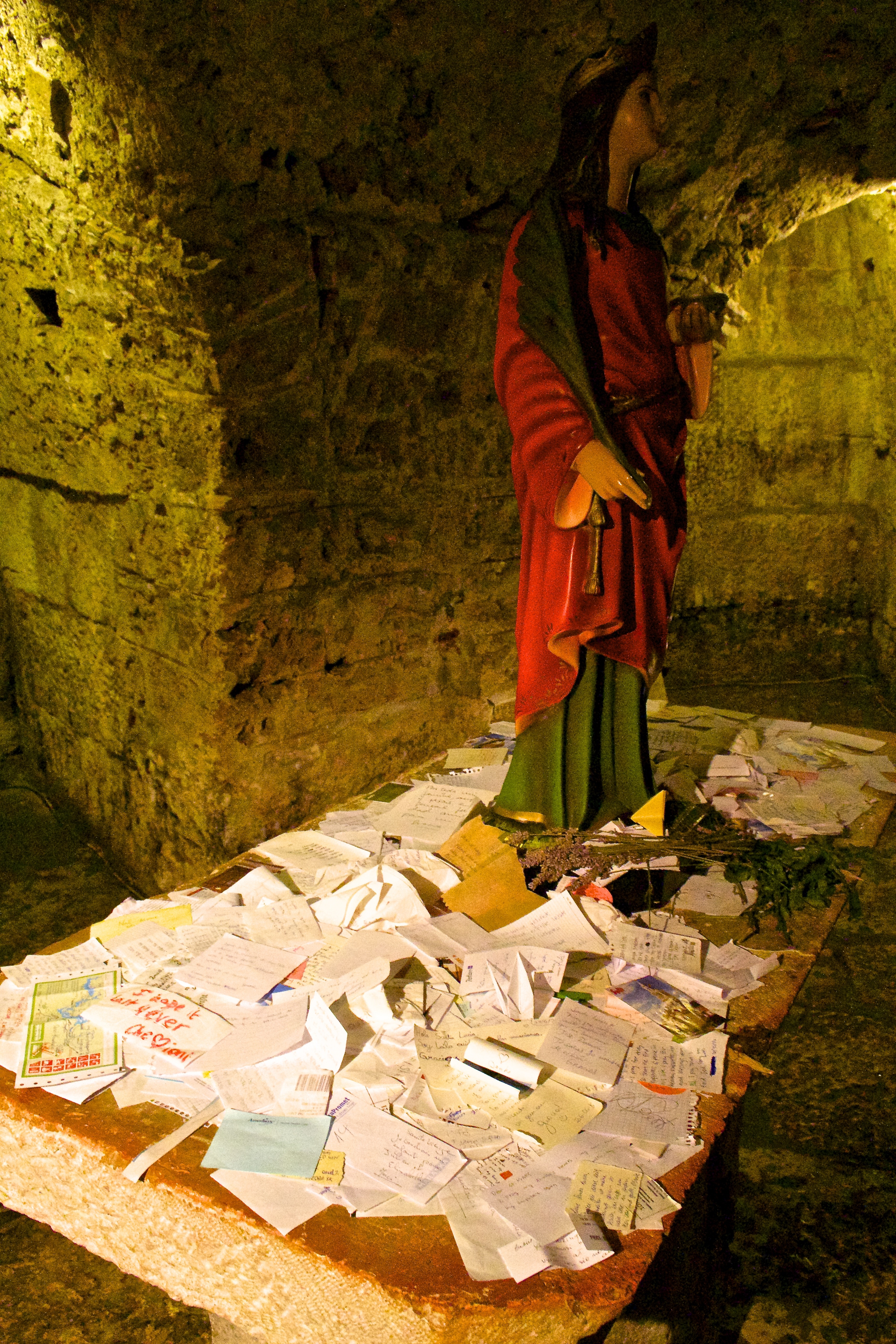
So the practice is a cultural one, peculiar to Eastern Europe, rather than the religious rite of a particular church. It’s up to you as to whether or not this ups the chances of their prayers being answered.

Ours were by a rather good restaurant in the walls, archly called Diocletian’s Wine House, with a sunken courtyard festooned with newly imported ancient olive trees, which we had to ourselves, along with fresh fish and an excellent bottle of local wine. The local waiter was both knowledgable and proud regarding the wine. The locals have a whole range of jobs dependent upon the tourist income, including those who dress as centurions and one old bugger who unaccountably turns out as a summer Santa.
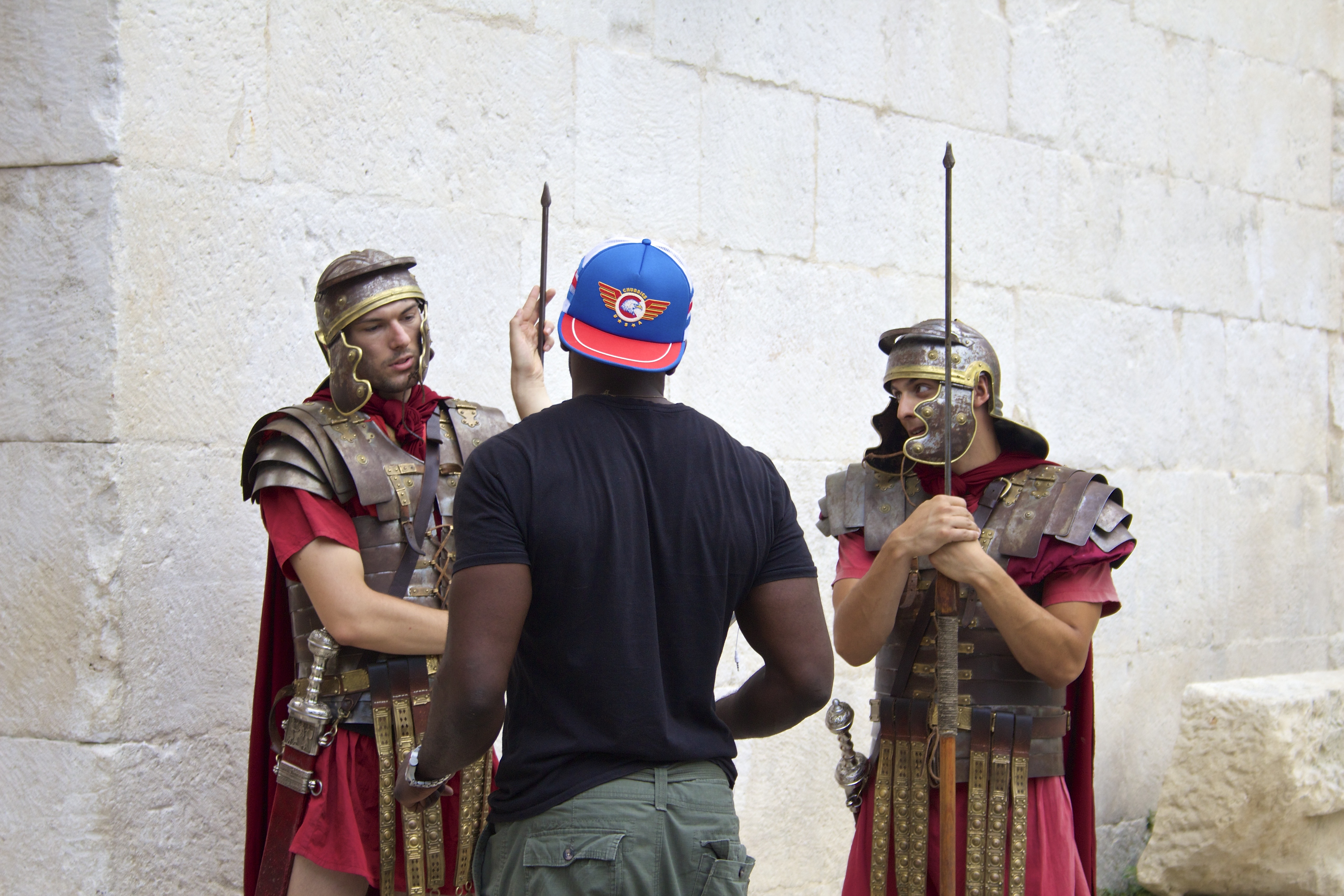
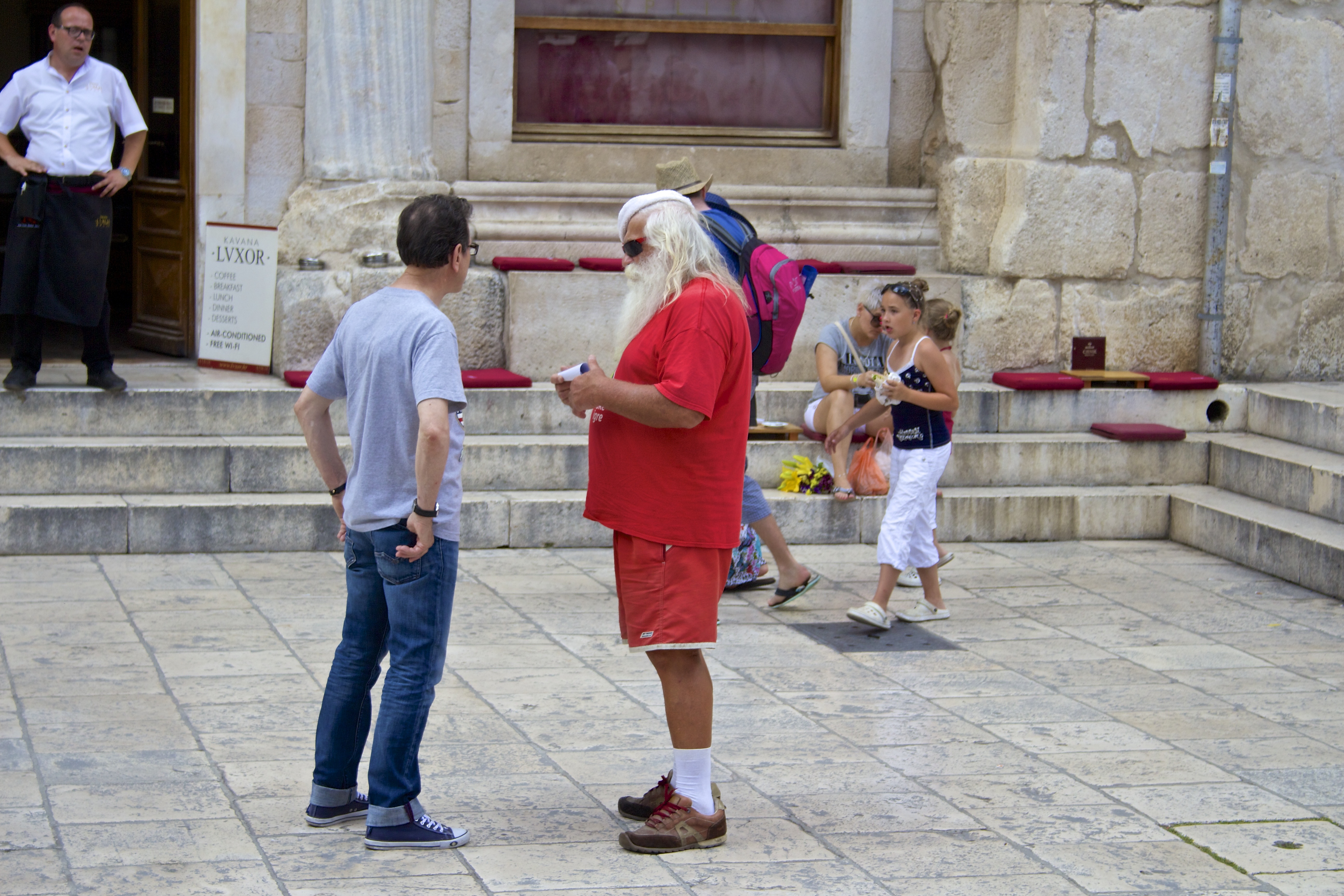
These guys work huge long days during the summer season, with rather less to do the rest of the year. One, asked if it was boring in winter, responded yes, but it was boring in summer too. Although quite a few holidaymakers clearly sound local, their numbers in restaurants fall off, presumably deterred by the price.

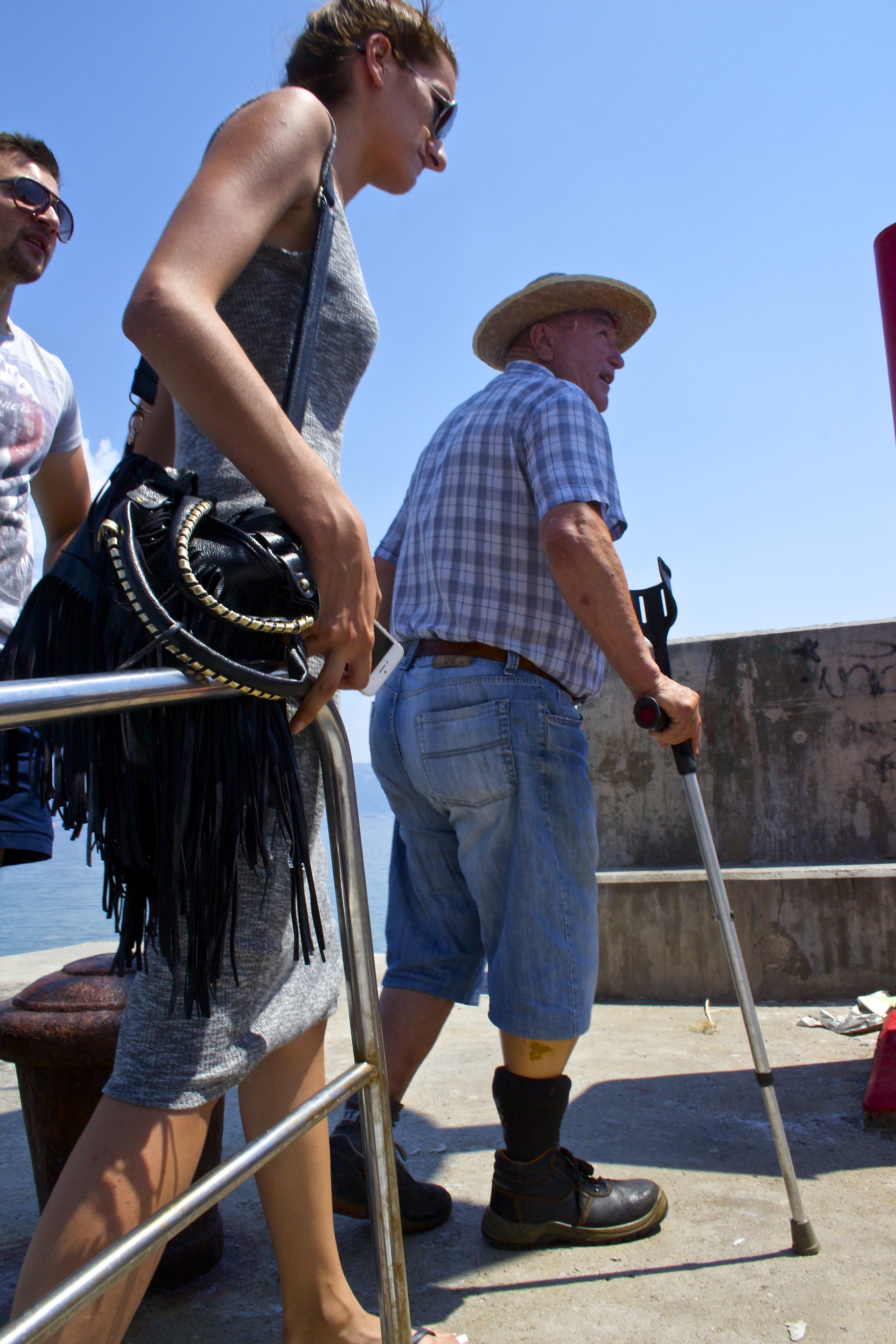
I wondered how it might be to be elderly here, if not Diocletian. One old soldier boarded the ferry at 11 in the morning with crutch in one hand and a beer in the other. When he disembarked I understood a little more – he only had one original leg.

Later, I spotted this old lady with her arm in a sling methodically touring the Split bins to retrieve plastic bottles, presumably for some recycling income. And then there was this well ballasted pair deploying walking poles on the essentially flat quay of Trogir.
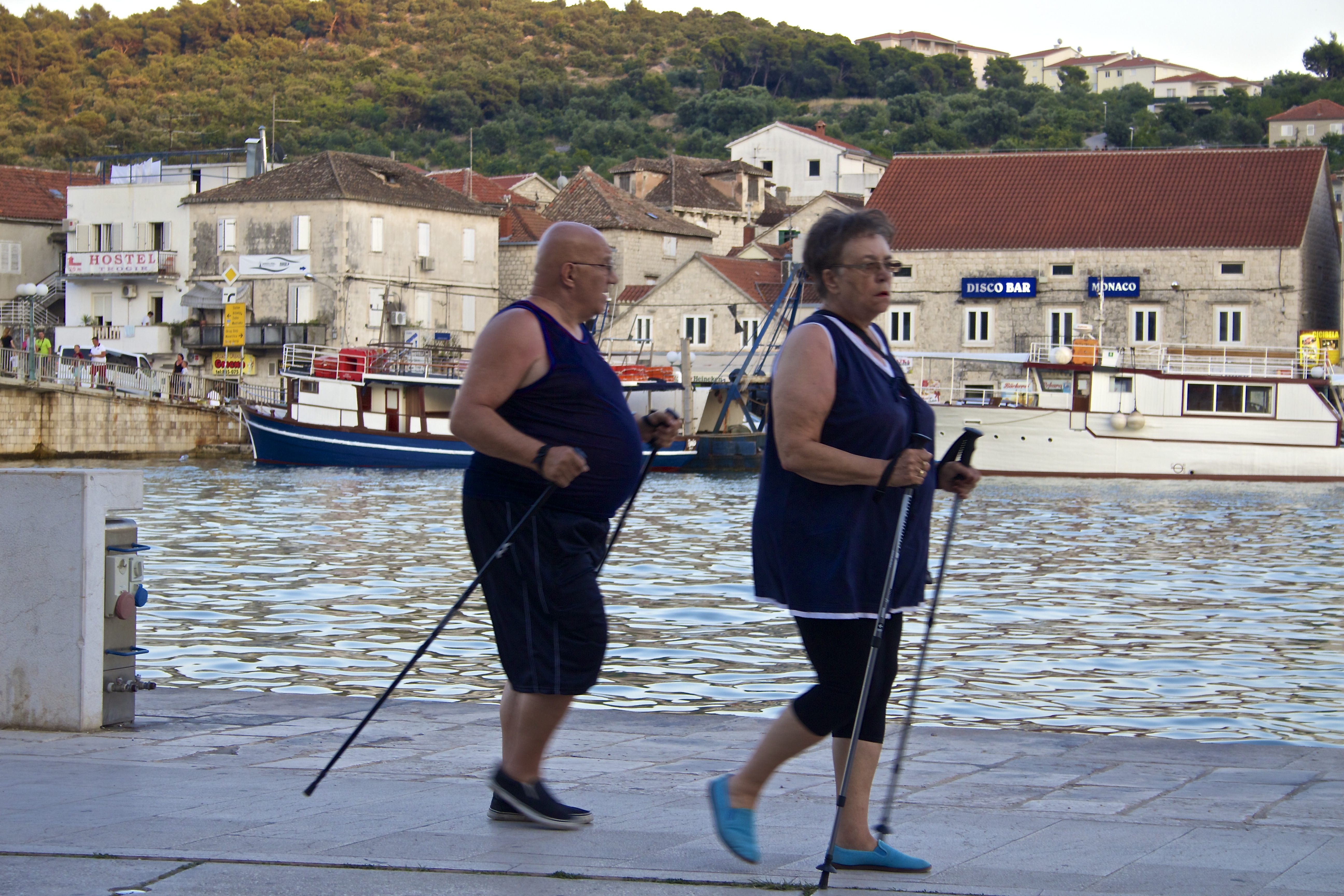
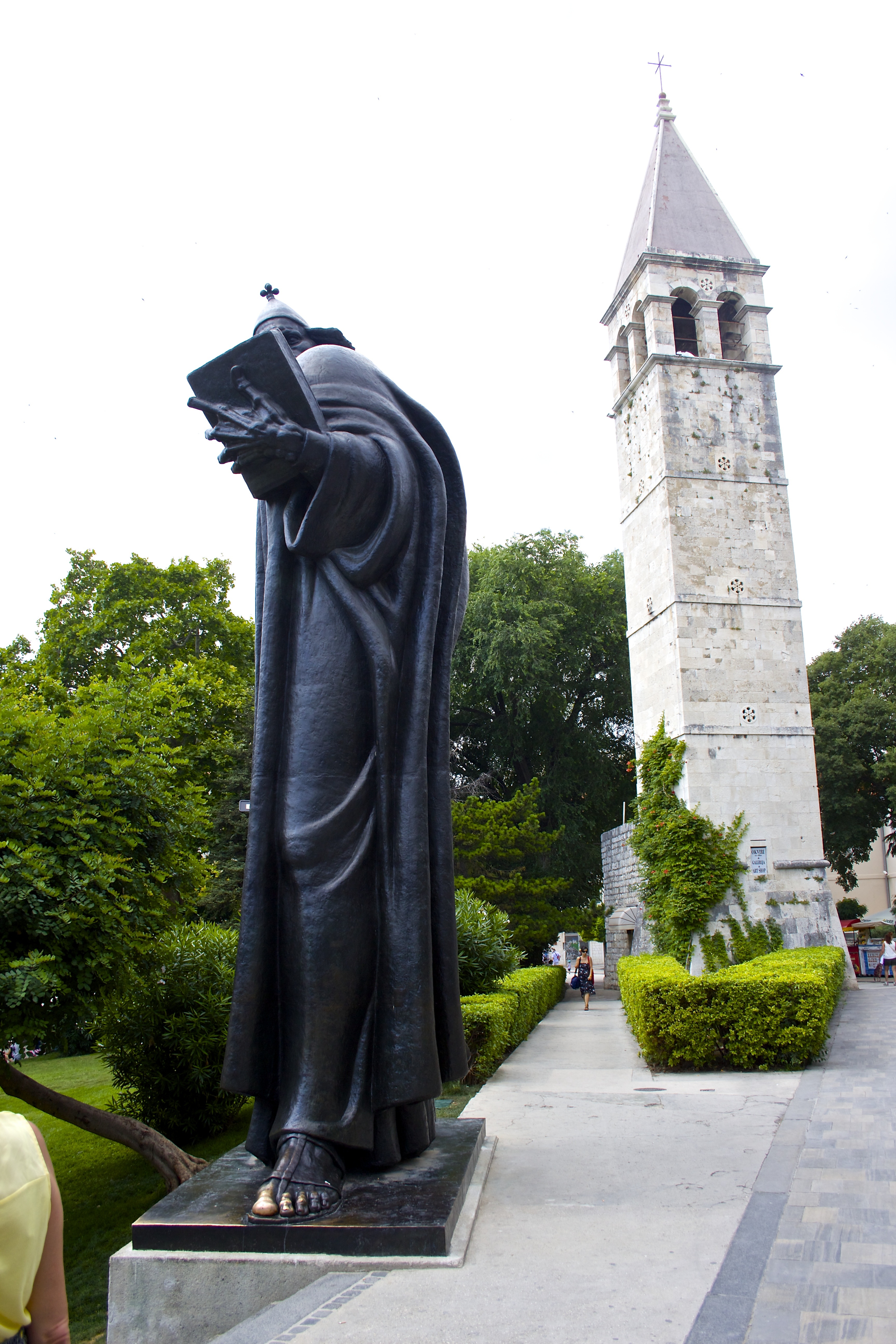
I suspect our welfare safety net is still better than that on offer here, but wonder for how long. There, they seem to put as much reliance in writing to St Teresa and getting good luck from rubbing the big toe of the statue of Gregorius of Nin, a 10th century bishop who failed to get himself elected primate of Dalmatia at the Councils of 925 and 926. Apparently the vote was Split.
 peterleewright.com