
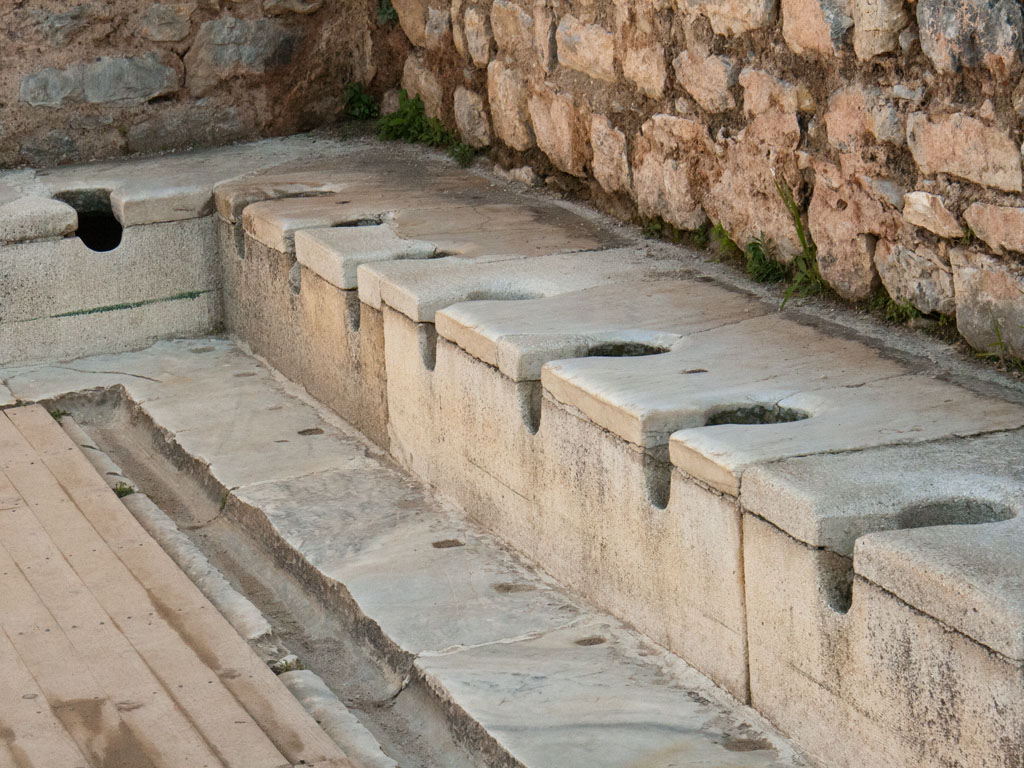
Most people would associate civilisation with running water, sewers, central heating and hot baths, with travel and trade enabled by ordered government, good roads and a secure currency. Britain enjoyed all these things over 2000 years ago, thanks to our being part of the Roman empire. Of course, the Romans had a nasty controlling habit of demanding people paid their taxes to deliver these goods – something we know the wealthiest and most successful in society today profoundly object to – and tended to insist on straight roads and solid buildings which didn’t fall down for centuries, a level of over-engineering incompatible with contemporary profiteering. The emperor Hadrian built a wall to keep out the Scots and the Picts – so-called because of their loutish tendency to cover themselves in tattoos. however, it wasn’t rebellions here which eventually drove the Roman legions out in 407, but much more deadly attacks on their homeland from Visgoths – who sacked Rome in 410 – and, later, Vandals. Thereafter, Britain was able to regain its sovereignty and rejoice in its own filth for fifteen hundred years before those fruits of civilisation would clean them up again.
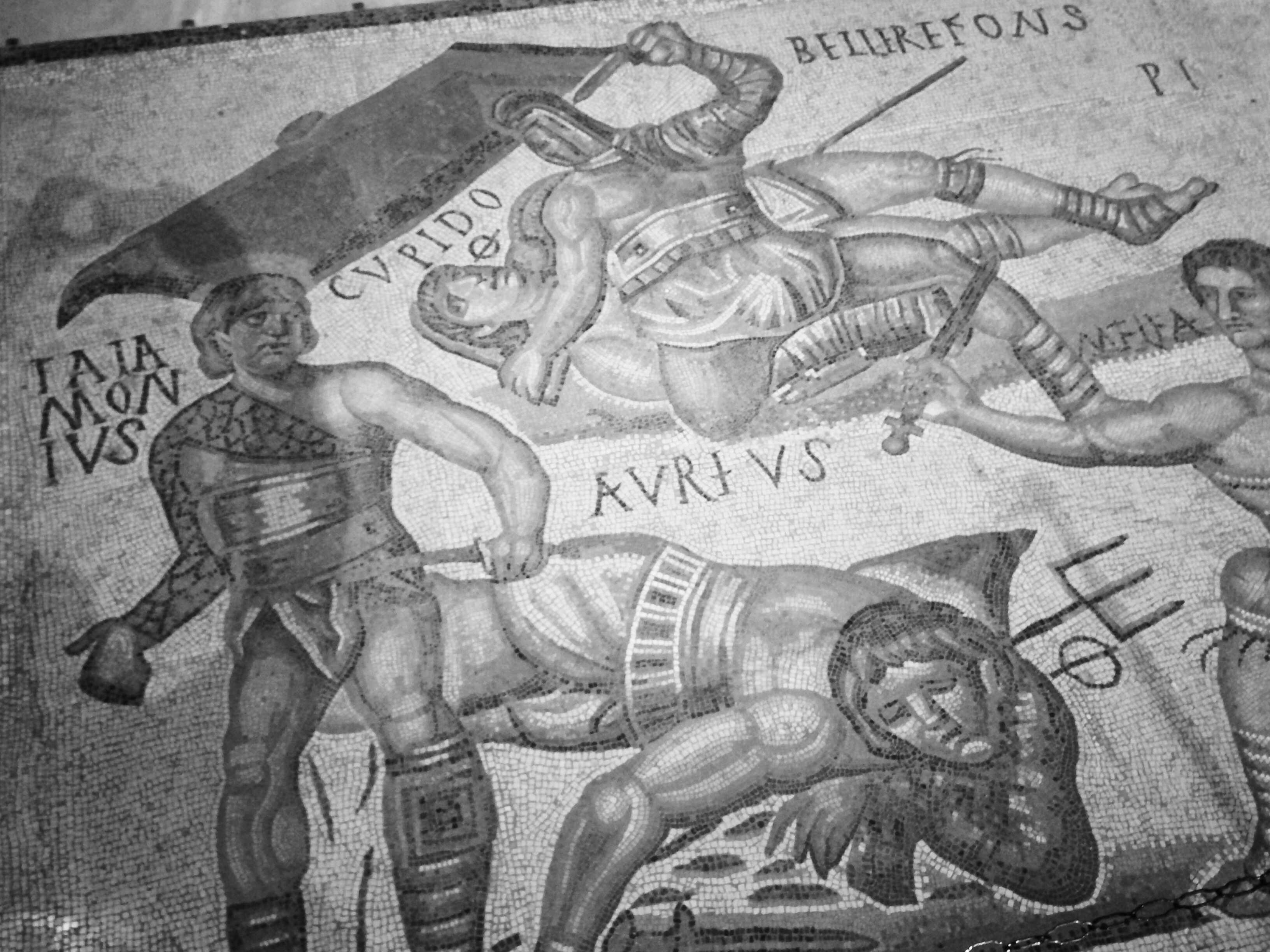

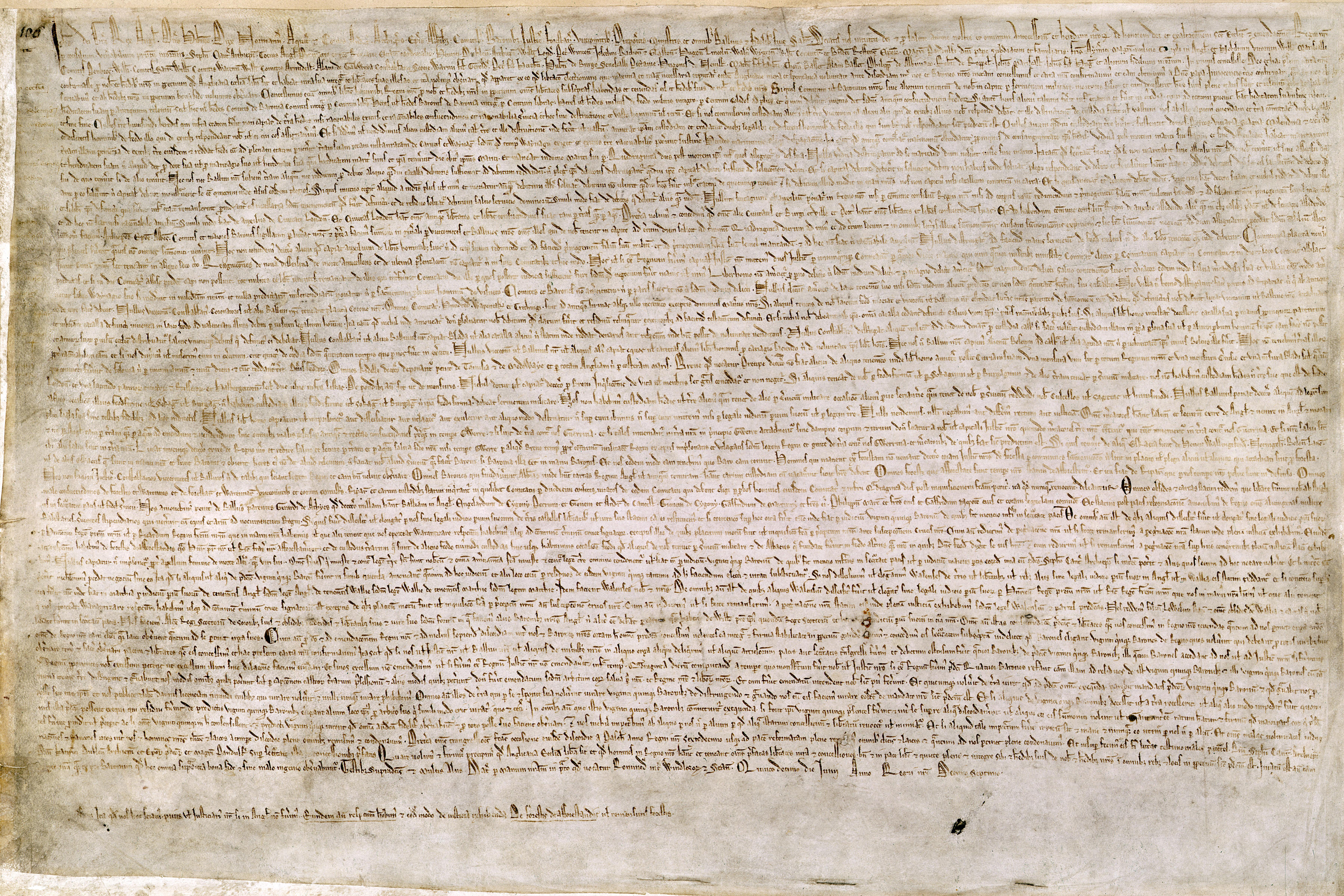
Of course, seeing off the Romans didn’t ensure little Britain could stop the unwanted arrivals on its shores. First it was the Saxons coming over and taking our jobs; then the Vikings arrived, pillaging our villages and women. It’s lucky we had already forgotten how to work all the civilised features, such as water, sewers and central heating, or these scavengers would have ruined them. Then, to cap it all, the Normans came in 1066 and made us speak French, kowtowing to them just because they knew how to build castles and cathedrals and get things done. There was a nascent English resistance movement – celebrated in Paul Kingsnorth’s extraordinary 2015 novel The Wake, written in cod old English – later evolving into the Robin Hood myth we all grew up with. But for every Merry Man swinging through the greensward of Nottingham Forest there were many merry women moving in with their overlords, to a level that within a century the royal records could not distinguish natives from conquerors. And in 1215, the feudal nobility extracted from King John the only bill of constitutional rights Britons have yet to enjoy, in Magna Carta, the origin of our right to justice and a free trial. How dare the frogs come over here and make such socialistic demands!
The image of the Normans as bellicose invaders is somewhat tempered by a visit to the British Museum’s current exhibition: Sicily – culture and conquest. Having been the cultural crossroads of the Mediterranean for nearly two millennia – with Phoenicians, Greeks, Romans, Byzantines and Arabs having all enjoyed their time in power – the Normans first arrived in Sicily five years before the Battle of Hastings, in 1061. It took them some thirty years to establish their hegemony, and it didn’t last much more than a century but, during that time, this was a place of multi-cultural integration and religious tolerance which would shame most of Europe today. The surviving 12th century buildings, not least the royal palace in Palermo and its Cappella Palatina with Greek mosaics, Italian floors, Arab inscriptions and Islamic motifs, encapsulate this synthesis of all that was best in Mediterranean culture of the time, influencing every aspect of life from domestic behaviour through science and literature to international diplomacy. Much was due to the exemplary reign of Roger II (1130-1154), who built an enlightened court of all the talents, although their respective communities lived separately outside. Ghettos have been a constant feature of European history, with mixed results. Trevor Phillips blames much of Britain’s ongoing community problems on what he calls our misguided 20th century policy of “state sponsored segregation”, rather than the full integration pursued in the US, and only achieved in cosmopolitan centres like London.
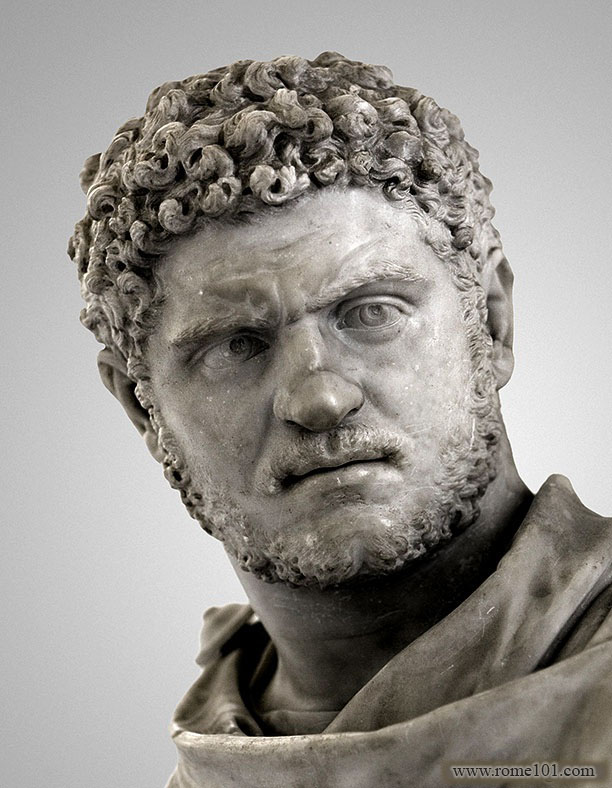
In 212 AD, the emperor Caracalla decreed that all the free inhabitants of the Roman empire, from Scotland to Syria, were to enjoy the full rights of citizens, the largest extension of citizenship in history. Of course, this early iteration of a supra European Union did not meet universal approval, with many wealthy objecting to the hoi polloi being granted equal privileges. These, whom we may call Rexiteers, were satirised by Juvenal as xenophobes going round saying “I can’t stand a city full of Greeks”. In 2016 UK, it is Poles, other East Europeans and the (not so) imminent threat of Turks which are the stuff of little Englanders’ nightmares, expressed most forcefully in impoverished towns yet to see many immigrants. That said, detailed analysis of the referendum results expose early myths: that the young didn’t vote, and that most Brexiteers were in the north. Two-thirds of young people did vote and as many well-off southerners voted to leave as poor northerners, more in the South-West than in EU subsidy-dependent Wales. The anti-German post-War feeling I grew up surrounded by – “we fought to avoid these people taking over!” – resurfaced every bit as strongly as the disenfranchised desire to give mendacious politicians a good kicking. The vile Johnson understood this regressive gene when he unspeakably allied the EU with the Third Reich.

Yet recreating the expansive reach of the Roman Empire has remained a political goal from the Frankish Charlemagne – crowned Holy Roman Emperor in Aachen on Christmas Day 800 – to the freakish George Bush, crowing “Mission Accomplished” in 2003 as Iraq sank into lethal chaos, while US troops vandalised the 6,000 year old city of Ur, spray-painting its ruins.
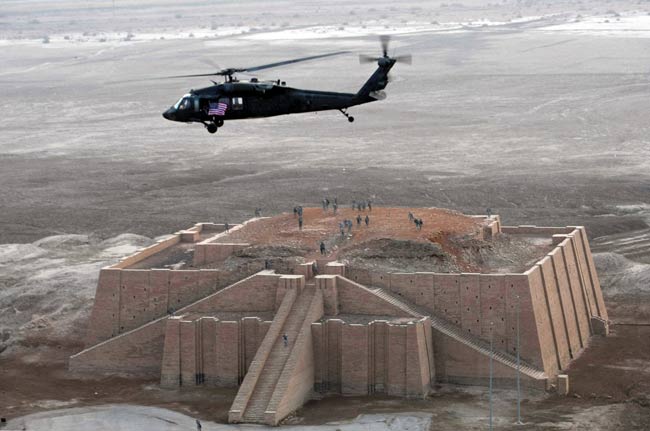
As I recall from Tacitus’ Agricola, which I studied for ‘A’ level, this is nothing new. He wrote of the Roman conquest of Britain: “To ravage, to slaughter, to usurp under false titles, they call empire; and where they make a desert, they call it peace.” Yet the Romans did have fine plumbing and marvellous mosaics, whereas the Americans have McDonalds. One thing they both have in common is a propensity for building straight roads and vast encampments to the same grid pattern, even if it means bulldozing priceless antiquities. The local equivalent today would be HS2, that threatens some of England’s ancient woodlands which, at just 2 per cent, form already one of the lowest levels of afforestation in Europe. One unintended bonus of Brexit may be the cancellation of this vanity project, which will not even connect the ‘northern heartland’ with the Europe they wish to leave.
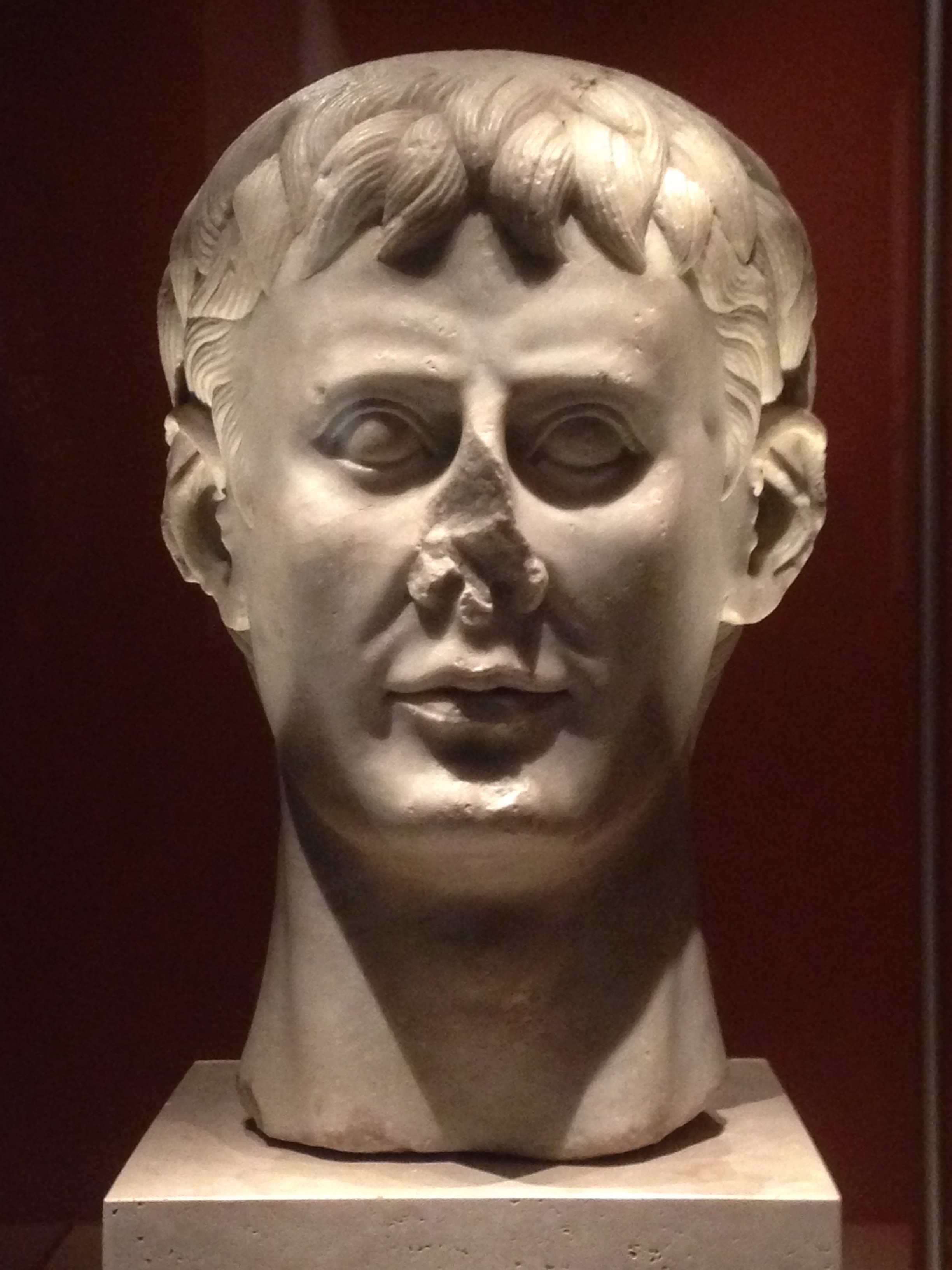
The apotheosis of the pan-European ideal arguably came with Frederick II, crowned King of Sicily in 1198, King of the Romans in 1212, and Holy Roman Emperor in 1220. Although this gigantic imperium necessitated an itinerant court relatively far more costly and time-consuming than the bi-cameral European Parliament today – Frederick also became King of Jerusalem in 1225 – his heart remained in Palermo, where the civilisation of his multi-cultural education kept him engaged in Greek literature and philosophy, Arabic mathematics and astronomy, Latin poetry and numismatics and Roman art and architecture. Historians disagree as to whether this was a direct precursor of the Renaissance, yet Frederick’s Constitutions of Melfi, or Liber Augustalis, was a written constitution of 69 laws which accepted that divine right was still subject to human law, an advanced conception he intended to extend to all his empire, unrealised, but which remained in effect in Sicily until the 19th century. That association, of the advancement of political thought and social rights with openness to other cultures and what they can teach us, is embedded at the heart of the principles of European Union, if somewhat occluded by an overemphasis on free trade. Vital though this is, and fatally threatened by Brexit, what little Britain has forgotten in the last 1600 years – characterised by school history as the Norman conquest, Napoleonic wars with France and the two world wars with Germany – is that we are indivisibly part of the European continent. Turning our back on it and saying “Shan’t!” is the response of the peevish child unable to dominate the game, which will go on without us to our inevitable disadvantage. We may have rediscovered plumbing, but Britain has had to be dragged kicking and screaming into compliance with many EU directives, such as those on groundwater and sea purity. Our freedom to bask in our own shit once more, just as we did when the Romans left, is a costly liberty with precious few redeeming features. Our political masters may claim to be classically educated, but there is precious little evidence of real learning or deep thought.
 peterleewright.com